

By Ed Avis
When Darryl Holliday and his colleagues made a batch of Smoky Oaxacan Charred Cucumber & Jobo Salsa in the kitchen at Simple Culinary Solutions in Rogers, Arkansas, it was quickly devoured. Holliday suspected it was something special….and he was right! The recipe won first place in el Restaurante’s 2025 Sassiest Salsa Contest sponsored by Sammic.
“We liked the idea of that refreshing cucumber flavor in a spicy sauce,” Holliday says. “It was a flavor profile we had worked on and were really impressed with how it elevated the fruity notes and offered a cool, minerally flavor.”
Holliday’s recipe, which earned him $750 and a Sammic XM-52 Immersion Blender, is complex and creates deep flavors. The other winning recipes have the same rich characteristics. Second place went to Funky Black & Yellow Salsa by Kristofer Jubinville, executive sous chef at Bonita Bay Club in Lehigh Acres, Florida; and third place was awarded to Salsa Macha La Chida by Alberto Arteaga, owner of Pinchis Salsas in La Puente, California. The second and third place winners earned $500 and $250, respectively.
See all three winning recipes below.
“The varieties of salsa that can exist and be created with imagination were a surprise,” says Enrique Fleischmann, corporate chef at Sammic and one of the judges of the contest. “Smoky salsas, roasted salsas, some with pineapple and others with a dual color...chile peppers presented in a very special way, nuts and seeds, blends of aromas and textures within them...without a doubt, a great edition of the Sassiest Salsa Competition.”
First Place: A Mole and Macha Base

Darryl Holliday
The base of Holliday’s winning Smoky Oaxacan Charred Cucumber & Jobo Salsa resembles a mole. Key ingredients such as pepitas and garlic are mashed in a molcajete; toasted chiles, vinegar and oil deliver the unique salsa macha twist.
“We dove in hard with the idea of moles, but looking beyond just the mole negra,” he explains. “We looked at some of those fruity, fresh moles, and we paired it with the trend of salsa macha, bringing those two flavors, two styles of salsa into one unique product.”
Then Holliday topped off the recipe with charred cucumber and jobo, a type of plum.
Holliday suggests that his Smoky Oaxacan Charred Cucumber & Jobo Salsa would work well on chicken or a light white fish.
“But a good salsa is never specific to one thing,” he says. “It’s all about how you want to use it in the application.”
Second Place: Fermentation is the Key
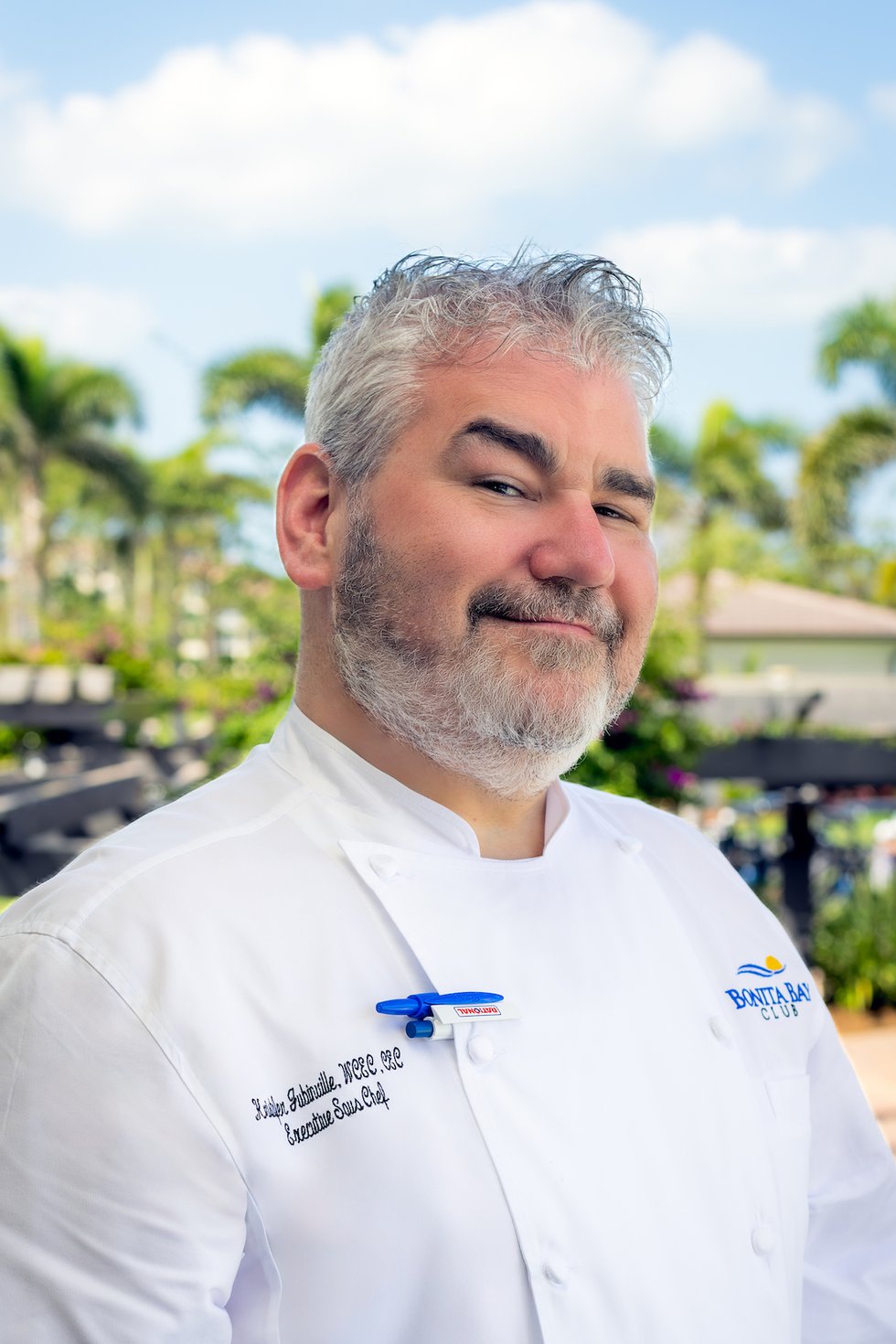
Kristofer Jubinville
The second place winner, Funky Black & Yellow Salsa, is distinguished by fermented ingredients. Jubinville and his boss, Executive Chef Richard Brumm, became intrigued by fermentation during a trip to Copenhagen, where they ate at famed restaurant Noma.
“I’m a food nerd and my boss is a food nerd,” Jubinville says. “We’ve been getting very much into the fermentation and the pickling aspects of food.”
Jubinville’s recipe starts with a base of pineapple, black garlic, red Fresno chile, cilantro stems, Kaffir lime leaf and miso. Those ingredients are fermented for about five days in a precisely made brine of salt and water. The salsa is then topped with a drizzle of aromatic oil and fried quinoa crunch.
“It all just balances nicely,” Jubinville says. “The Kaffir lime leaf brings in a little citrus flavor without being overpowering, and the pineapple adds the sweetness. Then the fermentation develops that umami flavor, that depth, that richness.”
Jubinville says the salsa is added to a chicken thigh taco served the Bonita Bay Club’s casual bar called The 55th Hole. It’s one of the bar’s best sellers.
Third Place: A Salsa Macha with Almonds
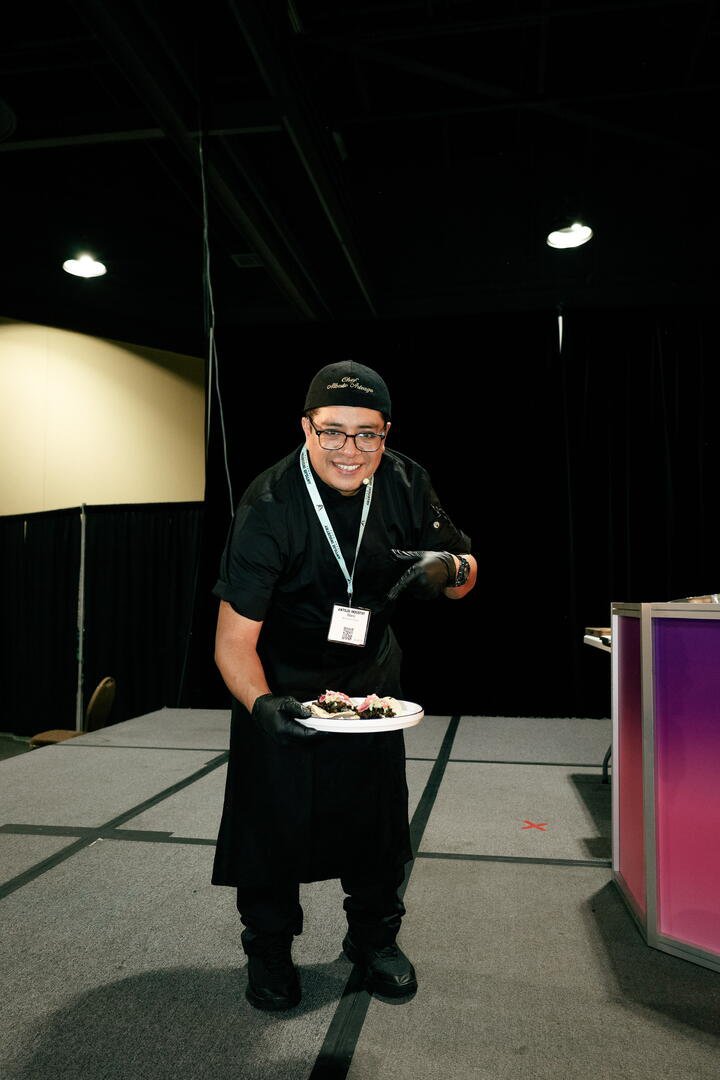
Alberto Arteaga
Like many restaurant people, Alberto Arteaga was homebound during COVID and decided to create some salsas to pass the time. Friends and family told him they loved his efforts and encouraged him to create more. Arteaga, who works as a personal chef, eventually launched Pinchis Salsas as a side business.
He created the recipe for Salsa Macha La Chida because his daughters didn’t like the salsa they were offered at a taco shop.
“We were [at a restaurant], and my daughters said to me, ‘Dad, the taco sauce isn’t very good. You should make a salsa that we can bring in the car and use anytime,’” Arteaga remembers.
He decided that a salsa macha, with its rich combination of nuts, seeds and dried peppers, would fit the bill, because it is much less likely to spoil in the heat.
“But I said, ‘Let’s make it with almonds instead of peanuts, something different.’ So, we started playing with flavors and textures, including a little bit of Japanese [flavor] with the crunchy garlic. My daughters said to me, ‘Dad, this salsa is cool, it’s really good.’”
Arteaga says the salsa goes well with tacos, seafood and other dishes needing a blast of flavor.
“I’ve used it when I make salmon with mushrooms for my clients as a private chef, and they love it,” he says. “And with avocado toast for breakfast, a few dashes of La Chida on top. They love it.”
Grateful for Support
This is the third consecutive year Sammic has sponsored the Sassiest Salsa Contest. The company’s support makes the program possible.
“Sammic has been thrilled to be involved in this innovation and we have had a great time tasting and learning how these chefs are pushing culinary boundaries,” says Neal Pearlman, Sammic’s sales director for North America. “Sammic is a manufacturer that sells extensively into Mexican restaurants and to customers who make Mexican, Tex/Mex and other Latin foods. As an innovative leader in this food equipment space, we want to inspire and reward innovation from end-user chefs. We look forward to learning more in the years to come.”
Special thanks also to our judges, Chef Enrique Fleischmann from Sammic and Chef Herve Guillard, director of education at the Institute of Culinary Education in Pasadena, California.
1st Place: Smoky Oaxacan Charred Cucumber & Jobo Salsa
Recipe by Darryl Holliday
Simple Culinary Solutions
Makes 6 servings
2 medium cucumbers, peeled, seeded, cut into thick slices
1 c. ripe jobo (yellow plum), pitted and coarsely chopped
2 tomatillos, husked
2 dried chilhuacle negro chiles, stemmed and seeded
1 fresh chilhuacle amarillo chile, stemmed and roughly chopped
2 cloves garlic, peeled
½ small red onion, roughly chopped2 T. pumpkin seeds (pepitas)2 T. neutral oil (grapeseed or vegetable)
Juice of 1 lime2 T. apple cider vinegar1 small bunch cilantro, roughly chopped
Salt to taste
Char the cucumbers & tomatillos on a hot comal until blistered and lightly blackened. Set aside to cool slightly.
Heat the oil in a heavy skillet over medium heat. Add the dried chilhuacle negro chiles, onion, garlic, and pumpkin seeds. Fry gently, stirring, until the chiles darken slightly and the onion and garlic are fragrant (about 2–3 minutes). Remove from heat and let cool briefly.
In a molcajete, blend all ingredients except the cilantro, jobo, and cucumber into a coarse paste. Add jobo and cucumber and mash lightly unit crushed.
Stir in cilantro, taste, and adjust salt. Let rest at least 1 hour in the refrigerator for the flavors to marry before serving with grilled fish or chicken.
2nd Place: Funky Black & Yellow Salsa
Recipe by Kristofer Jubinville,
Bonita Bay Club
Makes 8 servings
The Base:
500 g pineapple, peeled, cored, diced
20 g black garlic (about 4-5 cloves), mashed
30 g red Fresno chile (about 2 chiles), sliced
15 g cilantro stems, finely chopped1 Kaffir lime leaf, julienned15 g white miso
The Fermentation Brine:
12 g non-iodized salt (2% of total weight of produce)
~200 ml filtered water (enough to submerge)
The Optional Quinoa Crunch:½ c. red quinoa, uncooked
Grapeseed oil for frying
The Optional Aromatic Oil (added post-fermentation):
5 g toasted mustard seeds30 ml sesame oil
1 g smoked paprika
1. Char Pineapple: Grill or sear the pineapple cubes in a hot, dry skillet until nicely caramelized and slightly charred. Cool completely.
2.Combine and Weigh: In a large bowl, combine pineapple, black garlic, Fresno chili, cilantro stems, Kaffir lime leaf, and miso. Weigh the total amount of solid ingredients (should be ~600 g) and calculate 2% salt based on that (about 12 g; double-check your total weight).
3. Massage and Pack: Add salt directly to the mix, and massage gently to release juices (especially from the pineapple). Let sit for 20-30 minutes to draw out moisture. Pack tightly into a fermentation jar or crock, pressing down to remove air pockets. Add a little filtered water if needed to fully submerge.
4. Ferment: Use a fermentation weight or clean object to keep solids submerged. Cover with an airlock lid or breathable cloth secured with a rubber band. Let ferment at room temp (21-24°C) for 5-7 days. Taste daily after day 4.
5. Finish: Once the desired acidity is reached, transfer to the fridge to slow fermentation.
6. Make Optional Quinoa Crunch: Rinse quinoa, boil in water until just tender (about 12 mins), then drain well. Spread on a towel to dry for 20–30 minutes. Shallow fry in grapeseed oil at ~375°F until puffed and crispy. Drain on paper towel. Salt lightly.
7. Make Aromatic Oil (added post-fermentation): Heat sesame oil, add mustard seeds. Once popping, remove from heat and stir in paprika. Cool and drizzle over salsa before serving. Fold in freshly crisped red quinoa right before serving for crunch.
Third Place: Salsa Macha La Chida
Recipe by Alberto Arteaga,Pinchis Salsas
Makes 4 6-oz. bottles
5 oz. chopped almonds
4 oz. pumpkin seeds
3 oz. sesame seeds
3 oz. cranberries
20 garlic cloves
26 oz. canola oil
12 árbol chiles (toasted)
16 pasilla chiles (smoked)
5 morita chiles (toasted)
5 mulato chiles (toasted)
3 oz. coarse salt
2 oz. pepper
1 pinch cumin
2 oz. brown sugar
Tools: Mesquite charcoal grill, skillet, large pot, blender, spoon, ladle, four 6-oz glass jars
1. Garlic maceration: Two days before, soak the garlic in cold oil. This base is the soul of La Chida, smooth yet intense.
2. Chile smoking: Light the mesquite charcoal. Over indirect heat, smoke the pasilla chiles for 10 minutes. This step adds body and depth to the spiciness.
3. Toasting the chiles: Toast the mulato, morita, and árbol chiles in a pan on the grill. Toasting releases essential oils and enhances their flavor.
4. Browning the garlic: Mince the garlic. Heat the oil in a pan and brown the garlic.
5. Grind the chiles: Grind them into a medium-textured powder. Not too fine, not too coarse. Just like someone who loves a good heat would grind them.
6. Adding seeds: With the garlic browned, add pumpkin seeds, almonds, and sesame seeds to the pan. Lower the heat. Guard the temperature, as if it were a secret.
7. Final touch: Gently stir in the cranberries. Then, add the ground chiles, using oil that is now cooler to avoid irritation from the capsaicin. Add sugar, pepper, cumin, and gradually add the coarse salt. Mix. Increase the heat to bring to a final boil.
8. Packaging: With the mixture still hot, fill ¾ of the jar with the sauce, the rest with oil. Seal immediately.
Click here to go to the next article, Five Questions: Chef Chris Valdes
Click here to return to the Table of Contents