
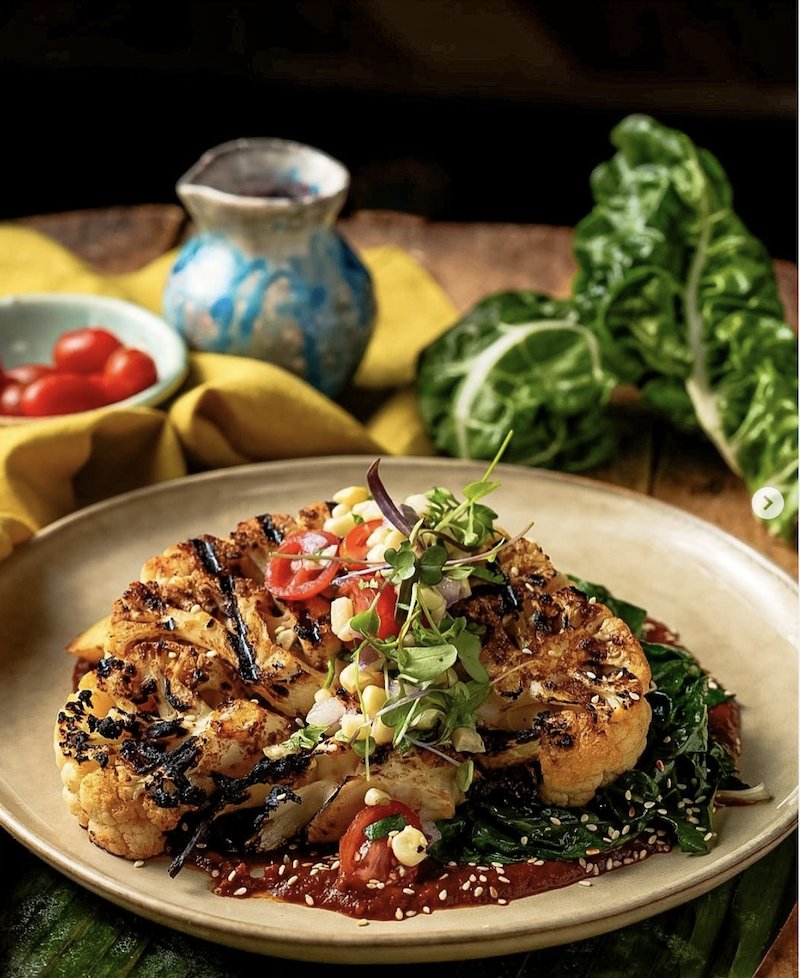
Cauliflower with Mole at Gracias Madre in San Franciso
By Kathleen Furore
If you’re wondering what role plant-based dishes should play on your menu, consider data from an el Restaurante reader survey in April 2026.
Of the restaurants that responded, nearly all of them offer at least some vegetarian dishes. And many of them offer a lot of vegetarian options — 47 percent reported that plant-based dishes make up 25 percent to 50 percent of their menu, and 73 percent of restaurants that offer vegetarian options also offer vegan options.
Our readers, Mexican/Latin restaurants, are totally on-trend. Plant-based eating has become one of the most significant food trends worldwide — one that is “not only shaping consumer preferences but also transforming the way restaurants operate,” according to “The Rise of Plant-Based Menus in Restaurants from 2025 to 2035,” a report from the Food Marketing Institute (FMI).
A recent report by NPD Group shows that 53 percent of U.S. consumers are actively seeking plant-based options when dining out. In response, restaurants are diversifying their menus to cater to guests seeking plant-based options, the FMI notes.
“By 2035, the plant-based dining experience is expected to become a standard across all types of eateries,” FMI predicts.
A Plant-based Pioneer
Gracias Madre, a concept that debuted in in 2009 in San Francisco and opened a Los Angeles location in 2014, made plant-based dining its calling card well before vegetarian and vegan cuisine started trending.
“When Gracias Madre first opened, plant-based dining was still considered niche, especially within Mexican cuisine,” Chief Operating Officer Patrick Hotchkiss recalls. “Since then, the market has evolved tremendously, with more consumers embracing plant-based eating for wellness, sustainability, and lifestyle reasons.”
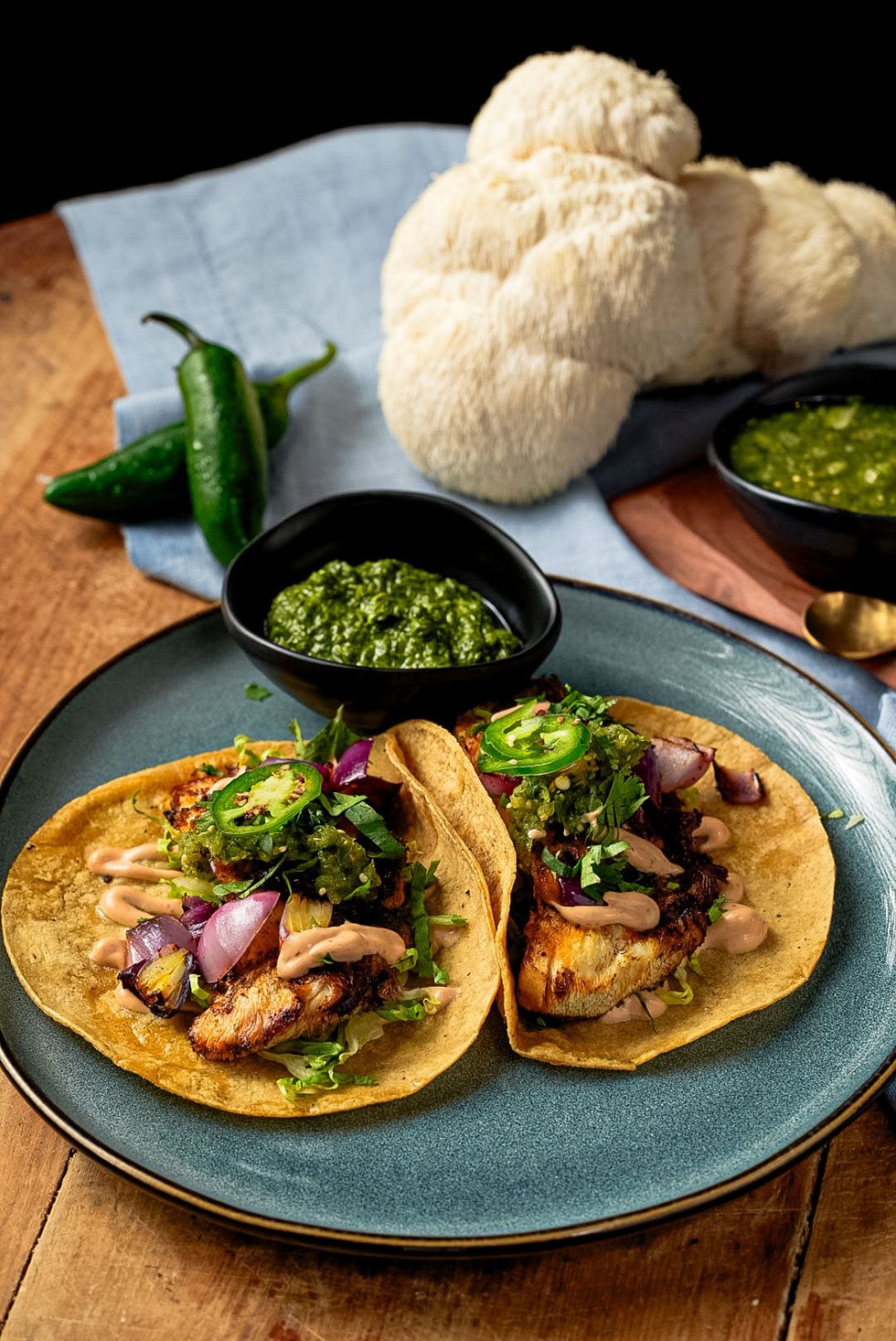
Gracias Madre Grilled Lions Mane Tacos
And while many restaurants have come and gone since Gracias Madre opened its doors, Hotchkiss attributes the restaurant’s success to an unwavering commitment to organic ingredients, ethical sourcing, and quality. “Even through inflation, the pandemic, and economic challenges, we never compromised our standards,” he stresses.
While those standards have remained unchanged, the menu has evolved in tandem with ingredient innovation and guest preferences.
“As awareness around nutrition and plant-based ingredients has grown, we’ve introduced more seasonal and ingredient-driven dishes, such as our Lion’s Mane Mushroom Tacos and Fresh Coconut Tacos,” he reports. (The Cauliflower with Mole, pictured on the cover and in the opening of this story, is another example of a seasonal offering.) “We’re also constantly refining our sourcing, including working with clean, ethically produced plant-based cheeses and organic ingredients whenever possible.”
Popular dishes recently added to the menu include the Madre Bowl featuring roasted sweet potato, crispy tofu, kale, black beans, quinoa, pesto, and habanero salsa, and the Queso Fundido made with house-made cashew cheese, jalapeño, tomatoes, cilantro, and corn tortilla chips.
That doesn’t mean signature dishes from earlier menus have disappeared.
“Our classic Guacamole made with avocado, jalapeño, red onion, cilantro, and lime has remained unchanged since the beginning. Other longtime staples include our Ceviche with hearts of palm, cilantro, aguachile, whipped avocado, and aleppo pepper, as well as the Mushroom Quesadilla with roasted garlic mushrooms, mozzarella, spinach, pico de gallo, and house tapatío,” he says.
Highlighting Plant-based Options
As important as plant-based fare is for some diners, billing a restaurant as vegan — something Gracias Madre has done since its inception — might seem a step too far for businesses wanting to build a broad base of loyal customers.
Hotchkiss acknowledges that vegan cuisine can sometimes feel limiting to guests who are unfamiliar with it.
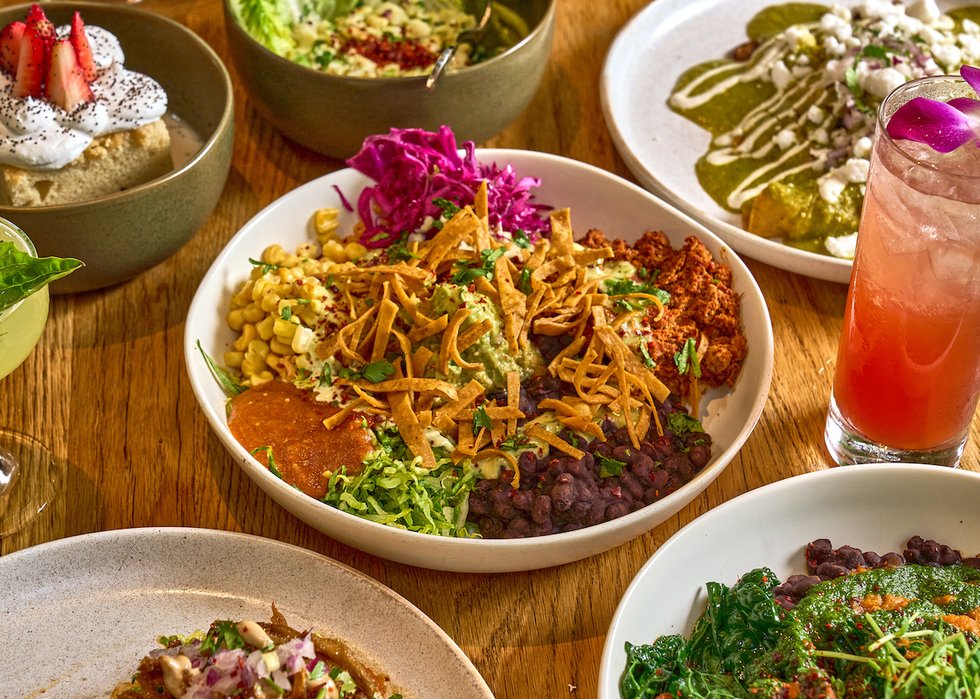
Oaxaca Bowl at Gracias Madre
“Being a vegan concept definitely comes with challenges, particularly when guests initially associate plant- based cuisine with limitation or assume there won’t be enough protein or flavor,” he says. “One of our goals has always been to change that perception by showcasing how satisfying, nutrient-dense, and flavorful plant-based Mexican cuisine can be.”
He praises Gracia Madre’s culinary team for achieving that goal by doing “an incredible job developing dishes that feel approachable, flavorful, and satisfying for everyone — whether they follow a plant-based lifestyle or not.”
“Over the years, many guests who don’t eat vegan regularly have discovered Gracias Madre through friends, celebrations, or simply curiosity, and we’re proud to have become an introduction to plant-based dining for so many people,” he adds. “Between the ambiance, hospitality, and the quality of the food, we’ve been fortunate to build a reputation that extends well beyond the vegan community.”
So, how can Mexican and Latin-themed restaurants let customers know they offer plant-based options without putting too much focus on vegetarian and vegan dishes?
Hotchkiss shares his perspective.
“Clarity is incredibly important,” he stresses. “Whether restaurants choose to create a dedicated section, use symbols, or clearly note vegan and vegetarian options directly within menu descriptions, making those offerings easy to identify creates a much better guest experience.”
He speaks from experience.
“As someone who personally follows a plant-based lifestyle, I know how difficult it can sometimes be to navigate a menu or even decide whether to dine at a restaurant if the options aren’t clearly communicated,” Hotchkiss adds. “Guests appreciate transparency and thoughtful menu design, and even adding a few well- executed plant-based dishes can make a restaurant feel much more inclusive and approachable.”
Does your restaurant offer some creative plant-based appetizers and entrees? We’d love to showcase one of your recipes in our My Favorite Recipe or Recipe of the Week features. Email editor Kathleen Furore at kfurore@restmex.com to be featured in a future issue.
SIDEBAR: Readers Weigh in On Approaches to Plant-base Dishes
el Restaurante readers increasingly are embracing vegetarian and vegan options in response to their customers’ preferences for more plant-based menu items.
According to an April 2026 reader survey, 53 percent of respondents ranked vegetarian/vegan dishes as “moderately important” (some customers order them); 40 percent said they were “quite important” (many order them); and 7 percent “very important” (nearly all customers order a vegetarian or vegan menu item).
And they call out those options in a variety of ways: 27 percent have a separate section dedicated to vegetarian and vegan dishes and 53 percent use asterisks or some other symbol to notate vegetarian/vegan options.
What are some of the best-selling, plant-based items survey respondents are serving?
“I have five bowls on my menu — all have a vegetarian option,” says Jim Urdiales, owner of Mestizo Louisiana Mexican Cuisine in Baton Rouge, Louisiana, who features the bowls on the separate menu he has created for the restaurant’s vegetarian/Keto and gluten-free guests.
Purple rice — the base ingredient in each bowl — is topped with a vegetable mash or quinoa, some kind of sauce, sauteed spinach, grilled onion, pico de gallo, sliced avocado and cotija cheese.
The Vegetarian Cauliflower Bowl, for example, includes cauliflower mash and black beans topped with tomatillo sauce; the Sweet Potato Mash Bowl includes sweet potato mash topped with salsa macha; the Vegetarian Broccoli & Brussels Sprout Bowl includes broccoli and Brussels sprout mash topped with peanut mole; the Quinoa Bowl includes veggie quinoa and black beans topped with chimichurri sauce; and the Power Bowl includes black beans topped with tomatillo sauce.
“I also have jackfruit as an option on many dishes,” Urdiales adds.
Karen Sanjuan, restaurant manager of Don Artemio Restaurant in Fort Worth, Texas, reports that several dishes do well with vegetarian and vegan customers.
Among the favorites are the Ensalada de Palmito (grilled heart of palms, panela cheese, tomato, avocado, peanut chili vinaigrette); the El Famoso Chile Hojaldrado (a cream cheese and pecan-stuffed poblano wrapped in puff pastry and served over house made tomato sauce); Nopalitos Fritos (tender- fried cactus that can be made without the bacon, served with heirloom house-made blue corn tortillas to make tacos); and Enchiladas Queso Queso (deep-fried enchiladas, stuffed with queso fresco and goat cheese, topped with homemade artisan tamarind mole, ajonjoli, cream and potatoes in a slow cooked spicy tomato sauce). That dish also can be made with veggies instead of cheese for vegan customers.
“We use an asterisk or some other symbol to note vegetarian/vegan options: V= Vegetarian, PV = Possibly [can be made] Vegetarian,” Sanjuan says.
Click here to go to the next article, Empanadas’ Appeal: Global Flavors Expand Menu Options