
By Natalia Otero
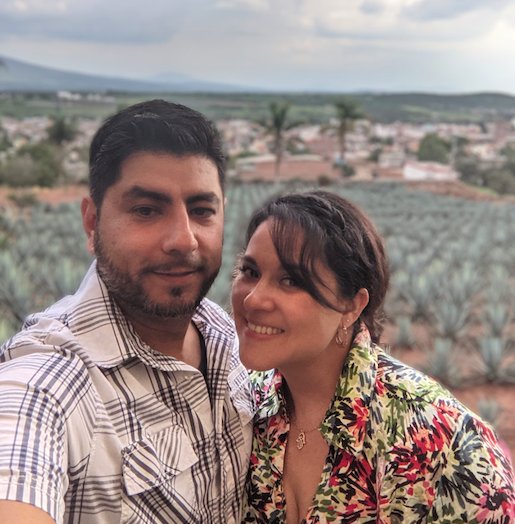
Everardo Fonseca and Karina Benavides
The cuisine at Abuelita’s, in Richmond, Virginia, is the everyday cuisine of Mexican homes. The menu features stews that simmer for hours, freshly made tortillas, mole prepared with patience, and recipes passed down from generation to generation.
But Everardo Fonseca and Karina Benavides, the married couple who own Abuelita’s, didn’t start with that type of cuisine. Rather, they ran TexMex restaurants for years, until they found themselves missing the food they grew up with in Jalisco—a cuisine also influenced by the culinary traditions of Michoacán and Guanajuato. Thus was born a concept that has now become one of Richmond’s most authentic Mexican restaurants.
How did the story of Abuelita’s begin?
Everardo Fonseca: We had TexMex restaurants, like Cerro Azul, and we were tired of that kind of food. It was always a struggle to find truly traditional food. That was what I missed and longed to find in the United States. I looked in different places, but nothing came close to what tasted so good to us back in our hometown in Mexico. So we decided to make guisado tacos, because you can’t find them here in the United States. Nothing satisfied us the same way.
We were longing for the stews my grandmother, my mom, and my mother-in-law used to make—the kind of food we ate at home. That went on for three years, until I asked my mom for the recipes and started making the stews myself.
Karina Benavides: Since Jalisco borders Michoacán and Guanajuato—three states well-known for their traditional cuisine—we’re heavily influenced by them.
How did you design the menu?
Karina Benavides: We didn’t want a fixed menu, because there are so many stews we grew up with, and they’re all delicious. We chose chicken, beef, pork, and vegetarian options—with two stews from each category—and created a rotating menu. We cook in batches to avoid wasting ingredients.
We’re always rotating the menu: pork in red chili sauce, chicken mole, chicken tinga...
We develop the recipes together. Some come from our families, and others we’ve created ourselves, like the chicken in chorizo cream sauce that my husband made, which is now one of our most popular dishes.
We also want everyone to be able to come, which is why we offer vegetarian options.
Everardo Fonseca: We’ve also had to adapt to the American crowd in Richmond.
How did you two meet, and how did you end up opening a restaurant together?
Karina Benavides: We have quite a history. We met in Jalisco through mutual friends. I came to the United States in 1995, and Everardo in 1999. My parents already had a restaurant in Mexico, and he was offered a job there as a chef.
Everardo Fonseca: My cousin worked with my wife’s father. Back then, we were friends, and we each had our own partners.
Karina Benavides: We spent six years as friends and working together.
Everardo Fonseca: Until one day we were both single (laughs) and started dating.
Karina Benavides: We opened our first restaurant in 2002. I was pregnant, and we’d been married for just a year and a half. It was a TexMex restaurant called Cerro Azul. We ended up with three restaurants. Today we still have one Cerro Azul location and Abuelita’s, because the latter requires a lot of work.
How do you manage both restaurants?
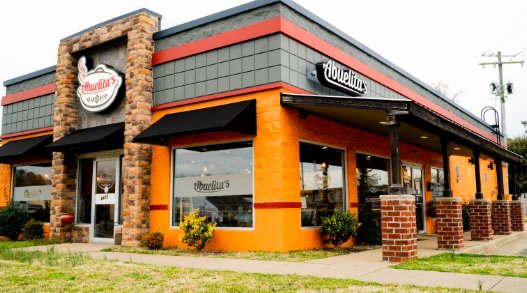
Everardo Fonseca: We realized that running a TexMex restaurant isn’t the same as running Abuelita’s.
Karina Benavides: At Abuelita’s, the food is prepared just like cooking at home. People arrive and the food is already ready, as if they were coming over to eat with the family.
At the TexMex restaurant, everything is prepared to order. It’s a full-service restaurant, whereas Abuelita’s operates in a simpler way: customers order at the counter and take their food to the table.
We also put a lot of thought into our team. At Abuelita’s, most of the staff are women. The shifts are shorter so they can work and also take care of their families.
Everardo Fonseca: We don’t use seasoning mixes. Everything is made with fresh sauces, prepared daily, with plenty of spices—just like homemade food.
Karina Benavides: In addition to the eight daily stews, we offer pozole, tamales, menudo, and birria. The birria we make is the traditional version from our region, prepared with adobo.
How do you preserve the original recipes?
Everardo Fonseca: When we started, we could barely find guajillo chiles, chile de árbol, and canned tomatillos. Today, it’s much easier to find Mexican ingredients.
We standardize the recipes and train our chefs. Each stew has its own personality. Each sauce needs a different touch. You have to learn when a tomato is ready, how long to roast a chili, and when an ingredient changes the flavor.
That’s what I learned by going to the market with my mom.
The people who cook with us need to understand why we take each step—not just repeat a recipe.
Karina Benavides: Patience has been essential. At home, if a meal doesn’t turn out right, it’s no big deal. In a restaurant, it has to turn out the same every day. That’s what builds trust and makes a customer come back three days later expecting exactly the same flavor.
From the very beginning, we made it our goal to never compromise on quality. We knew we needed to create systems to achieve that.
Your concept requires a lot of explanation. How did you get the public to understand your stews?
Karina Benavides: We have what’s practically a “Bible” on how to welcome each customer.
We welcome them, and before they order, we offer them a small sample so they can try one of the stews. Because if you don’t educate, you don’t sell.
Everardo Fonseca: At first, it was a huge hurdle. People would come in looking for enchiladas or fajitas. We had to explain that this was a different kind of cuisine. We had to educate them and let them try the stews.
Karina Benavides: Since the menu changes constantly, they often ask for a dish that’s no longer available. So we tell them, “Try this one instead.”
Everardo Fonseca: We explain that this is Grandma’s house. Grandma doesn’t always cook what you want, but rather what she prepared that day… and it’s always good. Over time, customers come back looking for their favorite stew.
What’s the daily preparation like?
Karina Benavides: We have two people dedicated solely to preparing the stews every day.
Today we might make the consommé for the birria; tomorrow, a chicken stew; the next day, a beef or pork stew. We always strive to make everything as fresh as possible.
Everardo Fonseca: We try not to make everything with salsa verde. One day we make mole, another day crema, another day red chili… we want variety in both flavors and colors.
Karina Benavides: The food has flavor on its own. For those who want it spicier, we have a selection of salsas made with the same ingredients but with different levels of heat.
What has been the most rewarding and the most challenging part of these past years?
Everardo Fonseca: The greatest satisfaction has been reviving a part of Mexican culture that was being lost in restaurants across the United States.
Representing the food of my mom, my grandmother, and my mother-in-law is something very special. People tell us that our dishes remind them of their own mothers or grandmothers. Those moments are very moving. Ultimately, this restaurant is also a tribute to the hard work and creativity of all Mexican mothers and grandmothers.
Karina Benavides: We also have guests who come directly from Mexico and tell us that here they feel like they’re eating just like at home. That always makes us a little nervous, but when they leave happy, it’s a huge source of satisfaction.
We wanted to create a cozy place, with warm colors, antique utensils, spice grinders, wooden spoons, birdcages with little birds… details that remind people of their grandmothers’ homes. People walk in and feel that warm embrace.
As for the challenges, cooking everything fresh every day requires a great deal of organization. Nothing can go to waste. We run it like a home: we buy the groceries, and we can’t let anything go to waste.
We’re also thrilled to see that many children ask to come back to Abuelita’s to celebrate birthdays or graduations, and that couples from other cultures choose us for the most important day of their lives.
How do you divide up the work?
Everardo Fonseca: During the first few years, I was completely in the kitchen, teaching how to prepare each recipe and supervising everything.
Karina Benavides: I was always out front at the restaurant serving customers. Now we’re continuing to grow with new projects, like our drive-thru, as well as events and fairs to bring us even closer to the community.
What advice would you give to other restaurant owners?
Everardo Fonseca: There are very difficult moments filled with despair, but you mustn’t give up.
Proving that this cuisine could work in the United States has been a huge challenge because it’s very labor-intensive. There’s a lot of work behind every dish.
But we keep moving forward because we believe we all have a grandmother, and we want to carry that name as high as possible.
People think TexMex is Mexican food. We want to show that there’s another kind of cuisine: the one that’s actually eaten in Mexican homes, the one that fills your heart as much as your stomach.