
Haz clic aquí para leer esto en español
Editor’s Note: It’s always exciting for us at el Restaurante to learn about a Mexican restaurant that is succeeding in an interesting way. Tacodeli, which has 12 locations in Texas, is a great example. They sell their salsas, dips and tortillas in Whole Foods stores, and they just announced that grocery chain HEB will also be selling their products. We asked Jeff Day, president of Tacodeli’s retail business, some questions about this experience.
el Restaurante: Tacodeli has been selling products retail since 2017. Why did you start doing that?
Jeff Day: We’ve been in the restaurant business since 1999, and as we’ve expanded our number of restaurants across Texas, the consumer affinity -- and to some degree cult following -- of many of our salsas continues to increase. In 2017, Whole Foods Market, which is headquartered here in Austin, approached Tacodeli and had a casual conversation selling the salsas in grocery stores. Our founders, Roberto Espinosa and Eric Wilkerson, are your classic entrepreneurial sort of guys who are interested in chasing unique opportunities. They said, “Heck yeah, that sounds great.” And that’s what began our foray into CPG (consumer product goods). We launched in 2017 with three of our salsas at Whole Foods in the Southwest region, which was 47 stores.
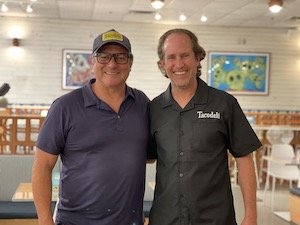
Roberto Espinosa and Eric Wilkerson, founders of Tacodeli
That’s great. Now, every Mexican restaurant has salsa, but not many of them sell beyond the restaurant. Why were yours popular enough that you could sell them in grocery stores?
Roberto is originally from Mexico City. So while each of the salsa recipes has a different story behind them, they were primarily inspired by flavors of Mexico City in terms of both the ingredients used as well as the style of salsa.
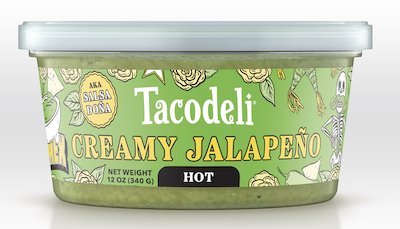
One of our salsas, Salsa Doña, has a really fantastic origin story. In the early days of our first restaurant, Roberto held a salsa competition among the staff, and everyone contributed their own salsa recipe. One of the female chefs, Bertha Gonzalez, who had the nickname in the kitchen of Doña, presented the recipe for a creamy jalapeno salsa. It’s a beautiful bright green, emulsified, spicy jalapeno salsa that Roberto had never laid eyes on. And so that’s where that came to be, and that is why it’s named Salsa Doña, after Bertha. And even though she’s long gone from Taco Deli, she’s still compensated for that, for helping bring that salsa to the restaurant and now to consumers nationwide.
Cool story. Did you have change the salsas much to suit the retail market?
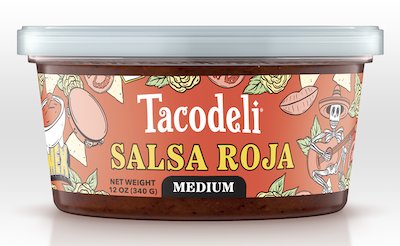
No, we follow the same process that we make our salsa in our restaurants for what we sell in grocery stores. We are roasting tomatoes on the plancha and roasting them down for our salsa roja. Even at scale, we are doing these things. I think that that contributes to a really high quality product that consumers have really fallen in love with.
So you’re not using a co-packer (a food manufacturing company that makes products on a contractual basis)?
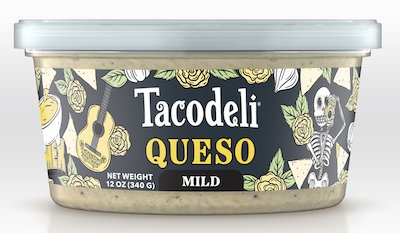
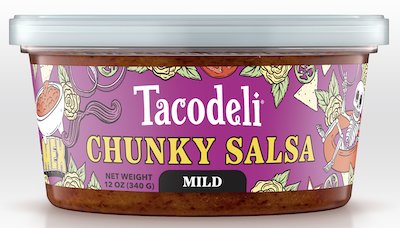
We are. It’s just that we partnered with a co-packer here who’s a smaller boutique, and they follow the same procedures we do in the restaurants. In addition to Salsa Doña, we sell Salsa Roja and Salsa Verde in Whole Foods. And since 2017 we’ve added a queso, using the same queso recipe that’s in our restaurant. We’ve also added a black bean dip, which is the same black beans that we use on our tacos in our restaurant. And with HEB, we launched what we call chunky salsa, which is the first product that we have launched for the consumer retail that is not in our restaurants. The reason for that is the salsas that are available in our restaurants are, for the most part, used as toppings on a taco. And one thing that consumers were asking for is a more traditional tomato salsa that they can dip chips in.
I see that you also sell tortillas and tortilla chips to the grocery stores.
Yeah, we launched tortillas in about a hundred Whole Foods stores this past year, and we’re excited about the early success of that product. We serve 6 million flour tortillas a year in our restaurants, and we have a great local Texas tortilla maker that follows a specific recipe just for us. Our tortillas are in the refrigerated section at Whole Foods because there are no preservatives in them.
What we think about our brand is, “We’ve Got Your Taco Night Covered.” That's how we think. We are known for selling really high quality tacos and all the accompaniments that go with that. We want customers in grocery stores to feel that they can elevate their taco night with Tacodeli.
Have you had any products that failed in the grocery market?
Not yet. I’m sure it will happen. We keep adding to our refrigerated salsas and dips portfolio. We currently have six. Salsa Verde is our slowest mover of those six. But no, we’ve not had anything that we’ve pulled entirely yet. Everything that we’ve had so far has had some traction.
Do you work with a broker or distributor to get your products into stores?
We work with a sales brokerage firm, and their name is Cultivate. They’ve done a really nice job so far. With HEB, we serve them direct, and with Whole Foods, we go through a distributor, UNFI, which is a big natural foods distributor.
Do you sell any products to other restaurants or other foodservice clients?
Not yet. We’re not saying no to that, but a lot of foodservice operations want a fairly generic, cheap salsa. And we sell a more premium product, so we haven’t found it to be necessarily a perfect fit for what we do. But we do think about partnering with certain restaurants, especially in Texas, where we have a great brand equity. They would be able to say, “We serve Tacodeli's queso on our menu, or we serve Tacodeli’s Salsa Doña,” for example. That is something that I think has promise, and we’ve had some initial conversations with some restaurant groups about that.
How important are the retail sales of your products to Tacodeli’s overall business?
The CPG business represents about 5 to 10 percent of Tacodeli’s total sales. We’ve had a 53 percent four-year CAGR (compound annual growth rate). This year we’ll do 150 percent growth versus last year.
Do you see some benefit for the restaurants beyond just that 5 to 10 percent in additional sales?
Yeah, certainly we know that the awareness of the restaurants helps drive sales of the retail goods, but we also know that as our retail sales have expanded in many places where we have more presence in the retail world than the restaurant world, the retail sales are creating a halo impact back to our restaurants. And that is particularly true, for example, in a market like Houston, where we currently only have one restaurant, but we are opening up two restaurants later this year. We’ve been selling our products in grocery stores in Houston for years, so there are a lot of people in Houston that know us because of our grocery products.
As you seek to expand, especially beyond your natural market of Texas, how are you marketing your products?
We do a lot of support in the grocery stores themselves through product demos, as well as price promotions and getting featured in the refrigerated bunker displays and end cap displays. Demos are expensive to replicate at significant scale, but for our products, they’ve had tremendous ROI. For the most part, when shoppers try our salsas, we have a very high conversion rate to purchase. So we’ve invested heavily in that.
What does the future hold for your retail sales?
Currently we’re in about a hundred Whole Foods stores, and in June, we'll be in 500 stores at Whole Foods across the country. So we've been on a slow, steady, methodical growth trajectory in terms of starting in our home base of Texas where we have many restaurants and partnering with a leader in natural and organic and premium foods like Whole Foods. And now we are getting into HEB, which is major Texas retailer. For a Texas brand like ourselves, that’s a natural fit. We hope to build off of that and continue to partner with major retailers across the country.
If another restaurant came to you said, “Wow, this is so cool, we want to sell our salsas at retail, too,” do you have some advice?
Number one is, I would say know what you’re getting yourself into. The recipe for success in the restaurant and hospitality world is incredibly different than the recipe for success in consumer product goods. I think you need to recognize that and also be well capitalized in order to fund the inherent investment that’s required to grow a CPG brand.
And the second thing I would say is I think you have to really be honest with yourselves about what compromises you are willing to make in your products to ensure they can go to grocery stores nationwide and have a long shelf life and all of those things. You need to be able to keep your product quality as close to what has become special as you can. And sometimes the compromises might be so great that it’s no longer worth it, and sometimes you can do it really effectively.
Thank you, and good luck on continued success!
To read another el Restaurante article about selling salsa in retail, click here.
Don't miss a thing! Subscribe to el Restaurante's digital publications for free by clicking here.