

By Ed Avis
Brittany Dejean remembers well the first time she went to a restaurant with her father after he was paralyzed in a car accident. She was 13 or 14 years old.
“The waitress looked at me and said, ‘What does he want to eat?’” says Dejean, now a public speaker who specializes in getting people comfortable working with individuals with special needs. “I remember thinking, ‘That is so weird. Why is an adult asking me what my dad wants?’ Then I realized she was uncomfortable. She wouldn’t really look at my dad.”
That kind of experience does not need to happen in your restaurant. There are ways to make your establishment welcoming to customers with disabilities — something that is imperative to do from a humanitarian perspective, and makes good business sense, too.
Bonnie Holtzman, regional deputy director of supported employment at YAI, an organization that supports people with disabilities, notes that dining out is a favorite activity for many of the people with intellectual and developmental disabilities with whom she works.
“Going to restaurants is a big social outlet for them,” she says.
Ensuring that your restaurant is compliant with the Americans with Disabilities Act (ADA) — with proper accessibility, parking, restrooms, etc. — is the first step. But there are other ways you can make your restaurant welcoming to members of the disability community. Here are six tips:
1 Get input from those in the community.
A great way to see if your restaurant is prepared to welcome customers with disabilities is to invite representatives from local organizations that work with them to visit. Ask them to evaluate everything from your physical layout to your service to your menu from the perspective of the people they serve. Remember that the disabilities that affect your potential customers could range from intellectual disabilities to sight or hearing problems to mobility issues, so you may need to invite representatives from multiple organizations.
“You should have the mindset that, ‘We want to make this better, and if we want to make this better, we have to be open to learning from the source,’” Dejean explains, adding that you should offer to pay these individuals for their input.
2 Prepare your front-of-house staff.
Your hosts, servers, bussers and floor managers are the employees most likely to serve customers with disabilities. Make sure they are trained well in this area by offering training/onboarding that covers:
• The importance of greeting all customers cordially regardless of disability status
• How to communicate clearly with individuals with hearing or comprehension difficulties
• How to be prepared if a client needs help getting to a table, reading a menu, carrying a tray, or reaching items on a buffet line or salad bar.
Basically, employees should be ready to help in any way...but only after asking if the person needs help.
“If your employees feel awkward about disability, they don’t necessarily want to admit it,” Dejean notes. “And you don’t want to wait for bad experiences to happen before you take steps to say, ‘This is important, and I want my employees to feel equipped.’”
3 Make sure your physical space accommodates customers’ special needs.
The ADA regulations cover essential elements but there are other things that can make your restaurant comfortable for customers with limitations:
• Have straws, especially bendy ones, available for people who may be unable to comfortably hold a glass.
• Keep condiments and other self-serve items conveniently located on tables so everyone can reach them, even if they are in a wheelchair.
• Put large-print, high-contrast, non-glare signage on your buffet and salad bar.
• Make sure the type on your digital menu can be enlarged and/or read electronically or have large-print and braille paper menus available.
4 Make sure the kitchen can handle special dietary needs.
You already ask patrons if they have allergies or other dietary restrictions. Remember some people with disabilities may require special food-related accommodations, too.
“We serve some people who are severely disabled and can only eat pureed food,” Holtzman says, explaining that these individuals may want to eat a normal menu item but require that it be pureed to the right consistency. “If there was a restaurant that was equipped to accommodate these dietary needs, then families could take their loved ones to that restaurant and there would be a ton of choices.”
5 Consider creating a quiet space.
Individuals with sensory disabilities may enjoy a meal in a restaurant that has a quiet space without televisions, flashing lights, or loud music.
“A lot of people on the spectrum or people who have seizure disorders can’t tolerate flashing lights,” Holtzman says. “And noise is an issue for many people. A restaurant could even offer headphones to people who want to block out the noise.”
Creating a quiet space in your restaurant, at least during certain days or times, also could attract customers who prefer a less stimulating, quieter experience, even if they do not have a disability.
6 Don’t treat customers with disabilities differently.
Dejean knows the server who was uncomfortable looking at her dad was not being intentionally unkind. She was having a normal reaction to something she was unfamiliar with.
“It wasn’t done out of malice. She wasn’t trying to be rude. She was just so afraid of doing something wrong that she chose to do nothing at all,” Dejean says.
Servers should assume that a customer with a disability can communicate just like any other customer, unless they learn differently, she notes. Furthermore, they should not worry about being perfect, she advises.
“People can get overwhelmed by an idea like, ‘Oh, this person has this disability and what was the thing I was supposed to do?’ People start to get scared that they’re going to do the wrong thing,” she says.
Her solution? Relax. Do your best. Treat every guest, including those with disabilities, with respect.
“Word will spread if you put effort into that experience, if you’re receptive to feedback, if you treat people like human beings,” Dejean says. “It can be so difficult for people with disabilities to have a positive restaurant experience, whether it’s because of accessibility or because of attitude or because of anything else, so people remember where they feel good, right? And so, when it goes well, word spreads.”
SIDEBAR: Organization Connects Ability to Job Opportunities
People with disabilities are not only potential customers, but also potential employees. YAI is an organization that supports people with disabilities and helps them find employment. Restaurants are key employers in the program, says Bonnie Holtzman, regional deputy director of supported employment at YAI.
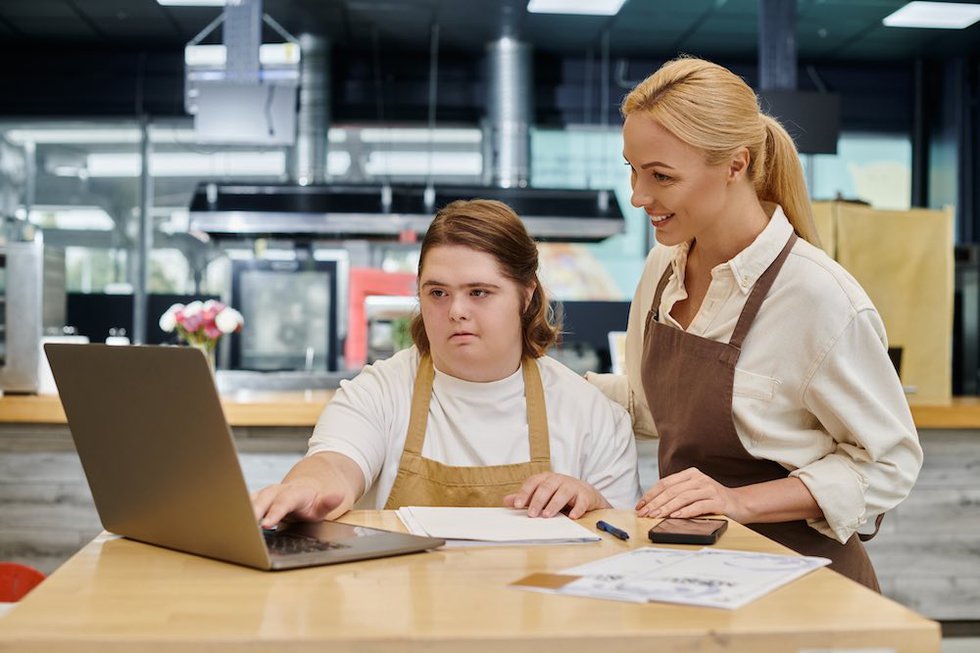
Holtzman primarily works with people with intellectual and developmental disabilities who can help with dish washing, stocking, cleaning and other restaurant tasks that match their abilities.
A key benefit of the YAI program is that it provides a job coach who remains with the worker until all parties agree they are no longer needed.
“The job coach is with the individual every step of the way from interview to hire to orientation and then they’re with them on the job,” Holtzman explains. “The job coach is there to help the individual learn their tasks and master their tasks so that the onus doesn’t fall on the owner or the other coworkers.”
And if the worker — who is paid a normal wage — gets promoted or if their duties change, the job coach returns to help them master their new tasks.
To learn more about hiring someone through YAI (which currently places workers in New York City and is expanding to New Jersey and California), visit yai.org or contact Holtzman at bonnie.holtzman@yai.org.
You also can find tips from the National Restaurant Association on hiring and training individuals with disabilities here.