
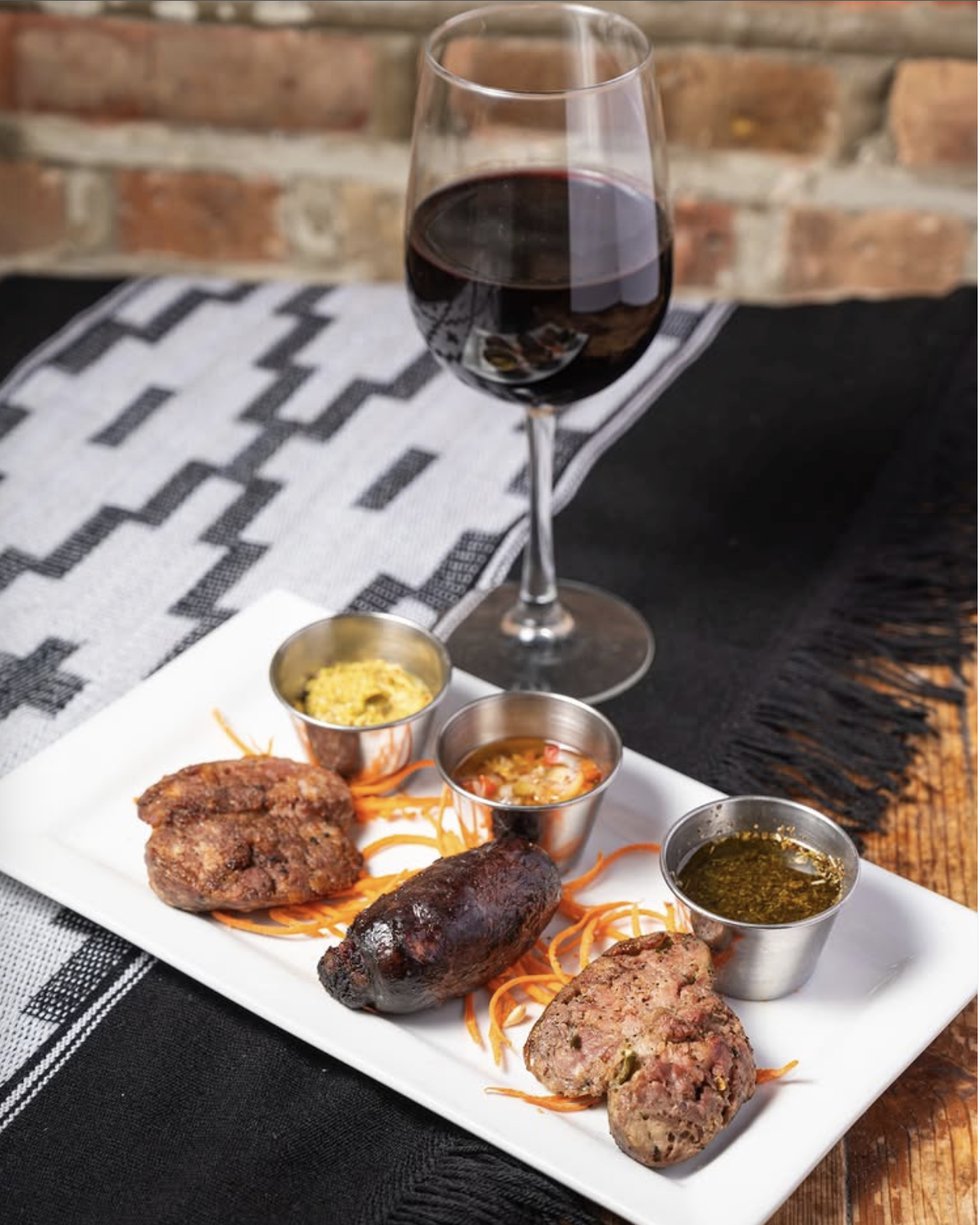
The Chorizo Trio at Folklore in Chicago
By Kathleen Furore
Does your menu lean toward the cuisines of Spain or Latin America? Is it authentic Mexican? Or do you offer a fusion menu with fare that falls somewhere in between?
Whatever your concept, you can incorporate chorizo in many ways — it just depends on the kind of meat you want to feature. In fact, there are so many types of chorizo, depending on its country of origin, that it’s tough to sum it up in a way that covers the myriad culinary nuances.
El Pollo Norteño, a family-run Mexican restaurant with six locations in Santa Ana, Anaheim, Garden Grove, Lake Forest, and Corona, California, does a good job of explaining the basics.
“When it comes to Mexican chorizo, there are distinct differences that set it apart from other varieties of chorizo found in European or Latin American cuisines...While Spanish chorizo typically contains pork, paprika, and garlic, Mexican chorizo is made with fresh ground pork and a blend of aromatic spices and seasonings. Common spices used in Mexican chorizo include chile powder, cumin, coriander, oregano, and cloves, giving it a bold and spicy flavor profile distinct from its European counterparts,” the restaurant’s blog says. “Another distinguishing feature of Mexican chorizo is its texture. Unlike Spanish chorizo, which is typically cured and dry-aged, Mexican chorizo is made with fresh ground pork and is often sold raw. This results in a softer and more crumbly texture.”
And that just scratches the surface!
Because there are so many versions of this versatile sausage, we reached out to three restaurants to find out how they’re using chorizo in their restaurant kitchens.
FOLKLORE AND BODEGA SUR, Chicago
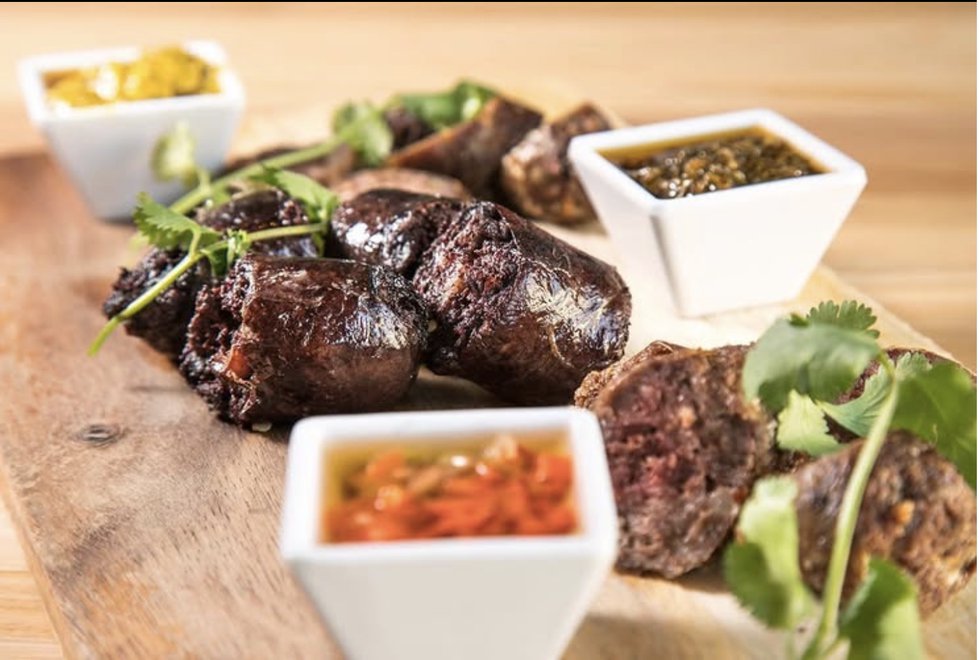
The Choriboard at Bodega Sur in Chicago
Argentinian fare is the calling card at Folklore and Bodega Sur, sister restaurants in different neighborhoods on the Windy City’s popular north side. Argentinian chorizo stars in several offerings on the meat-forward menus, according to Jenny Di Sapio, co-owner of both establishments.
“Chorizo in Argentina is more like an Italian sausage. It is the main part of our asado, or traditional barbecue. We make our traditional, or classic chorizo, spicy chorizo, and morcilla in-house for both restaurants,” Di Sapio explains.
Folklore’s Chorizo Trio, a selection of homemade Argentine sausages, includes classic/traditional chorizo, spicy chorizo, and morcilla, accompanied by chimichurri. Bodega Sur also serves a three-sausage chorizo dish, the Choriboard, along with a popular street food called the Choripan that’s made with homemade Argentine chorizo served in a sandwich with chimichurri.
“The chorizo and the spicy chorizo are the most similar, since the only difference is the spice level,” Di Sapio explains. “The morcilla is a blood sausage made with the restaurant’s own Argentine spices.”
The specifics about the restaurants’ chorizos might be a little confusing to customers (“We do have to explain how each of the three chorizos are different,” Di Sapio says), but that doesn’t negatively impact sales.
“Our chorizo dishes are very popular, and people really seem to love them. They are my father’s recipe. People come to buy them cooked and prepared to eat at our restaurants, and they also buy them raw, to cook and prepare for home or for barbecues, from my family’s butcher shop,” she reports. “Our chorizo dishes are unique, especially since we make them in-house, so people tend to want to try them whether they are first-time diners or regulars.”
And does the bottom-line benefit make the labor-intensive prep process worthwhile?
“Our chorizo is a lot of work to make, but we do it for the love we have for this food item and because it makes us unique in the market,” she adds.
CHICHERIA MEXICAN KITCHEN, Atlanta
A chorizo special created for a popular springtime food fest has become a best-selling sandwich at Chicheria Mexican Kitchen, a Baja-inspired concept at The Works in Atlanta’s Upper Westside.
O'Kelly Marketing Co.
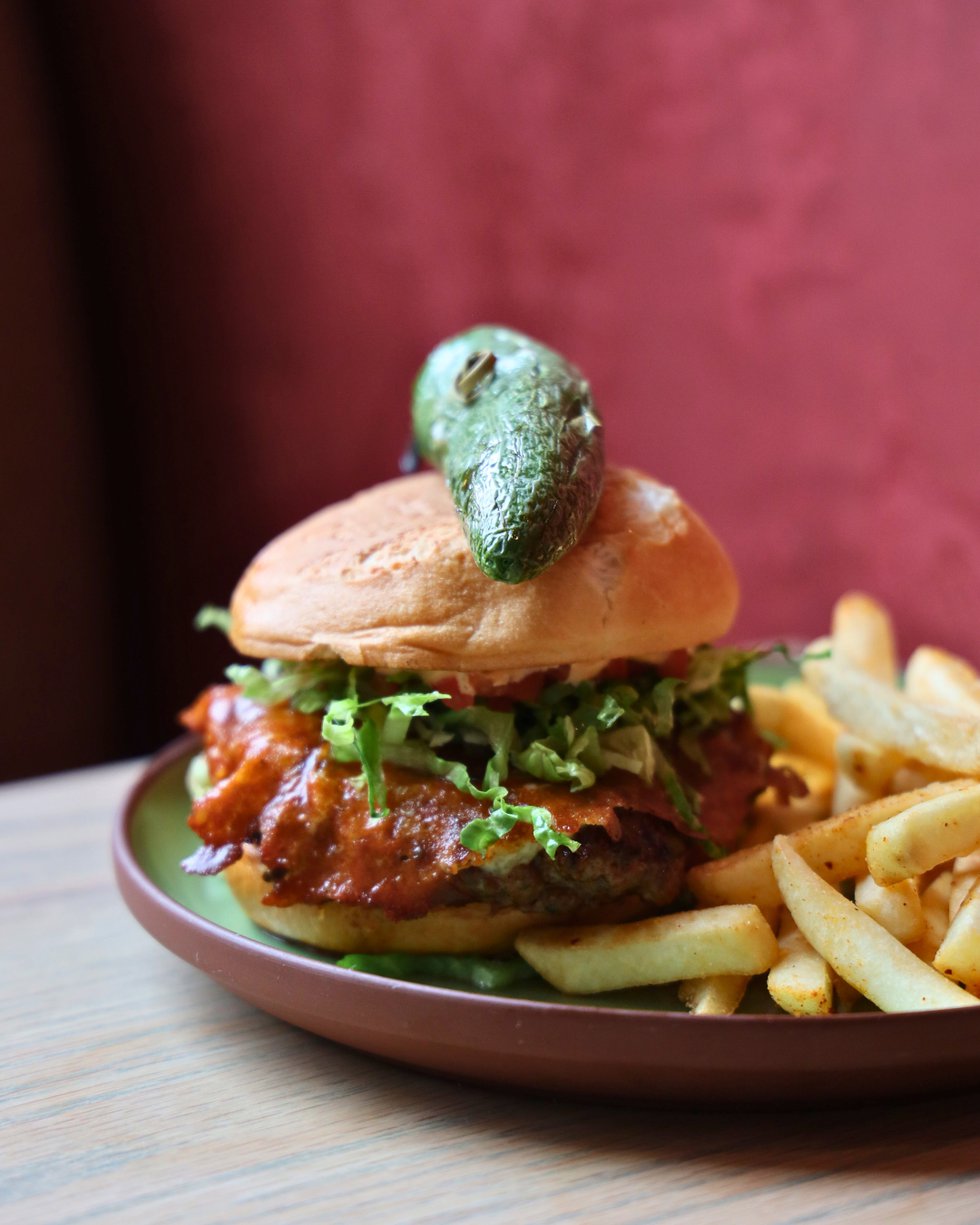
The Chorizo Smash Burger at Chicheria in Atlanta
“The Chorizo Smashburger was created specifically for Atlanta Burger Week as a way to showcase bold flavor while staying true to the smashburger format,” Chicheria Executive Chef Joey Vazquez recalls. “We wanted something that felt familiar but still exciting, and chorizo gave us just that. Our guests loved it so much, we ended up making it a staple on the menu. Many people have stated they couldn’t even tell it was gluten free.”
That now-famous burger isn’t the only menu item that is spiced up with chorizo.
“Chorizo is a versatile ingredient that works well across our menu — burger, brunch, appetizers, and even sauces. Guests are always curious and open to trying new flavors, and chorizo fits that trend while still feeling approachable,” the chef shares. “Beyond the Smashburger, we’ve used chorizo in a few dishes such as breakfast-style burgers, our brunch bowl, Cali salad, and as an add-on in our queso — very popular — and specials where it can really shine,” Vazquez says. “Overall, chorizo really pops when used correctly — and our guests love it!”
The news about Mexican chorizo isn’t only positive from the customers’ perspective; it’s a positive on the food cost front, too.
“From a food cost standpoint, [Mexican] chorizo is a good ingredient to carry,” Vazquez reports. “You don’t have to use much of it. Because of its strong flavor it really stands out in most dishes.”
Sidebar: Fun Fact
Chorizo arrived in Mexico with the Spanish conquistadors (and their pigs). In the 16th century, Hernán Cortés introduced pig farming in the Valley of Toluca; the animals, raised on local corn and within large grazing areas, were leaner than their Spanish cousins. This resulted in meat better suited for fresh sausage, a tradition for which Toluca soon became renowned. In fact, the local soccer team is affectionately known as “los choriceros,” aka “the sausagers.”
– FOOD & WINE: WHAT’S THE DIFFERENCE BETWEEN SPANISH AND MEXICAN CHORIZO
Sidebar: Morcilla vs.Chorizo
While often paired with chorizo, morcilla technically isn’t chorizo. One big difference: “Pig’s blood is an essential ingredient in morcilla and has a major impact on its taste, appearance, and consistency, whereas blood is not a factor in chorizo,” a story about Morcilla at The Spruce Eats explains. “While both undergo a curing process (morcilla is usually briefly boiled first), the aging period is much longer for chorizo than it is for morcilla.” And that raises another significant difference: “Whereas Spanish chorizo is usually sliced thin and eaten much like an Italian salami, morcilla is only semi-cured and therefore must be cooked before eating, either on its own or as an ingredient in other preparations.”
Sidebar: Mexican Chorizo: A Very “Brunchable” Ingredient
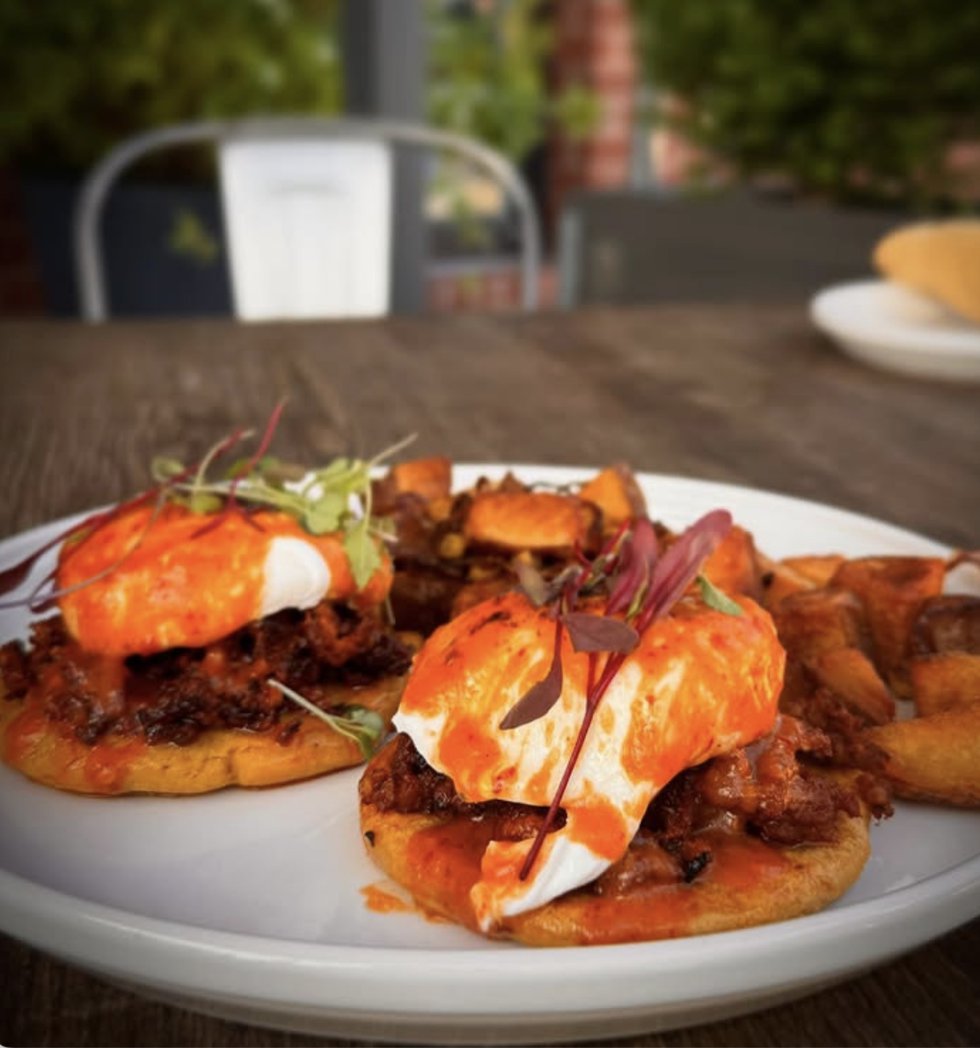
Chorizo Eggs Benedict at La Llorona Cantina Mexicana in Philadelphia
If you’re looking for ways to spice up your breakfast and brunch menus, glancing at the menu at La Llorona Cantina Mexicana in Philadelphia (named one of Philadelphia’s Standout Mexican Restaurants by Thrillist in 2022) is a good place to start. Mexican chorizo stars on several dishes, with a wide range of creative options on the brunch menu:
• The Chorizo Benedict, handmade sopes topped with chorizo, poached eggs, and chile de árbol hollandaise sauce, served with a side of home fries with corn, onions
• The Chorizo Burrito, a flour tortilla filled with scrambled eggs and mixed cheeses, served with lettuce, sour cream, pico de gallo and salsa verde on the side
• The three-egg Huasteco Omelette bursting with a filling of chorizo, nopalitos and beans, plus Monterey and cheddar cheeses, on a bed of pasilla salsa, topped with avocado, pico de gallo, and micro cilantro, and accompanied by home fries with corn, onions
Click here to go to the next article, Creative Salsas: Award-Winning Chef Reveals his Salsa Secrets