
Yanco González
By Alfredo Espinola
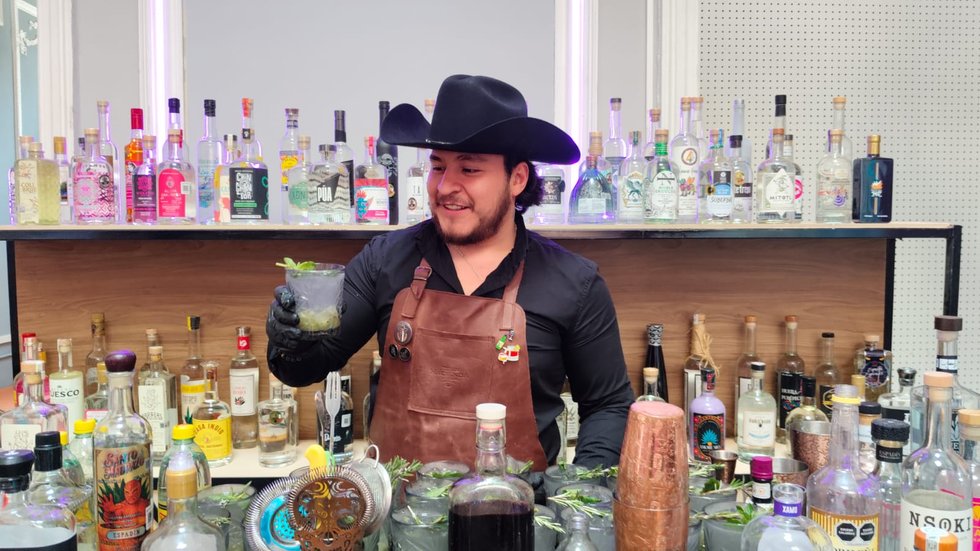
Originally from Mexico City, Yanco González discovered mixology thanks to a friend who took him to an event. What began as an invitation ended up sparking a curiosity that, years later, would become his profession.
“I was really drawn to the interaction with people,” he recalls. “I like being up front, explaining things to them, and meeting new people.”
He also found something he still particularly enjoys today: the chance to escape monotony. Every event, every customer, and every drink presents a different challenge.
He began his training in 2020, though the pandemic forced him to temporarily put his studies on hold. When the schools reopened, he resumed his training and started knocking on doors at events. His first experience came working with a mixology agency, where he started in the back bar, learning a part of the craft that consumers rarely see.
Today, with about five years of professional experience, Yanco works on various mixology projects, participates in events and brand activations, and runs his own agency, Shaker 27, dedicated to organizing bars and cocktail services for events.
A Tradition That Continues to Evolve
To understand the new generation of Mexican mixologists, we must take a brief look back.
Long before contemporary bars, Mexico already had a rich culture centered on beverages. Pulque, made from maguey sap, has pre-Hispanic roots. With the arrival of the Spanish came new techniques, ingredients, and production methods that would transform the world of Mexican beverages.
Over time, taverns and cantinas emerged—spaces that became hubs of social interaction and helped build a culture centered on drinking. Tequila and other agave spirits gradually developed their own identities, while international influences introduced new techniques and recipes.
Contemporary Mexican mixology is, in many ways, the result of that convergence: tradition and experimentation.
And it is precisely in this realm that Yanco carries out his work.
From Bartender to Mixologist
The difference between a bartender and a mixologist may seem minor, but for Yanco, it is fundamental.
A bartender works primarily with established recipes. A mixologist, on the other hand, studies spirits and seeks to create new experiences using them.
“He’s the one who specializes in spirits and is responsible for creating new things with whatever he has on hand,” he explains.
That search for new combinations is an essential part of his work. Even when dealing with a well-known brand, the challenge lies in discovering new possibilities.
Yanco began working with Richard Pernod in 2023, participating in event activations and developing cocktails using their products. Later came a partnership that would become one of the most important of his career: Suntory.
With Suntory, he participates in exhibitions throughout Mexico, developing and presenting mixology concepts for various brands in its portfolio, including Jim Beam, Hornitos, and Midori. His work consists not only of preparing drinks but also of explaining to the public how the products can be enjoyed and mixed.
He also collaborates with Madrileña, a company that was later acquired by Bepensa, participating in cocktail events and presentations of their spirits.
Another important project is Finca de Tepa, with whom he works specifically on creating cocktails centered around tequila, a spirit in which he acknowledges having particular expertise.
Mezcal, on the other hand, represents uncharted territory for him.
And that seems to excite him more than it intimidates him.
“There are more and more agaves, more and more regions where it’s produced—it’s more traditional,” he says.
For a mixologist, knowing a spirit means much more than just knowing how to mix it. You have to understand its origin, its alcohol content, its characteristics, and what makes it unique.
Creating also Means Listening
Yanco has a quirk that might seem like a problem for someone who works behind a bar: he isn’t particularly fond of sweet cocktails.
He drinks his coffee without sugar and, in his own words, adds practically no sugar to anything.
But he soon discovered that a bar can’t be built around the mixologist’s personal taste.
“For me, the drink is fine without sugar,” he explains. “But it has to suit everyone’s taste.”
That’s where one of the most interesting aspects of the craft comes in: creating means listening.
A good cocktail may reflect the personality of the person who makes it, but it must also appeal to the palate of the person who drinks it.
That search for balance is especially important to Yanco, who observes with some concern a trend he considers increasingly common: hiding the character of the spirit behind overly sweet flavors.
For him, the main ingredient must remain prominent.
If mezcal is used, its smoky character should be detectable. If tequila is used, its personality should be recognizable.
His favorite drink, the Negroni, sums up that philosophy quite well: an intense, bitter, and dry cocktail where sweetness doesn’t take center stage.
Learning from the Back Bar
Like many professionals who start at the bottom, Yanco had to deal with egos and competition within the industry.
In his early jobs, he started in the back bar, responsible for keeping supplies, ice, bottles, and ingredients available for those working the front of the house.
It wasn’t the most visible position, but it was a learning experience.
There he learned that behind good service lies a tremendous amount of work that the customer never sees: inventory management, ingredient preparation, organization, and the ability to anticipate what will happen during an event.
A Mentor in a Foreign Land
A pivotal figure also appeared in his career: Rafael Panekatl, whom Yanco recognizes as one of his greatest mentors.
They met during an exhibition in Zapopan. Yanco was working as head bartender at Suntory and found himself in a place where he knew practically no one. Rafael, on the other hand, was a renowned professional. That encounter turned into a friendship and later into a collaboration.
“He’s very passionate about what he does,” Yanco recalls. “He taught me a lot.”
This relationship represents an important part of mixology culture: knowledge passed down from one generation to the next.
Techniques can be studied. Recipes can be written down. But there are things you can only learn by watching someone with experience behind the bar.
A New Generation Seeks Experiences
Consumers are changing, too.
Yanco observes that younger generations are discovering drinks in a different way. Social media, influencers, and digital trends have a huge influence on what young people want to try.
A drink is no longer just a drink. It’s also an experience, an image, and, often, content to share.
Hence the growth of ready-to-drink products, non-alcoholic beverages, and increasingly accessible flavored cocktails.
Yanco isn’t opposed to this evolution. What he questions is that, at times, the industry seems more interested in following a trend than in preserving the product’s identity.
“By trying to please everyone, you sometimes end up pleasing everyone and no one,” he reflects.
It’s an observation that sums up his stance: innovate, yes, but without losing what makes a spirit special.
The Future of the Bar
For Yanco, Mexican mixology has a promising future.
There are more and more opportunities for bar professionals, and more and more events are incorporating mixology as a central part of the experience.
Social media has also helped bring visibility to a profession that for a long time remained behind the bar—literally.
But Yanco isn’t just thinking about his future as a mixologist.
One of his main goals is to grow Shaker 27 and build his own team of professionals.
He’s already involved in coordinating and sending mixologists for projects with brands such as Madrileña, Finca de Tepa, and Suntory. His intention is to expand that structure and become a hub connecting brands with cocktail professionals.
It’s a natural evolution: moving from making cocktails to building a team capable of doing so.
Don’t Lose Your Passion
When asked what advice he would give to those just starting out in the profession, Yanco doesn’t talk about fame or contracts.
He talks about patience.
“Don’t get discouraged,” he says.
Keep honing your skills. Get to know the spirits. Experiment. Don’t lose your curiosity.
Because in mixology, perhaps the most important question remains the simplest one:
What would happen if we mixed this with that?
For Yanco, that spark is essential.
He also acknowledges that the journey includes uncertainty, difficult moments, and a dose of luck. But he insists on something he seems to have learned from his own experience: you have to keep moving forward.
The Cocktail That Opens Doors
At the end of the conversation, an inevitable question arises: with what drink would Yianco toast the young man he once was?
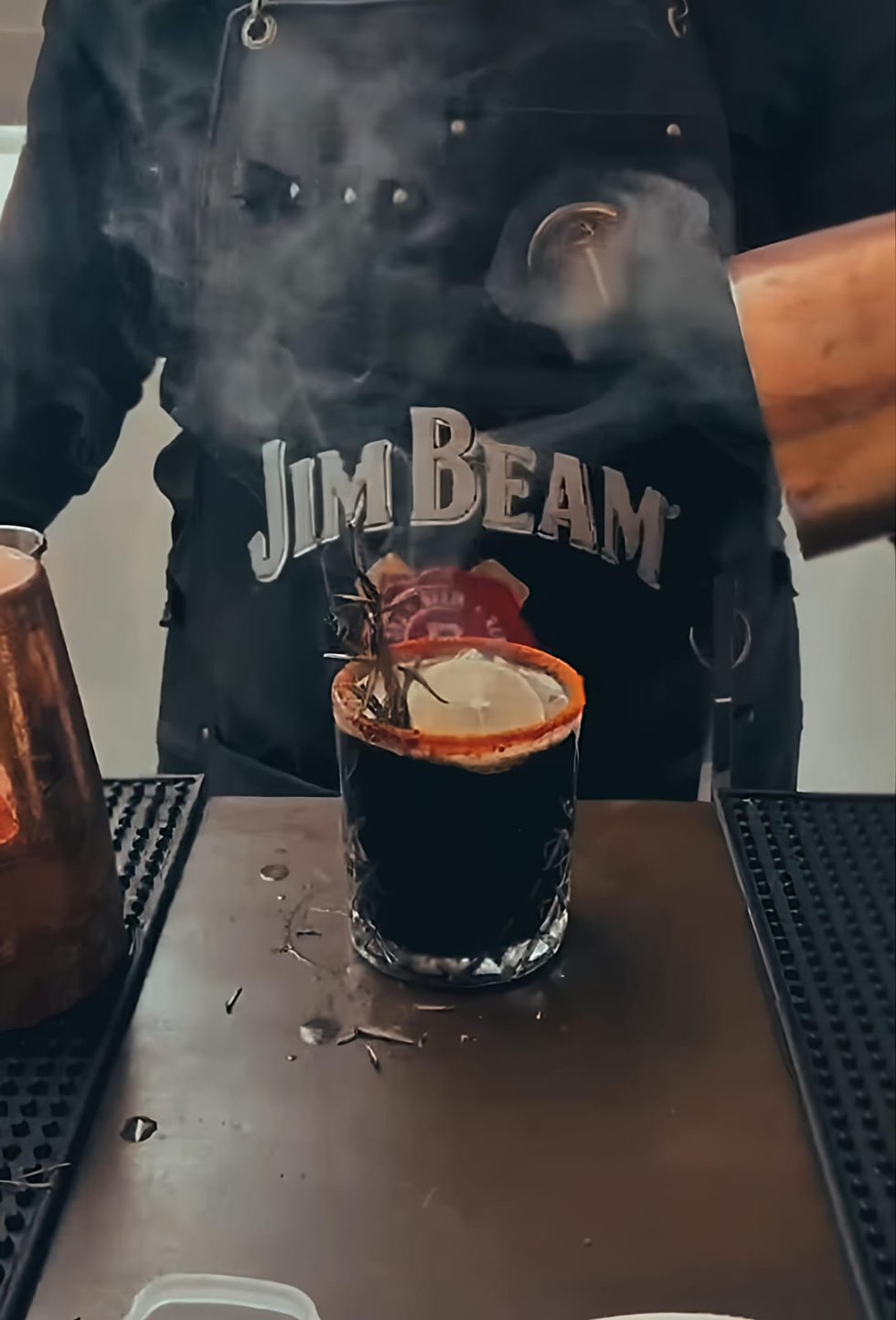
The answer is a creation of his own: Tequila, passion fruit, pineapple, lemon, agave nectar, and activated charcoal. The result is a black cocktail that, he says, has opened doors for him.
It’s a drink that sums up his approach to mixology quite well: a Mexican spirit as a starting point, familiar ingredients, a contemporary technique, and the desire to surprise.
And as long as there’s someone willing to try a new ingredient, listen to the customer, and wonder what would happen if two seemingly opposing flavors came together in a glass, the story of Mexican mixology will continue to be written.