
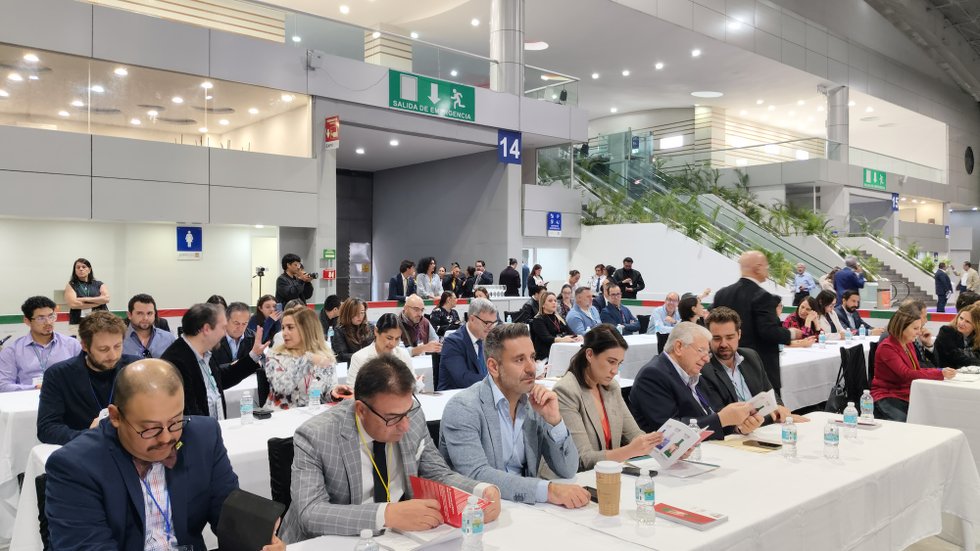
Participants at Wine Experience & Fine Food 2026 in Mexico City listen to a presentation.
By Alfredo Espinola
Mexico City was the setting for an event aimed at building bridges between wine, gastronomy, and hospitality on November 5-6. Wine Experience & Fine Food Mexico City 2026 brought together producers, importers, distributors, associations, and professionals from various countries to share knowledge, discover new ideas, and forge paths of collaboration for an industry in constant evolution.
The arrival of this international exhibition in Mexico represents, in the words of its organizers, the beginning of a new era for the sector. The event brings together wines, premium beverages, gastronomy, and hospitality under one roof.
A Community That Makes the Event Possible
Representatives from the wine and hospitality industries, associations, producers, importers, distributors, and institutions contributed their time, expertise, and networks to shape the project. The organizers highlighted the Mexican community’s response as a sign of generosity, trust, and collective vision.
Molly Matelski, director of global programming and partnerships for United Experience, noted that hospitality means making space for other people, cultures, and ways of viewing the world. That philosophy, she explained, also guides the growth of Wine Experience: each edition must be built together with the community it seeks to serve.
The organization has hosted events in cities such as Ho Chi Minh City and London—diverse markets that share a common conviction: relationships are the foundation of lasting business. In Mexico, this premise took shape thanks to the participation of importers and distributors, chambers of commerce, associations, wine-producing regions, educational institutions, and wine clubs.
The fair’s experience was designed to foster more personal and productive interactions. A lounge-style space and a matchmaking app to coordinate meetings and networking activities aim to facilitate dialogue among buyers, producers, and industry leaders. These are complemented by blind tastings, conversations with experts, and initiatives that introduce chefs and buyers to the world of food and wine.
The agenda also includes the Market Shaker Awards, dedicated to recognizing individuals and organizations whose work has helped transform Mexico’s wine and hospitality industry. Another highlight is “Women and Wine,” a mentoring and networking event that brings together women from Italy, Mexico, and the United States to share experiences, strengthen professional networks, and open up new opportunities.
Italy and Mexico: Affinities That Cross Borders
The event’s international scope was reflected in the participation of BolognaFiere, an Italy-based exhibition organizer. Raúl Barbieri, the group’s director of new events, welcomed producers, importers, distributors, and industry professionals, and thanked the companies that have bet on the potential of the Mexican market.
Barbieri emphasized that wine is much more than a product: it is culture, territory, and tradition, as well as a universal language capable of connecting people and countries. Italy and Mexico, he noted, share a deep-rooted culture of hospitality, a love of socializing, and a passion for gastronomy. For BolognaFiere, Mexico represents a market of great interest, both for its commercial opportunities and for consumers’ growing curiosity about the origin, quality, and stories behind each bottle.
Wine Experience was created with the ambition of becoming a platform for networking and business—not merely an exhibition dedicated to wine. Through initiatives in Asia, Europe, and Latin America, BolognaFiere and United Experience seek to build an international network that brings Italian wine closer to strategic markets. Mexico plays a significant role within that vision.
Wine Finds Its Place at the Table
The restaurant industry’s participation provided an essential perspective: the restaurant is one of the places where wine becomes an experience and reaches the consumer. Claudia Ramírez del Palacio, national executive president of the National Chamber of the Restaurant and Seasoned Foods Industry (CANIRAC), celebrated the fact that Wine Experience & Fine Food brought together producers, sommeliers, and decision-makers with the restaurant sector.
Every glass that reaches a table, she noted, represents a value chain that begins in the vineyard and continues through the producer, importers, distributors, sommeliers, and professionals who recommend and serve the wine. When everyone collaborates, opportunities are created for every link in the chain. Restaurants, she added, serve as a bridge between the source and the consumer: they can turn a bottle of wine into a discovery, tell the story of a region, and enrich the dining experience through service and food pairing.
Ramírez del Palacio also highlighted the place Mexican cuisine holds in the international gastronomic conversation. Linking wine to this culinary richness allows for new experiences for both visitors and the local public, while opening up opportunities for Mexican and international producers. The goal, he said, is for the fair’s encounters to translate into lasting relationships: new customers for wineries and attractive offerings for diners.
A Mexican Industry with Room to Grow
From Querétaro, Eugenio Parrodi, president of the state’s Wine Cluster, shared the importance of participating in an international forum that allows for learning from other regions and strengthening the local wine identity. He specifically mentioned Italy’s experience with protected geographical indications, a model for Querétaro’s efforts to recognize and protect its wine-producing region.
Parrodi expressed the pride Querétaro producers take in their wines and their willingness to collaborate, listen, and forge ties with other wine-producing regions. Building a solid regional identity, as his remarks emphasized, requires a shared vision and collective effort.
For his part, Salomón Abedrop López, president of the Mexican Wine Council, highlighted the growth potential of wine consumption in Mexico. He noted that there is still ample opportunity to introduce this beverage to more people and make it a part of everyday dining. In this regard, he welcomed foreign wines—including Italian ones—believing that their presence can help expand knowledge of and consumption of wine in the country.
Abedrop insisted that the challenge lies not only in offering more wine labels but also in developing a wine culture. To achieve this, he considered it essential to join forces among Mexican producers, importers, restaurants, and industry organizations, as well as to strengthen the knowledge and skills of restaurant staff so they can recommend and serve wine with greater confidence.
Institutional Cooperation and Commercial Opportunities
Valentina Valente, head of the economic section at the Italian Embassy in Mexico, highlighted the close relationship between the two countries and the mutual interest that exists in the wine sector. The presence of more than 1,000 wine labels and nearly 120 Italian wineries at the exhibition—according to the figures mentioned during her remarks—offered concrete evidence of that interest.
Valente thanked the organizers and the Italian institutions that made the business participation possible. She also referred to the dynamism of the economic ties between Mexico and Italy and the prospects that, in her view, the modernization of the agreement between the European Union and Mexico opens up. In particular, he highlighted the opportunities that could arise for the agri-food and wine sectors through simplified export procedures and a reduction in tariff barriers.
Mexico City as Host
On behalf of the Mexico City Joint Tourism Promotion Fund, Omar Monroy Rodríguez, Director of Conferences and Conventions, welcomed the participants and conveyed greetings from the capital’s Secretary of Tourism, Alejandra Frausto. He emphasized that hosting Wine Experience & Fine Food at Expo Santa Fe confirms the city’s capacity to host international exhibitions and conventions, thanks to its infrastructure, connectivity, and professionalism.
Monroy Rodríguez described the capital as a meeting point between a millennia-old cultural heritage and a cosmopolitan culinary scene. He also noted that meetings tourism, along with wine and culinary tourism, can contribute to economic development when driven by principles of sustainability, responsibility, and social inclusion.
For the official, wine and haute cuisine are cultural expressions and ways of working that can foster dialogue among nations. He invited buyers, professionals, and investors to take advantage of the event to forge partnerships and to consider Mexico City as a host city and partner for future projects.
A Beginning and an Invitation to Build Together
The ceremony concluded with a thank-you to the institutions, associations, and professionals who made the first edition possible. The various speeches converged on a central idea: the industry’s growth depends on collaboration, the exchange of knowledge, and the ability to forge relationships that extend beyond a trade show or business meeting.
With the ribbon-cutting, Wine Experience & Fine Food Mexico City 2026 officially opened its doors to two days of discovery, tastings, conversations, and new opportunities. Producers and visitors were invited to tour the exhibition, meet the participating wineries, and join a program designed to bring markets together, share experiences, and strengthen the ties between wine, gastronomy, and hospitality.
More than just an opening ceremony, the event marked the beginning of a conversation between Mexico and the world—a conversation that recognizes the value of local identities, celebrates the diversity of wine-growing regions, and champions a wine culture that thrives through curiosity, education, and collaboration.
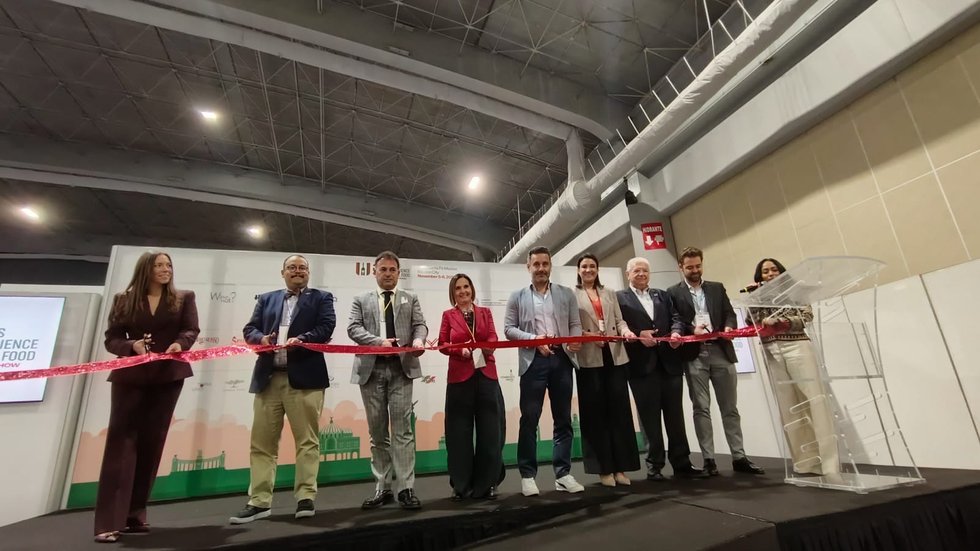
Molly Matelski, representante de United Experience; Omar Monroy Rodríguez, director de Congresos y Convenciones, del Fondo Mixto de Promoción Turística de la Ciudad de México; Raúl Barbieri, director de nuevos eventos de BolognaFiere; Valentina Valente, responsable de la sección económica de la Embajada de Italia en México; Francesco Brocchi, vicepresidente de la Cámara de Comercio Italiana en México; Claudia Ramírez del Palacio, presidenta ejecutiva nacional de la Cámara Nacional de la Industria de Restaurantes y Alimentos Condimentados (CANIRAC); Salomón Abedrop López, presidente del Consejo Mexicano Vitivinícola; Eugenio Parrodi, presidente del Clúster Vitivinícola de Querétaro