
By Alfredo Espinola
In the world of wine, time is often measured in decades, though sometimes in centuries. That is why it is particularly significant when a young project manages to establish itself quickly without losing depth. Such is the case with Viñedos San Miguel, a winery located in Guanajuato that, in just over a decade, has built a clear identity based on respect for the terroir, in-house production, and a far-reaching business vision.
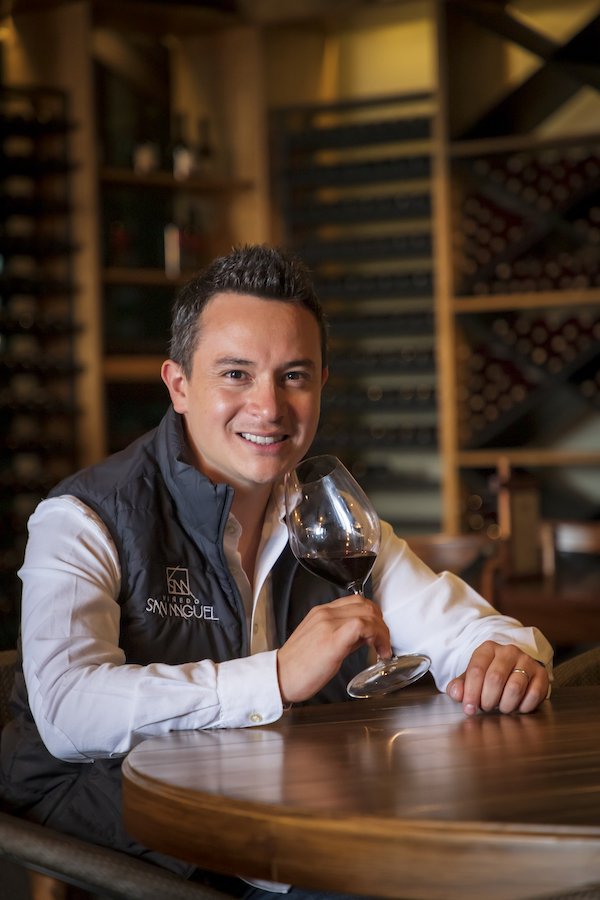
At the helm of the project is Jorge Solís, the winery’s general manager, who explains that the winery’s history cannot be understood without the business group of which it is a part.
LIDER_EP
Jorge Solís
“We are part of Grupo Cuadra, a Mexican company originally from León, Guanajuato, dedicated to the design and production of leather goods. Today, the group comprises around 15 companies with a presence in Mexico and abroad. Viñedos San Miguel was born within that structure, but with a completely different focus: that of wine, gastronomy, and the experience.”
From Tuscany to Guanajuato
The project’s origins date back to 2012, when the group acquired Villa Petriolo, a historic property in Tuscany, Italy, which, after years of restoration, became an internationally recognized sustainable boutique hotel.
“That project in Italy left us with a very clear legacy: respect for the land, gastronomy, sustainability, and wine. From there, the idea arose to do something similar in Mexico, in our own state,” says Solís.
The decision was made to establish the vineyard in the state of Guanajuato, where planting began in 2014. The project was born with three simultaneous pillars: viticulture, real estate development, and tourism.
Jorge Solís explains, “We planted the vineyard and at the same time began developing residential land. It was a catalyst project for the region. Today there are many real estate vineyards, but at that time it was something innovative.”
A young vineyard with early results
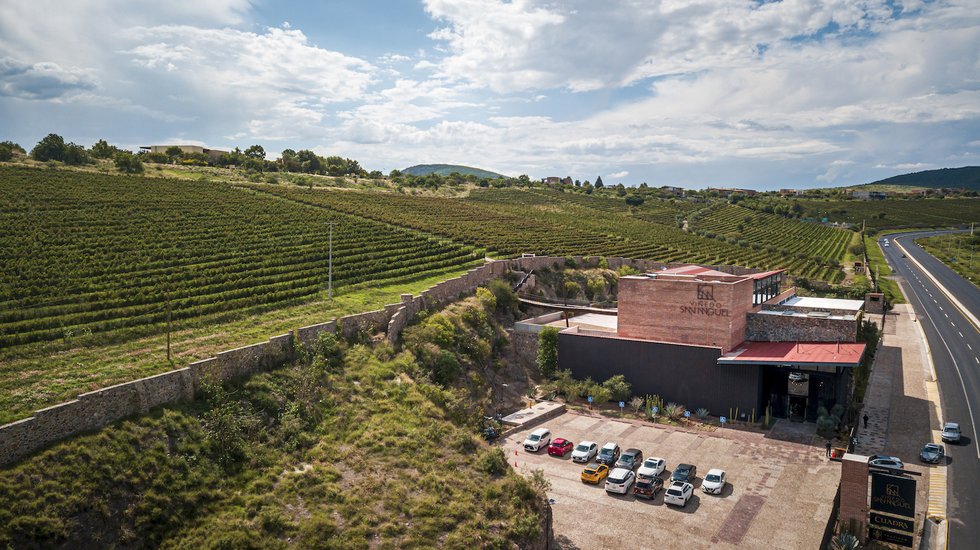
Currently, Viñedos San Miguel has 52 hectares of vineyards, making it one of the largest in the state, and from the start, the decision was made to work exclusively with grapes grown on the estate.
“We don’t buy grapes or wine. Everything we produce comes from our own land. Some years are better than others, because we depend on the weather, but we believe the only way to represent Guanajuato is with grapes from Guanajuato,” he explains.
The varieties planted include:
- Cabernet Sauvignon
- Cabernet Franc
- Syrah
- Merlot
- Malbec
- Monastrell
- Garnacha
- Nebbiolo
- Sauvignon Blanc
- Chardonnay
- Semillon
These are currently used to produce 12 labels, including whites, rosés, blends, single-varietal wines, and reserves, all under the guidance of our winemaker Alejandra Cordero.
The first vintage was in 2016 and marked a turning point.
“What is normally considered a trial vintage ended up winning a Grand Gold Medal at the Brussels World Competition, Mexico Selection. It was the first major medal for Guanajuato. That confirmed to us that the terroir had enormous potential,” she says.
Since then, the winery has accumulated more than 130 international medals in competitions such as Decanter, Bacchus, Mundus Vini, Virtus, and the Brussels World Wine Competition itself.
Last year we won the gold medal at the Canterbury competition, held in England.
This competition, with a 23-year history, is considered the most important in the world due to the large number of samples evaluated and the high level of expertise among its judges.
“In the entire history of the competition, Mexico has only won four gold medals, and we had the honor of being the fourth gold,” Jorge Solís added proudly.
Building a region, not just a brand
For Solís, one of the greatest challenges has been positioning Guanajuato as a wine-producing region.
“In the world of wine, people don’t talk about a single winery; they talk about regions: Rioja, Ribera del Duero, Mendoza, Napa. Our goal is that one day, when someone reads ‘Guanajuato’ on a label, they’ll know it’s a guarantee of quality.”
Today, the state is the fourth-largest wine producer in Mexico, with more than 60 wine projects, many of them geared toward tourism.
The winery and wine tourism
The current winery, inaugurated in 2020, spans 7,000 m² and was conceived as a space where wine is the centerpiece of a complete experience.
The project includes:
- Guided tours and tastings.
- Social and corporate events.
- The Cuadra Shop.
- Two restaurants.
- Gastronomic and cultural experiences.
“People don’t just come to drink wine; they come to learn, to discover, to experience something different. More than 80% of those who take a tour want to understand the process,” he explains.
Cuisine with a Guanajuato identity
One of the elements that sets Viñedos San Miguel apart is its culinary offering, featuring two restaurants: Viva la Vid, with an informal style, and Trasiego, both led by chef David Quevedo, world champion of the Pinchos and Tapas Competition held in Valladolid in 2021. His culinary approach is distinguished by the use of traditional ingredients and techniques from the state, reinterpreted with creativity and excellence.
“We wanted the cuisine to have the same DNA as the wine, so you’d know you’re in Guanajuato,” he says.
Among the elements that make up the experience are:
- Reinterpreted traditional cuisine.
- Use of local ingredients such as escamoles, garambullo, and xoconostle.
- Otomí ceremonial tortillas.
- Ancestral preservation and cooking recipes.
- Pairings designed with the house wines.
“We didn’t want to repeat what’s found everywhere. We wanted visitors to take home something unique.”
Philosophy, quality, craftsmanship, and continuous improvement
Within the group’s culture, the project is guided by four pillars:
- Craftsmanship.
- Quality.
- Continuous improvement.
- Human values.
“Here, no one is better than anyone else. We are a value chain. Success depends on everyone,” he says.
Currently, the winery employs around 90 staff members, many of whom have been there since the initial planting.
The future: vineyard maturity and international expansion
Solís explains that, just over ten years after planting, the vineyard has entered a key stage.
“The vines begin to show their best expression after ten years. We are entering a stage of maturity that will allow us to make increasingly complex wines.”
Future plans include:
- Consolidating exports to the United States and Central America.
- Strengthening the international presence.
- Continuing to develop wine tourism.
- Promoting Guanajuato’s cuisine abroad.
- Maintaining 100% in-house production.
“Wine is not a competition; it is an art to be shared. Our goal is not to be better than others, but to represent Guanajuato and Mexico well,” emphasizes Solís.
After more than a decade of work, Viñedos San Miguel remains committed to the same principle with which it began: growing slowly but with deep roots, and with the conviction that, as with wine, time always proves us right.
Viñedos San Miguel