
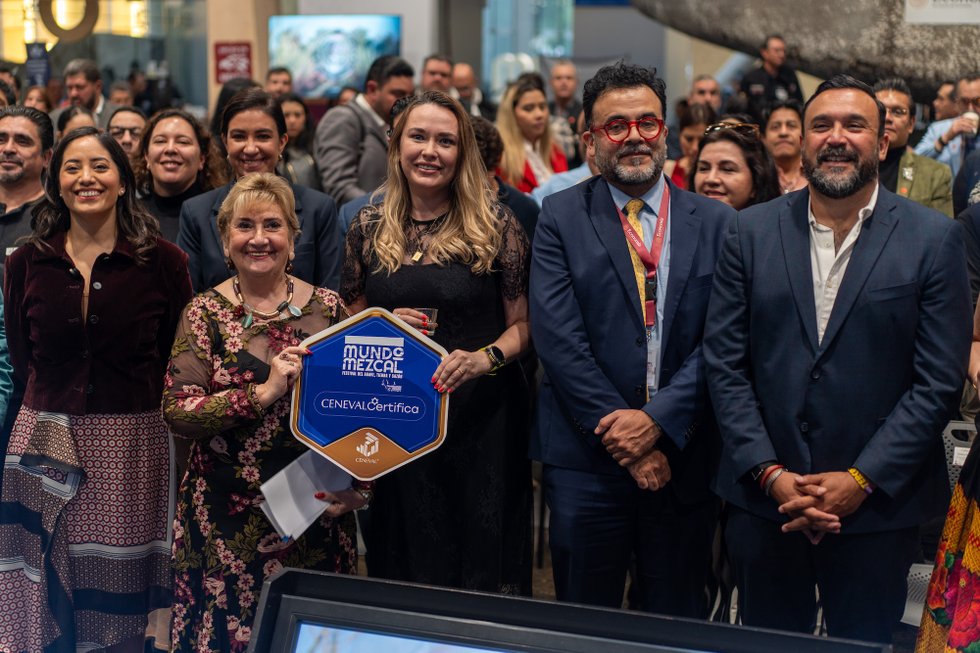
Officials of Mundo Mezcal announced that Tamaulipas will be the guest of honor during a ceremony held at the headquarters of the Ministry of Economy in May.
By Alfredo Espinola
In the highest reaches of the Sierra Madre Oriental grows an agave little known even to many Mexicans. It is called Agave montana, and its presence is limited to a few select regions. Tamaulipas is one of them.
Adapted to mountain ecosystems and considered one of the country’s most unique species, this agave represents a treasure that for years remained out of the spotlight. Today, however, it is part of a much broader conversation: that of Mexico’s extraordinary agave heritage and the need to recognize it in all its diversity.
With this vision in mind, the second edition of Mundo Mezcal | Festival del Agave, Tierra y Sazón, to be held October 16–18 in the gardens of Campo Marte in Mexico City, announced Tamaulipas as its guest of honor during a ceremony held at the headquarters of the Ministry of Economy.
The choice is no accident. At a time when the Mexican spirits industry finds its greatest strength in diversity, Tamaulipas is emerging as one of the regions with the greatest potential to enrich the national agave narrative.
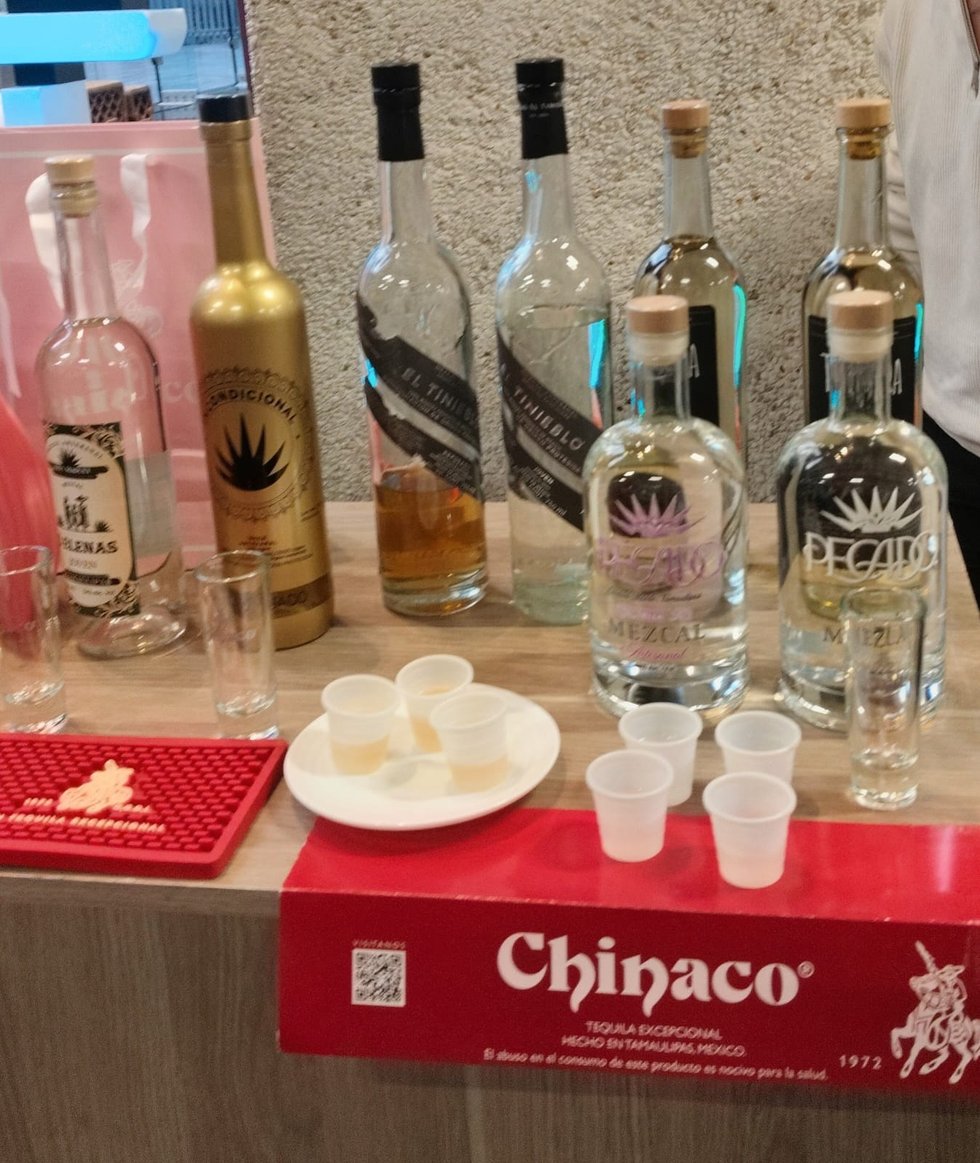
Chinaco Tequila comes from Tamaulipas, Mexico.
Mexico is home to one of the world’s most complex agave traditions. In addition to the richness of mezcal—protected by its Denomination of Origin in twelve states—there are traditions such as raicilla, bacanora, and a vast diversity of species capable of producing sensory profiles deeply tied to their regions of origin.
“Just a few years ago, mezcal was a drink that was little appreciated outside certain regions. Today, it is paving the way for many other agave spirits that we do not yet know or appreciate enough. Mundo Mezcal seeks to bring these artisanal expressions to more people and open the right doors so they can find the recognition they deserve,” said Marisol Rumayor, the festival’s general coordinator.
Tamaulipas represents precisely this new frontier of Mexican agave. Its industry is in a phase of consolidation, with an estimated annual production of 300,000 liters and a state fund of 10 million pesos allocated to strengthen legal frameworks and provide certainty for producers.
The state will participate with a delegation of around 50 representatives from ten municipalities, who will bring to the capital a sample of the state’s gastronomic, artisanal, tourist, and productive wealth.
“We have eleven municipalities with Mezcal Designation of Origin and eleven with Tequila Designation of Origin, a distinction that places us among the states with the greatest potential for the development of this industry,” stated Benjamín Hernández, Secretary of Tourism for the Government of Tamaulipas.
Along with Tamaulipas, states such as Aguascalientes, Campeche, Guanajuato, Michoacán, Sonora, and Mexico City itself will take part in the event, showcasing how the Mexican agave universe is built upon diverse geographies, histories, and traditions.
The nation’s capital, moreover, once again plays a strategic role. Considered the main domestic market for mezcal, it will once again serve as a meeting point for producers, consumers, specialists, and promoters of agave culture.
“Hosting the event for the second time reaffirms our ability to connect the various links that enable Mexican agave to transcend borders,” said Omar Monroy Rodríguez, Director of Groups and Conventions at the Mexico City Joint Tourism Promotion Fund.
But the industry’s growth also poses new challenges. One of them is promoting a culture of responsible drinking. For this reason, the Commission for the Wine and Spirits Industry (CIVyL) is joining the festival through the #BuenCopismo campaign.
“To continue promoting, producing, distributing, and, above all, consuming alcoholic beverages in Mexico, it is essential to talk about responsible drinking. We want beverages with a designation of origin to continue to be enjoyed responsibly,” explained Panambí Garcés, general director of CIVyL.
Another significant announcement was the partnership between Mundo Mezcal and the National Center for Higher Education Assessment (CENEVAL), which will develop a micro-credential program aimed at producers, mezcal masters, and stakeholders in the value chain.
“An industry so valuable to Mexico requires mechanisms to identify, strengthen, and showcase the specialized skills and competencies of its members,” noted María Elena Barrera, advisor to CENEVAL’s General Directorate.
Following a first edition that drew more than 8,000 attendees, nearly 400 exhibitors, and an estimated economic impact of 50 million pesos, Mundo Mezcal returns with even more ambitious goals. The outlook for 2026 includes 10,000 visitors, more than 250 agave spirits, and dozens of tastings, conferences, and specialized workshops.
Beyond the numbers, the purpose remains the same: to demonstrate that the future of Mexican spirits depends on recognizing the extraordinary biological, cultural, and human richness that makes them unique in the world.
Because behind every bottle there is much more than just a drink. There is landscape, memory, biodiversity, and entire communities that have found in agave a way to preserve their identity and project it into the future.