
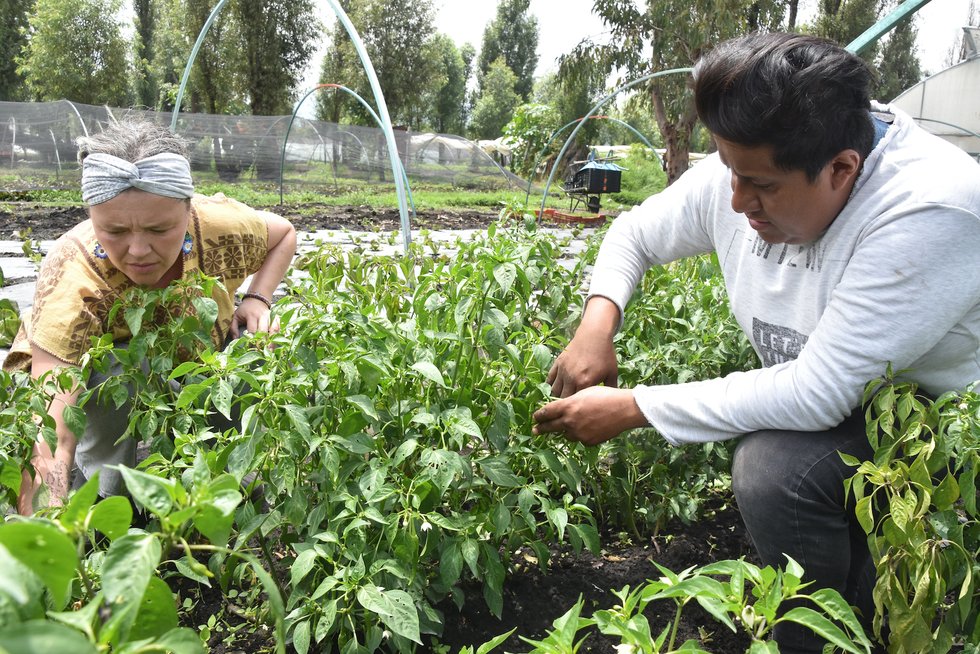
Diana López del Rio and Ernesto Garcia Zeferino
By Joseph Sorrentino, writing from Mexico
Editor’s Note: Freelance writer Joseph Sorrentino’s travels take him to big cities and small pueblos alike as he explores the culinary history of ingredient and current dining trends found throughout Mexico. Here, he focuses on the chile chicuarote, a pepper that has been thrust into the spotlight after a comment from the country’s president.
When I first wrote about chile chicuarote in 2023, it was virtually unknown outside of San Gregorio Atlapulco, a pueblo in the southern part of Mexico City, where it has been exclusively cultivated for centuries and probably since prehispanic times. Amazing what a plug from a president can do for a chile!
In 2025, Mexican president Claudia Sheinbaum declared it a "national treasure." Since then, there's been an explosion of interest in it — documentaries, YouTube videos and articles. Three years ago, I wrote about Ernesto Garcia Zeferino, who grew the chile, and how chef Diana López del Rio — owner of the acclaimed Mux Restaurante in Mexico City's Roma Norte neighborhood — used it. López was interested enough in the chiles that she spent a day harvesting them alongside Zeferino. In 2023, she had just started to cook with them and much of what she was doing was trial and error, trying to figure out how it could complement her dishes. I decided to check in with them to see how things have been going since we last talked.
But first, a bit about the chile and where it comes from.
Chile chicuarote is grown in the chinamperia, an ancient agricultural area. People like Zeferino (check out his Facebook page here: https://www.facebook.com/ernezto.garcia.3) who farm the land are called chinamperos. The chinampería was built in a shallow lake bed in what is now Mexico City and is comprised of rectangular areas called chinampas, separated by narrow canals. There's evidence that the first chinampas were built 5,000 years ago and it's believed the chinampería itself is about 4,000 years old. San Gregorio has the largest extant chinampería and the only one still used for growing vegetables. Among them, its famous chile.
The meaning of chicuarote is a little uncertain but it's definitely a Nahuatl word. Javier Márquez Juárez, a San Gregorio resident well-versed in indigenous culture and history, believes the Nahuatl name was chicualoni, which he translated as "chile with good flavor."
On the Mux Menu
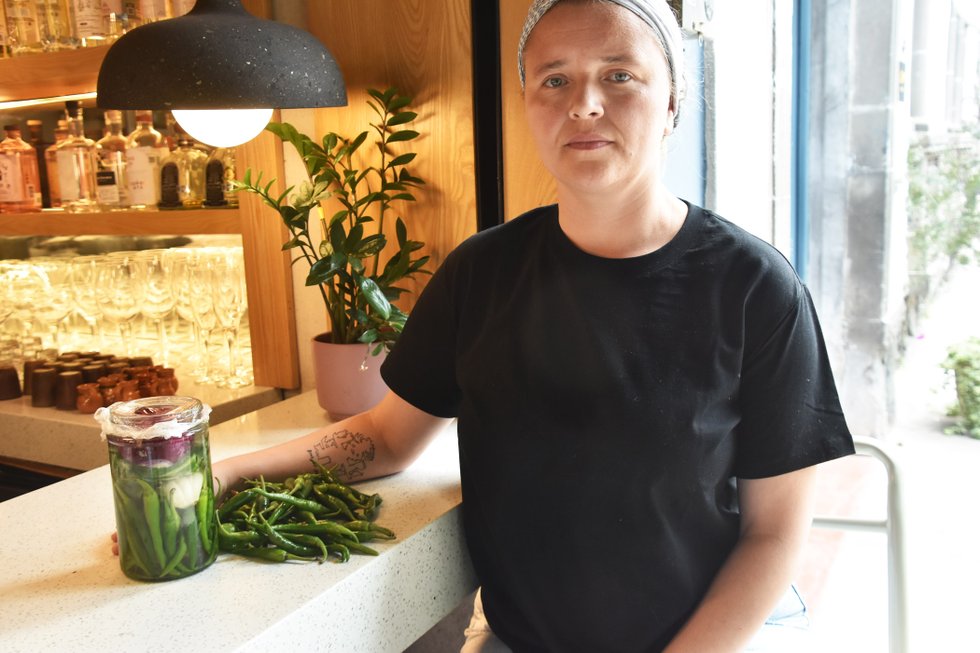
Chef Diana López del Rio with chile chicuarote
Juárez’s seems like a good translation for chicualoni and one with which López agrees.
“The chile is unique,” says López. “There is no equal. The flavor is very green, fresh. It is spicy but not too intense. Similar to a jalapeño but nothing like habanero. It gives more flavor to the herbs, it complements them.”
She uses fresh chiles in several dishes, including carne de puerco, a dish made with pork; tamales; and chicharron en salsa verde, deep fried pork skin in a green salsa. She insists on only using chicuarote in these dishes. “If we use another chile, it will be very different,” she explains. “Other chiles do not have the fresh notes that chicuarote does.” When she cooks the chile with produce from the chinampería, “everything is in harmony.”
López also ferments the chile using water and salt. She uses the chiles in salsas and the liquid as a seasoning, like soy sauce. López likes to educate customers, telling them a bit about the chile. “They are surprised,” she says, “but everything in Mexico is a surprise.”
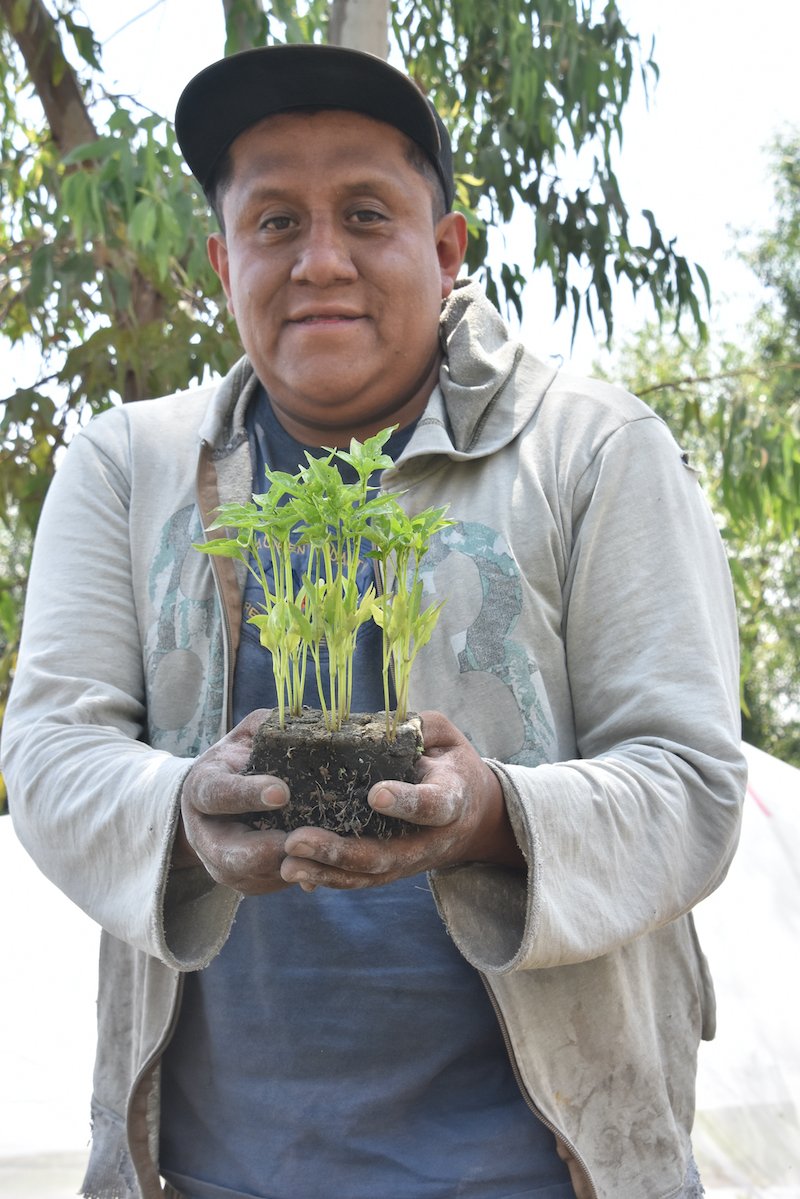
Ernesto Garcia Zeferino
The Grower and the Harvest
Zeferino is the fifth generation of his family to grow the chile. When I spoke with him in 2023, he figured maybe 10 chinamperos grew the chile and was seriously concerned that it could disappear. Crops like lettuce, spinach and herbs can be planted and harvested up to four times a year in the chinampería and bring in more money. Chicuarote has just one harvest a year and, until recently, was only popular in San Gregorio. Things have changed for the better.
“Probably 80 percent of chinamperos are planting chicuarote this year — at least 80 in my area alone,” he tells me. Part of the reason for that is that Comisión de Recursos Naturales y Desarrollo Rural (CORENADR), a governmental agency, is providing the plants; part of it is the promotion he’s done; and part is the increased interest due to Sheinbaum’s proclamation. “There are restaurants in nearby pueblos that want the chile,” he says. “People are coming [to San Gregorio] for the chile, people from Mexico as well as foreigners, including the U.S.”
A major challenge is that unlike many chiles — jalapeños and serranos, for example, which are available year-round — the chicuarote is only available from July through early November. “Sometimes restaurants will ask for the chile when there are not any,” Zeferino says, “so I am trying a different process. I am dehydrating them different ways so we can have them all year.”
Residents of San Gregorio are so proud of their chile that they call themselves chicuarotes. Depending on whom you ask, it’s either because they’re resilient like the chile; because they’re stubborn; or because they’re spicy. They’re also intensely jealous of it. A chef from the United States called Zeferino asking for some seeds. “I did not have enough to sell,” he says, “but I do not know if I will sell them to people outside of San Gregorio. It is a treasure of San Gregorio. Selling seeds will decrease its worth. People will not have the respect for the chile, so I believe it is better not to give anyone else the seeds. It is more important than just economics. It is part of our tradition.”
López agrees. “Chicuarote depends on the land in which it is grown,” she says. Like wine, the flavor changes when grown in a different place. “It belongs to the people there,” she adds. “It is a food connected with the community. The chile has an identity with San Gregorio.”
Author’s note: Fortunately, San Gregorio is fairly easy to get to — an hour from Mexico City and Cuernavaca, two hours from Puebla — so getting the chile in-season is not particularly difficult. There are countless ways to make salsas with the chile. For fresh, the simplest is to add a small handful of chopped chiles to a pound of diced tomatoes. Some chicuarotes roast the chiles first, removing the skin and seeds. Because I lived in San Gregorio for two years, where I'm known as the Gringo Chicuarote, Ernesto has given me plants. I often make a cooked salsa, frying some onion and garlic before adding chopped tomatoes, cilantro and chiles. As for quantities, experimenting is the best way to see what works.
Click here to see Chef Diana López del Rio’s recipe for Carne de Puerco, an adaptation of a recipe from Micaela Ramos Gonzalez, the grandmother of Ernesto Garcia Zeferino, the fifth generation of his family to grow the chile chicuarote.