
By Natalia Otero
It was never in José Theoktisto’s plans to open a restaurant. An engineer by profession, he had a stable career in the corporate world and, together with his wife, Belkis Castro, had built a life in the United States. But some business stories don’t begin with a business plan, but rather with a family recipe, a visit from friends, and an arepa.
Theoktisto was born in Venezuela. In 2007, his job at General Electric brought him to the United States. By then, he and Belkis—a lawyer—had two young daughters.
It was in 2016, while they were living in Albany, New York, that the idea for a restaurant began to take shape. So did the idea of offering Latin American cuisine beyond the well-known Mexican fare. When friends and family visited, José and Belkis would make arepas at home. The response was so consistently positive that his wife eventually asked the inevitable question: Why not open a restaurant?
That’s how Oh Corn! was born, initially as a project the couple envisioned almost as a hobby. They rented a small space near Clifton Park and started from scratch, with few employees and a lot of work to educate the public.
Because before they could sell arepas, they had to explain what they were.
In a city accustomed mainly to American cuisine, talking about a corn-based flatbread filled with different combinations was also an opportunity to introduce an essential part of Venezuelan culture. They began participating in farmers’ markets, and little by little, the local public discovered a cuisine whose flavors relied less on intense seasonings and more on the quality and natural flavor of each ingredient.
The strategy worked. From its earliest years, Oh Corn! began receiving recognition and building a customer base that was, for the most part, non-Venezuelan. The arepa became the vehicle for introducing Albany to a cuisine that Theoktisto describes as simple, versatile, and deeply rooted in everyday life.
In Venezuela, he explains, “every child is born with an arepa under their arm.”
And that’s no exaggeration. The arepa can be served for breakfast, lunch, or dinner; it can be fried or grilled, and its character changes completely depending on its filling. He compares it to pasta: the same base that can be transformed into different dishes depending on the ingredients that accompany it.
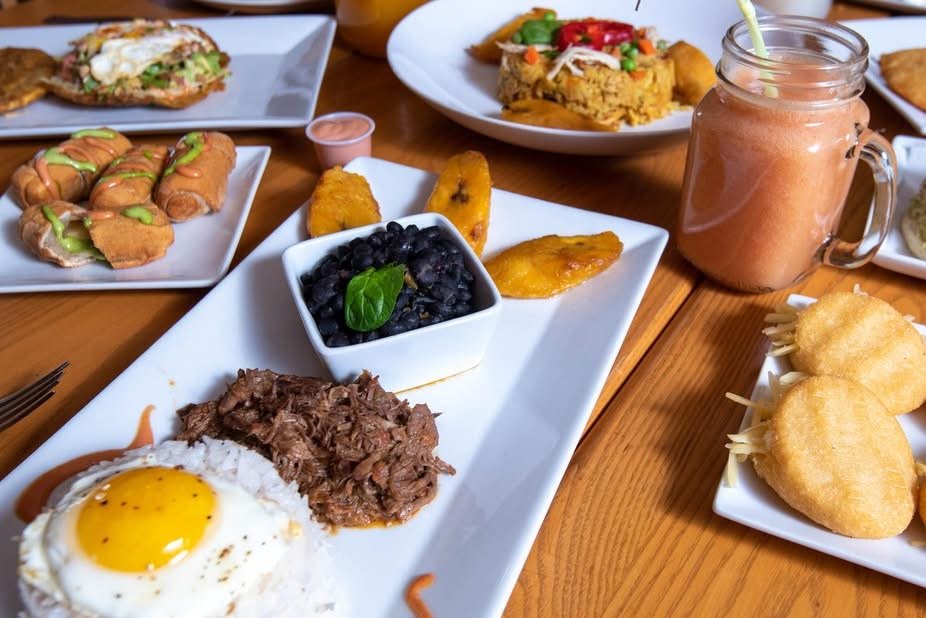
At Oh Corn!, that versatility translates into fillings such as chicken with avocado and mayonnaise, beef, roast pork, beans, and cheese. There are also cachapas, empanadas, patacones, tequeños, fried cassava, tostones, rice and beans, as well as fresh juices.
“The advantage lies in the fillings. The seasoning of the pernil and the beef—the Venezuelan seasoning, which leans more toward sweet than spicy—is the secret,” he explains.
When the pandemic hit in 2020, it changed the dynamics of the business. Although they had to close temporarily, takeout orders increased considerably.
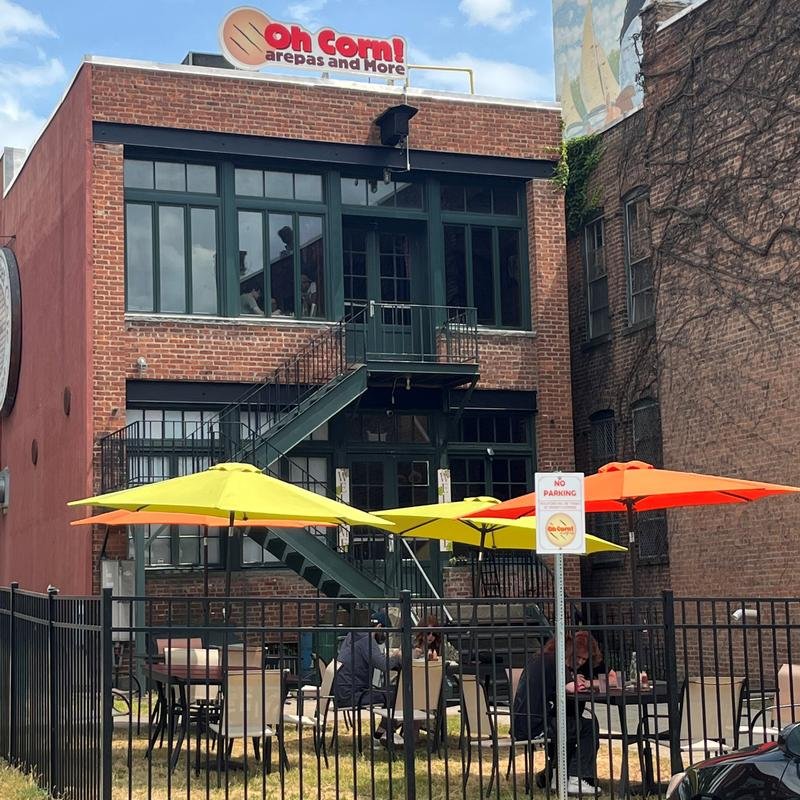
When the lease on their space expired in October 2021, the family sought a larger, more comfortable location. On December 1, 2022, Oh Corn! opened in a two-story building in the nearby town of Troy, featuring a larger kitchen, a patio, and a second floor with a bar and seating for about 70 people.
The new space also allowed them to expand the experience: today, it can host events, baby showers, weddings, and private celebrations.
The transformation was also a family affair. Belkis’s parents joined the project and began contributing something that no culinary school could teach in the same way: family recipes and home-style seasoning. Her mother-in-law, Gladys, is now the head chef.
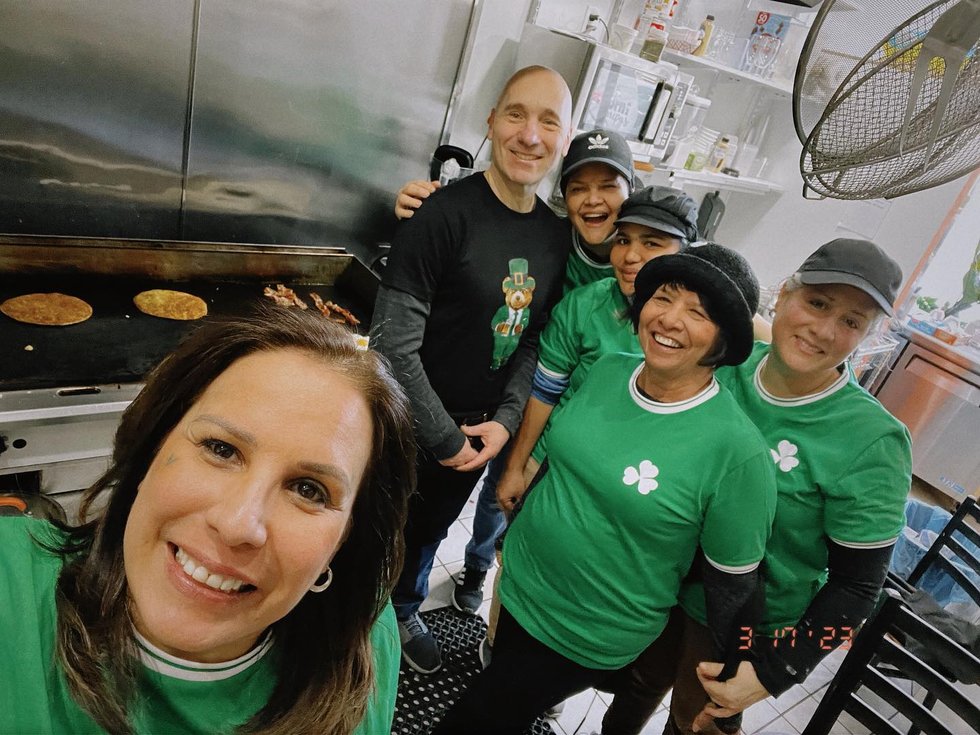
The team at Oh, Corn!: Belkis Castro, Jose Theoktisto, Aracelis Castro, Gladys Arias, Carmen y Yari
That family structure is an essential part of Oh Corn! Theoktisto continues his professional career and handles the restaurant’s administration, while Belkis continues her law career. That has forced the couple to develop processes that would allow the business to run even when they aren’t physically present.
“We have a system where, if my wife and I can go on vacation, we work really hard in the days leading up to it, and things run smoothly without us. We don’t close.”
For José, that ability to create systems has been just as important as the food. His professional training enabled him to directly handle permits, licenses, loans, and other administrative processes that often pose a barrier for small business owners.
The result is a restaurant that has managed to grow without relying entirely on its owners.
The menu has also benefited from the arepa’s adaptability. Approximately 99 percent of the menu is gluten-free, which has helped attract customers with dietary restrictions, as well as vegetarians and vegans.
“Something as simple as an arepa stuffed with cheese, black beans, and avocado—that’s a delicacy.”
Part of the Oh Corn! experience lies in the sauces that accompany the arepas and other dishes. The restaurant offers four: a garlic sauce, a spicy sauce made with ajíes and chiles, a cilantro sauce with mayonnaise, and a pink sauce. Three are mayonnaise-based, and all are available at the tables, as well as sold in bottles to take home.
What began as a family experiment has become a business with potential for expansion. The next step would not simply be to open another location, but to find a way to adapt the concept to a more efficient format.
The story of Oh Corn! is, in many ways, the story of a family that turned an everyday tradition into a business opportunity. A family that arrived in the United States with their own professions, their own paths, and a culinary culture that ultimately found an unexpected home in Albany.
And it all started with something as simple as making arepas for friends.
Here Jose shares a basic, but delicious, recipe from the restaurant:
La Reina Pepiada
Shredded chicken breast, boiled and salted, is mixed with ripe avocado and mashed with a touch of mayonnaise and a pinch of salt. When everything is mixed together, it should form a paste. The filling is served cold, like a salad, inside the warm arepa.