
By Alfredo Espinola
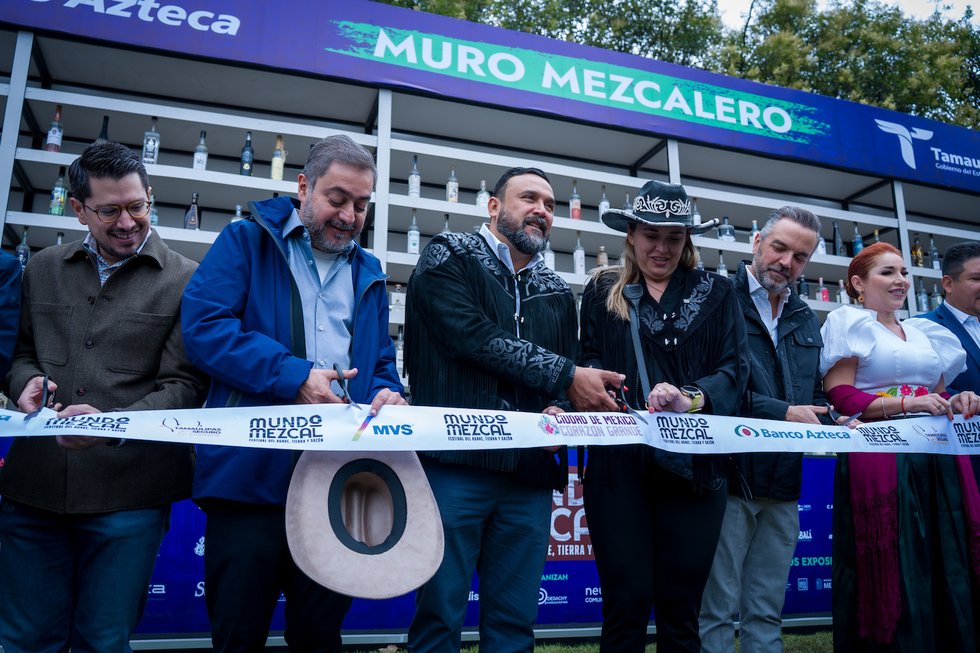
Nearly 11,000 people attended the second edition of Mundo Mezcal, the Festival of Agave, Earth, and Flavor, held October 17–18 in the gardens of the Campo Marte Restaurant. Organizers estimated the event’s economic impact at 60 million pesos.
The festival, presented by Banco Azteca, brought together producers of mezcal and other agave spirits, traditional cooks, and restaurants. New this year was a business fair designed to connect producers with buyers and partners.
“Reaching nearly 11,000 people at our second edition confirms that the public wants to know who is behind each bottle. This year, we wanted to take it a step further so that producers would gain more than just sales, which is why we added a business fair to connect them with buyers, partners, and tools for growth. Mundo Mezcal grows when they grow,” said Marisol Rumayor, general coordinator of Mundo Mezcal.
Exhibitors and Business Program
The 7,000-square-meter exhibition area held 279 booths. Agave spirits accounted for 222 of them: 187 for mezcal and the rest for tequila, bacanora, sotol, raicilla, and pulque distillates. The remaining booths included 27 for handicrafts, 16 for gourmet products, and 16 for industry suppliers.
Alongside the exhibition, the International Agave Business Fair and an academic program of conferences and panels focused on professional development and trade. Three certifying bodies—COMERCAM, AMMA, and Certificadora Mexicana—also took part.
The festival offered 33 guided tastings featuring mezcals from Designation of Origin states, as well as bacanora from Sonora, tequila from Amatitán, sotol from Chihuahua, and pulque-based spirits from Mexico City and Hidalgo.
Copa Mundo Agave Results
In the Copa Mundo Agave competition, a 30-member jury blind-tasted 166 brands, judging aroma, appearance, mouthfeel, and overall quality. Medals went to 102 brands from 13 states: 32 gold, 40 silver, and 30 bronze.
Mezcal Trinus, from Puebla, earned the top score of 100 points. Guardián de Almas, from Oaxaca, followed with 98, and Tierra de Diosas, also from Puebla, scored 96.
Oaxaca led all states with 37 medals, followed by Michoacán with 20. Gold medals in other categories went to BAM and Montaraz (Sonoran bacanora), Oro de Coyame (Chihuahua sotol), and Nsoki (Hidalgo pulque distillate).
Tamaulipas Places Third as Guest State
Tamaulipas, this year’s guest of honor, finished third in the medal count with seven medals, three of them gold. Winners from the state included El Abuelo, Ojo de Agua, and Pecado Artesanal.
Tamaulipas exhibitors also included El Tinieblo, which has produced mezcal since 1865 using salmiana and montana maguey, and 3 Elenas.
José Manuel Azpiroz, executive director of communications at Grupo Elektra, Banco Azteca’s parent company, said the bank was “proud to be presenting Mundo Mezcal for the second consecutive year and to support an initiative that honors our roots, promotes Mexican talent, and helps our traditions reach new audiences and markets.”
Food and Sustainability
Fifteen traditional cooks from Mexico City, Campeche, Oaxaca, Guanajuato, Tamaulipas, and Morelos, along with 19 restaurants, served food at the festival.
The Commission for the Wine and Spirits Industry (CIVyL) promoted responsible drinking through its #BuenaCopa campaign, and a glass recycling program developed with FISAC and Novoglass was intended to help protect the authenticity of the spirits.
Organizers say they aim to establish Mundo Mezcal as a meeting place for the entire agave industry.