
By Natalia Otero
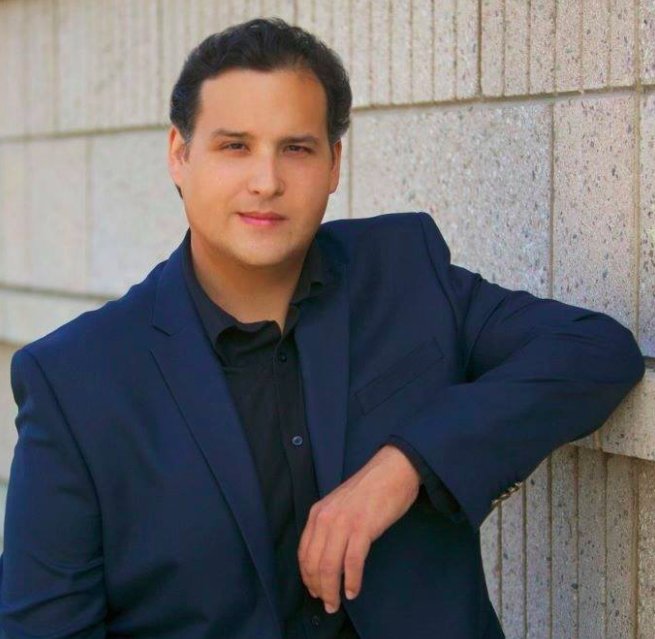
César Sánchez
There are countless stories about people from various professions eventually opening restaurants, but have you ever read a story of an opera singer opening a taqueria? Well, you’re about to.
César Sánchez is a Mexican opera singer known as the “Tijuana Tenor.” He graced stages across Europe for two decades and performed with some of the top musicians in the world…and today he owns Taco Time Cantina in La Jolla, California. It may appear that those two parts of his life are totally separate, but he says he applies the same discipline, the same obsession with detail he learned in opera to every handmade tortilla and every decision he makes within his restaurant. In this conversation, Sánchez speaks candidly about talent, failure, leadership, and building a kitchen with its own identity.
El Restaurante: Tell us about your journey from opera singer to restaurant owner.
César Sánchez: One day, when I was 11, I saw Luciano Pavarotti on TV and became obsessed with opera. I just saw him singing the end of the aria and said, “I want to do that.” I didn’t know if I had talent or anything. I grew up, and when I was 17, I started a torta business, and thanks to cooking, I was able to pay for my studies.
I was in Tijuana, and a friend of mine told me, “You have a good voice; you should give it a try. You’ll always be able to run a business, but singing has an expiration date. Give it a try.” I had never traveled that far before. I joined the Mozarteum Conservatory of Music in Salzburg, Austria. That’s when I realized I really did have something special. It was one of the best schools in the world, with plenty of resources, and they welcomed me very warmly—including accepting my friend because I asked them to.
In Mexico, when they saw my results, they helped me with a scholarship called Embajador de las Artes. They gave me a monthly stipend, and in exchange, I helped other Mexicans with the visa application process and paperwork.
After 20 years of living abroad, far from my family, a few days before the pandemic I came back to renew some documents. I was hired to sing in Germany, but I didn’t get to go because the world shut down due to COVID. I realized how much I’d been away from my parents and decided to stay. I opened my first restaurant, which was successful, but my partner and I couldn’t agree on issues like human resources. At Taco Time, my partners and I are on the same page; we get along very well, and we all care deeply about the human side of our staff.
Along my journey, there was a mix of acceptance and rejection. Making a living from art is like that: passion, rejection, and success. I was a very lucky person, but it’s not all my doing: I was born with a versatile voice that shifts between high and low registers very well and adapts to different operas. But I worked hard to develop that voice. I was given that talent—a gift from nature, from God—and it was an experience that opened doors for me and showed me that the world is full of good people, even though the wicked make a lot of noise. Singing was a beautiful gateway.
ER: You talk about talent and hard work. How do you connect that to opening a restaurant?
César Sánchez: Talent is the reason you go to work. It’s no guarantee of anything. It’s a sign that you must work even harder than those who have nothing. It’s a moral obligation to develop it.
Work is an ethic acquired through effort and observation. It is the only tool for success. I don’t blame anyone. I am the only one responsible. I am happy. I am not a victim. And that carries over into business. If I try and give my best, I am always at peace, regardless of the outcome.
Everything you do is an extension of who you are. Even if you’re cleaning a bathroom, you do it with excellence. That is the ethos of my restaurant. I don’t give people less than what I give myself. For example, if I don’t have organic corn dough, I’d rather close than use anything else. We’re making real food and changing the perception of the taco. That is ethos.
Cooking is art, just like singing. It creates memories and community. Successful restaurants foster that feeling. Food evokes memories. We are sensory beings.
ER: What flatters you most after serving a dish?
César Sánchez: Seeing the expression on the person’s face as they enjoy it. That creation is an extension of me. When they enjoy it, they are accepting a part of my essence. That gives me enormous pleasure. And knowing that you’re feeding someone pleases me immensely.
ER: How did you make the decision to leave opera?
César Sánchez: My hero was Enrico Caruso. I always wanted to sing like him. One day I looked back and said: I’ve already done it. I had already sung with Plácido Domingo. I’d gone further than I ever imagined as a tortero from Tijuana. So, when I returned from Europe, and with the whole pandemic situation going on, I thought: what comes next, I want to do for my parents. I always wanted to own a restaurant again, like when I was 17. I decided it was time. I spent 25 years as a singer, and now I’m moving on to being an entrepreneur. So I left the opera at 42, and it’s been six years since I’ve been running my own restaurants.

The interior of Taco Time Cantina in La Jolla, California
ER: How did you create the Taco Time menu?
César Sánchez: I’ve always worked in the kitchen, including in haute cuisine in Europe. When I returned to San Diego, I thought of something formal, with French technique and Mexican ingredients. But I saw a gap between that and tacos.
I spent six months visiting taquerías, from Tijuana to Los Angeles, every Monday, developing the concept. I use corn protected by the Mexican government, top-quality ingredients, everything fresh, made daily. I incorporated some dishes I like from California, such as fries with beef or the burrito, and infused them with my own style.
I have to be very patient not to fall into the temptation of rushing the cooking, since customers sometimes think we should serve them as quickly as at a fast-food restaurant. Customers think a taco should be ready in five minutes, but I make tortillas to order and prepare very small portions of meat to keep it fresh. It’s not fast food. Nor is it as slow as a fine-dining restaurant, but it’s something in between that I have to explain to customers.
We use avocado oil, organic corn, and prime beef. I invest a lot of money in this, but I know it’s worth it, because people can eat without feeling sick, without getting heartburn or inflammation. And many customers come back, even every day. That’s a sign we’re doing something right. We opened nine months ago, and in the last three months, we’ve grown by 51%, so we’re doing very well, and it reflects how we work internally.
ER: Do you sing while you cook?
César Sánchez: I hum all the time. I have two cashiers who sing too. When it’s someone’s birthday, I go out and sing “Las Mañanitas” to them. They’re surprised and want more, but I tell them, “You’ll have to wait until your next birthday.”
ER: What do you think about finding your own voice, in art and in cooking? What makes you a good cook?
César Sánchez: Imitation is natural. We’re all influenced. The challenge is finding your authenticity. I think I’ve achieved that with Taco Time. It’s tied to my vision. Every taco is different because I make it while singing, with top-quality ingredients, and with real investment. That alone makes me different.
My tacos are good because I sing to them (laughs). Passion. An obsession with detail. Making food that everyone wants to eat: a good taco, with real ingredients. Who doesn’t want to eat a taco once a week? It’s something everyone needs. Even more so if it’s a buttered tortilla made with organic corn, juicy meat, simple guacamole with lemon and salt, scallions, cilantro. Everything is prepared with avocado oil, including the potatoes we fry. If you have all that, you have a good taco, and a good taco is pure bliss.
ER: How important is a good work environment and a happy team?
Imagine this: if you go to work at any job, you’re going to spend 8 hours a day there. You give most of your life to that place and your coworkers—more than you spend with your family. If there isn’t a healthy environment, it becomes a miserable place. It’s a whole different story when you’re in a place where everyone treats you with respect and offers constructive feedback.
I wouldn’t want to be without any member of my current team. I’ve chosen them all myself, in the sense that we’re growing together, and I know they’re all intelligent people. And when things go better for me, they do for them too. That’s how my company’s success works: when you receive more, you have to start sharing—not out of necessity, but out of conviction.
I work with many young people, including some who are or have been my singing students. And I’ve seen that the current generation wants everything fast, and if they don’t see that growth, they say, “I’ve been doing the same thing for a year now, so bye.” Still, I think they’re a generation with a lot of potential and one we can learn from, which is why we need to give them new motivations. We have to adapt to this generation, because otherwise, they’ll be lost, and we won’t grow either. Without my team, I couldn’t grow.
If I apply this to music: Giuseppe Verdi, Giacomo Puccini, José Alfredo Jiménez… none of them would exist without a good orchestra, a conductor, a team. No one can do it alone. I’m not an isolated individual: we’re a company. I need a good, healthy, and safe place to work, and healthy collaborators who want to protect the project.
When you find someone who wants to go further, you can influence them through your own leadership—not by telling them what to do, but by example. An example is easier to follow than an order. Orders are forgotten, but when you’re a leader, they get used to doing things that way because they believe in it, because they see someone they respect.
To inspire them to do the same, it takes time and personal effort. Teaching… and whoever doesn’t want to do it, it’s because they don’t want to.
ER: Does the restaurant’s design respond to that need to adapt to the context?
César Sánchez: Yes. In La Jolla, near the sea, we wanted something familiar, accessible, and beautiful. The terrace has a huge tree, beautiful shade, a garden-like atmosphere. We wanted to offer customers high-quality food at very affordable prices, and for the place to be for both those who work and need to relax, as well as families and others who like to feel they belong.
ER: What advice can you give to other restaurant owners, or aspiring singers, to keep working toward fulfilling their dreams?
César Sánchez: Everything in life is scary, but you mustn’t let fear, insecurity, or your ego equal or outweigh your talent or your decisions. If your fear outweighs your dreams, you won’t achieve them; if your ego outweighs them, you might achieve them, but you’ll be someone no one respects or likes; never put your dreams or decisions second.
The most important thing in life is to come to terms with the fact that you’re going to fall. It’s like a child: when they start running, they’re going to fall and scrape themselves, but they’ll also be able to heal the wound. Everything in life requires that inner peace, and an understanding that: yes, sometimes things will go badly for me, but it’s so that things will go better.
Once, when I sang Mario Cavaradossi’s aria from *Tosca* on a TV show in Florida, a reporter asked me, “To what do you owe the success of your *Tosca*?” I told her, “To many failures.” She looked at me with tears in her eyes and said, “That was exactly what I needed to hear.”
We forget that we have to fail in order to succeed. The bridge to success is action; then the path unfolds, and along it there will be failures and frustrations, as well as insecurity and fear, but if you don’t walk that path, you won’t get there: I chose that path; it is my path, no one else’s.
When you accept failure, success follows.
See César Sánchez in his former role as the "Tijuana Tenor."