
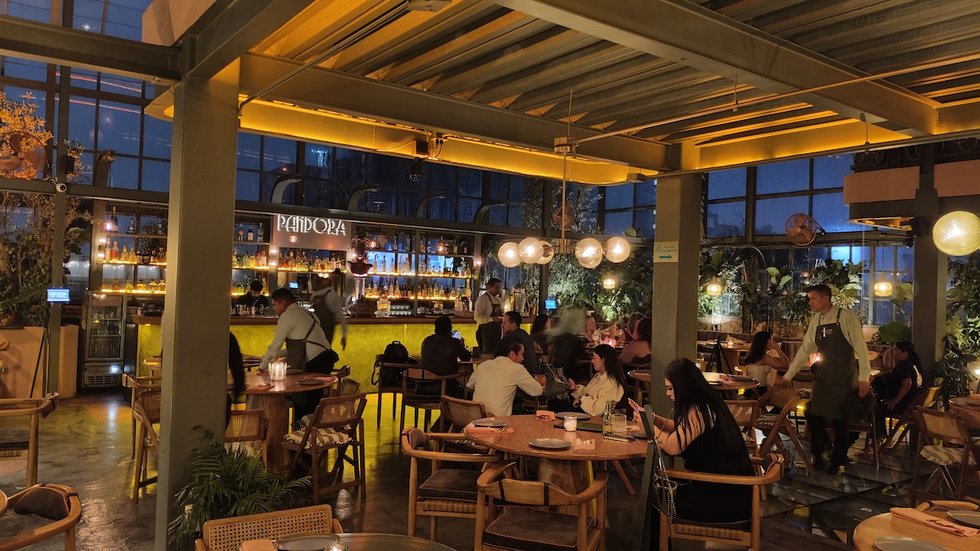
Pandora Restaurant in Mexico City
By Alfredo Espinola
When Mauricio Reina García was a child, while others went out to play, he preferred to sit with one of his uncles and watch cooking shows. One of them, La Ruta del Sabor, sparked his curiosity about gastronomy and, in particular, about what lay behind the dishes: the culture, the traditions, and the way Mexico tells its story through food.
Family influence did the rest.
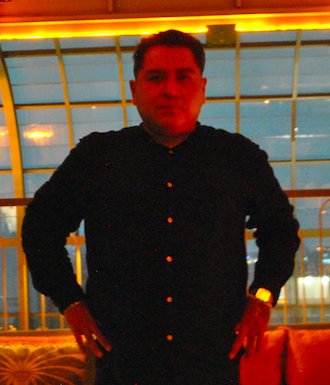
Chef Mauricio Reina
On his mother’s side, his roots are in Oaxaca; on his father’s, in Xochimilco. At family gatherings and during everyday meals, he discovered that a single dish could have multiple variations. Moles were, perhaps, one of his first lessons in culinary diversity.
In Oaxaca, he found preparations that differed from those in Xochimilco. The ingredients, textures, flavors, and preparation methods varied. But one thing remained constant: respect for the ingredients and for the time required to create good cuisine.
His grandparents made mole from scratch. Long before a celebration, they would begin gathering the ingredients. Mauricio would watch, ask questions, and, whenever he could, try to replicate what he saw.
Without realizing it, he was beginning his training.
Learning in the Kitchen
From 2013 to 2015, Mauricio studied at the Claustro de Sor Juana, but the professional kitchen ultimately called to him before he finished his degree. He began working in the hospitality industry and worked in various kitchens—including those at the St. Regis and Four Seasons—before moving to Playa del Carmen.
During those years, he came to understand that cooking is also learned by watching those who came before him.
In 2017 his career path then took him to Tulum, where he worked alongside Chef José Luis Hinostroza at Arca. The experience became one of the most important stages of his training.
“I consider him one of my mentor chefs,” he says.
With Hinostroza, he discovered and delved deeper into the use of ferments, ingredients, and techniques with Asian influences, while also finding common ground between those cuisines and Mexican cuisine.
The professional relationship evolved into a far-reaching collaboration. He participated in the launch of various projects in Tulum, including Tila, a natural wine bar, as well as Mestiza and the Rubí boutique hotel.
It was seven years of learning, and as is often the case with meaningful learning experiences, the time came to ask himself what to do with everything he had gained. Mauricio wanted to become his own José Luis: to build projects, open restaurants, and develop his own identity.
Returning to Mexico City in 2024 also meant a return to his roots.
“I feel that the best food in Mexico is chilanga cuisine,” he says.
His argument has to do with diversity. In the capital, flavors and cooking styles from practically every state in the country converge. Carnitas from Michoacán, barbacoa from Hidalgo, and a vast array of ingredients and traditions all come together here.
Pandora: A Restaurant Built from the Ground Up
Pandora began as a space within a small, 50-room boutique hotel. Upstairs, there was a bookstore intended primarily for guests. It was a pleasant place, but it had a lot of untapped potential.
Mauricio saw that potential.
Together with his partners and other chefs, he began transforming the space. The floors, bar, elevator, and various areas were modified; the layout was redesigned, and a kitchen specifically designed for a restaurant was built.
Mauricio was there from the very beginning.
That’s why Pandora holds a meaning for him that goes beyond just work. He describes it as one would describe something he’s watched grow from the very beginning: like a child.
Pandora opened its doors in late 2024, with its first formal service at the New Year’s Eve dinner, and began regular operations in January 2025. It’s still a young project, but Mauricio already speaks of it with the affection of someone who has poured a good part of himself into the place.
Mexico as a Starting Point
Pandora’s culinary concept does not aim to be traditional Mexican cuisine in the strictest sense.
Initially, the idea was to create a 100 percent Mexican restaurant. However, Mauricio and his team decided to broaden their perspective. The premise remained intact: Mexican ingredients had to be at the center.
Seafood comes from Sinaloa. Meats come from Durango. Much of the produce comes from the chinampas of Xochimilco.
Mauricio understands the importance of knowing where the ingredients on the plate come from. From childhood, he learned to identify good lettuce, good vegetables, and fresh produce. That family legacy is now part of his way of working.
“Beyond the fact that I know them—even if they’re new suppliers—I make sure everything is fresh and that they comply with regulations, protocols, and quality standards.”
When the Diner also Needs to Discover
The initial concept met with some resistance. Not everyone was used to certain presentations, textures, or combinations.
Mauricio recalls, for example, a raw fish dish from Campeche cured with kombu seaweed and served with a pomegranate and yuzu preparation. For some customers, the experience was unexpected. It wasn’t exactly a ceviche or an aguachile; it was another way of approaching the fish.
Even the fish skin was given a second life: it was used with rice to create a crunchy element that accompanied the dish.
The cuisine asked diners for more than just sitting down to eat; it called for curiosity, and Pandora had to strike a balance between that gastronomic exploration and the nature of a rooftop in Mexico City—a concept often associated more with music, drinks, and nightlife than with a dining experience.
The solution was to expand the menu. There are tacos. There are burgers. There are dishes designed for sharing, but even there, Mauricio seeks to put his own stamp on them.
The Diners as Part of the Experience
At Pandora, Mauricio wants diners to understand what they’re eating and why each ingredient is there.
That’s why training the team is essential. The servers receive regular training to learn about the dishes, their ingredients, and the sub-recipes. The goal isn’t to memorize a script, but to understand the philosophy behind each dish.
The idea is simple: if Mauricio can’t reach every table, someone on his team must be able to tell the story of the dish just as he would.
If a guest sets aside a flower because they don’t know what to do with it, Mauricio prefers to approach them and explain what it is, how it’s grown, and why he decided to include it. Perhaps after tasting it, they’ll change their mind—perhaps not—but they’ll have discovered something new.
Wine, Cocktails, and A Cuisine Designed for Sharing
Pandora has a unique approach to food and wine pairing.
The concept is more focused on sharing dishes, eating, and enjoying a drink than on creating a formal pairing dinner. However, there are areas like the VIP tables where the team can design experiences paired with wines or other beverages.
Mexican wine and spirits are featured, though the restaurant’s concept also gives mixology a starring role.
The bar team shares a philosophy similar to that of the kitchen: taking familiar references and taking them in a new direction. The goal is to move away from predictable cocktails and explore different ingredients and combinations.
Ultimately, both the kitchen and the bar seek the same thing: to spark curiosity.
What’s Next
Mauricio is 31 years old and has about 12 years of professional experience in the kitchen.
In addition to Pandora, he currently consults for several restaurants, cafés, and projects run by friends, and his sights are set on the near future.
He wants more restaurants bearing his name. Cafés. A taqueria. He even envisions a “garnachería”—but one with its own unique style.
There’s one thing he doesn’t want to lose along the way: tradition. His goal isn’t to stray from it, but to show that it can be transformed.
“Respecting tradition, respecting the ingredient, but giving it that twist.”