
By Alfredo Espinola
In the summer of 2026, Mexico will not only welcome soccer lovers from around the world—it will invite them to sit down at the table. At Campo Marte, an event venue in Mexico City, chefs and cooks will prepare traditional regional cuisine for thousands of customers just a few kilometers from the stadium where World Cup games will be played.
From June 11 to July 19, from 1:00 to 7:00 p.m., this space will become one of the main gathering spots of the 2026 Social World Cup. A place with seating for nearly a thousand people, but through which thousands more—between 2,500 and 4,000 each day—will pass, drawn by more than just curiosity: the need to recognize themselves.
Each week, a different region of Mexico will take the floor and transform the space.
· Flavors of the South and the Mayan World (June 11–17): Campeche, Chiapas, Quintana Roo, Tabasco, Veracruz, and Yucatán will kick off the experience; the Mayan world will open the conversation: cacao, corn, leaves that wrap stories.
· Treasures and Colonial Cities (June 18–24): Aguascalientes, Guanajuato, San Luis Potosí, Michoacán, Querétaro, and Zacatecas will showcase their heritage: cuisines that have learned to withstand the test of time without losing their essence.
· The Heart of Flavor (June 25–30): Mexico City, the State of Mexico, Hidalgo, Morelos, Puebla, and Tlaxcala—the center will showcase its everyday richness, that heart where everything converges.
· The Border and Grilled Meat (July 1–7): Baja California, Chihuahua, Coahuila, Durango, Nuevo León, Sonora, and Tamaulipas—the north will arrive with open fire and character.
· The Coast and the Pacific (July 9–19): Colima, Jalisco, Nayarit, Baja California Sur, Guerrero, Sinaloa, and Oaxaca, where salt, fish, and light weave a different language.
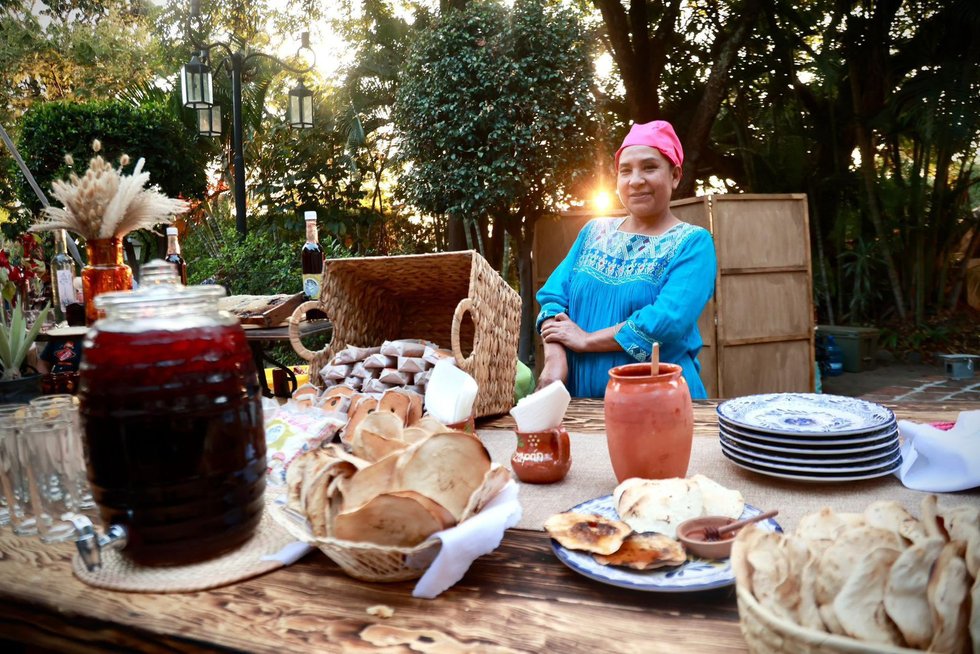
Traditional cooks and chefs will share the stove in a dynamic that prioritizes connection over performance. Each pair will prepare over 200 daily servings: a main dish, a dessert, and traditional drinks like pulque and tepache—which not only accompany the meal but also tell a story. Each serving will, at its core, be a brief narrative.
And then there is El Itacate. In this space, corn will be the centerpiece, transformed into tacos, tamales, tostadas, quesadillas. Nineteen traditional cooks from 14 states will prepare this food, and 100% of their earnings will belong to them. No middlemen. No concessions.
There will be live music. Screens. The constant echo of soccer filling the air. But what will remain is something else: the gesture of sharing, the pause before a plate, the conversation that unfolds without haste.
Driven by the Mexican Government’s Ministry of Tourism, the project aims to extend the tournament’s impact beyond the stadiums. It’s not just about watching the game, but about experiencing it through culture, flavor, and togetherness. Turning a sporting event into a platform where culture, the local economy, and identity find a tangible place.