
By Natalia Otero
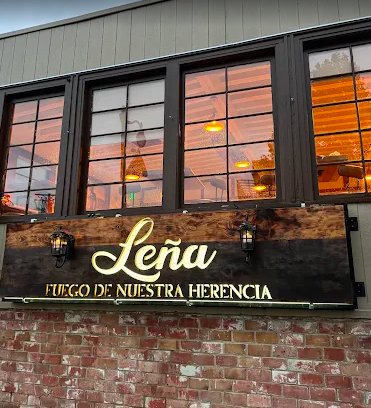
Leña in Alameda, California
For Yesenia Chávez, founder of Leña in Alameda, California, food was never just sustenance. It was the language through which her family built a community, welcomed newcomers, and preserved their Guanajuato roots.
That family tradition has evolved into a restaurant that seeks to change perceptions of Mexican cuisine in the United States: a concept where mole, chamorro al pastor, and family-style carnitas take their rightful place within a refined and contemporary dining experience.
“Both of my parents have always cooked at home. Food and cooking are the foundation of our family,” Chávez recalls. “They had other businesses, but they always wanted to own a restaurant and were never able to make it happen.”
Her parents, Juana Rodríguez and Mateo Chávez, emigrated from Guanajuato to the United States in 1972 and 1980, respectively, and built a life in California. Over time, their home became a gathering place for relatives who had recently arrived from Mexico.
“They were among the first from Guanajuato to buy a house, so everyone started coming and staying with us. Sometimes there were 30 people living in the house. Food brought us all together; we spent time together, shared stories, built a family, and that’s how we grew up.”
Although cooking was always a part of her life, Yesenia initially chose a different path. She studied business administration and spent eight years in the corporate world.
“I didn’t like it,” she admits. “That’s when I thought about what I wanted out of life, and my passion was food. I love to cook.”
She decided to leave her stable corporate career in 2016 to enter the restaurant industry. But first, she wanted to learn from the ground up.
“I told an uncle who owned a restaurant that I wanted to learn everything. I started working with him, and that’s where I learned the ins and outs of the restaurant business, and how to manage people. Then I said, ‘Yes, I want to do this.’”
In 2023 she started doing private events, catering, and pop-ups separate from her uncle’s business. Those served as a testing ground for developing her own culinary identity. She finally opened the bricks-and-mortar restaurant Leña (which means “firewood”) earlier this year.
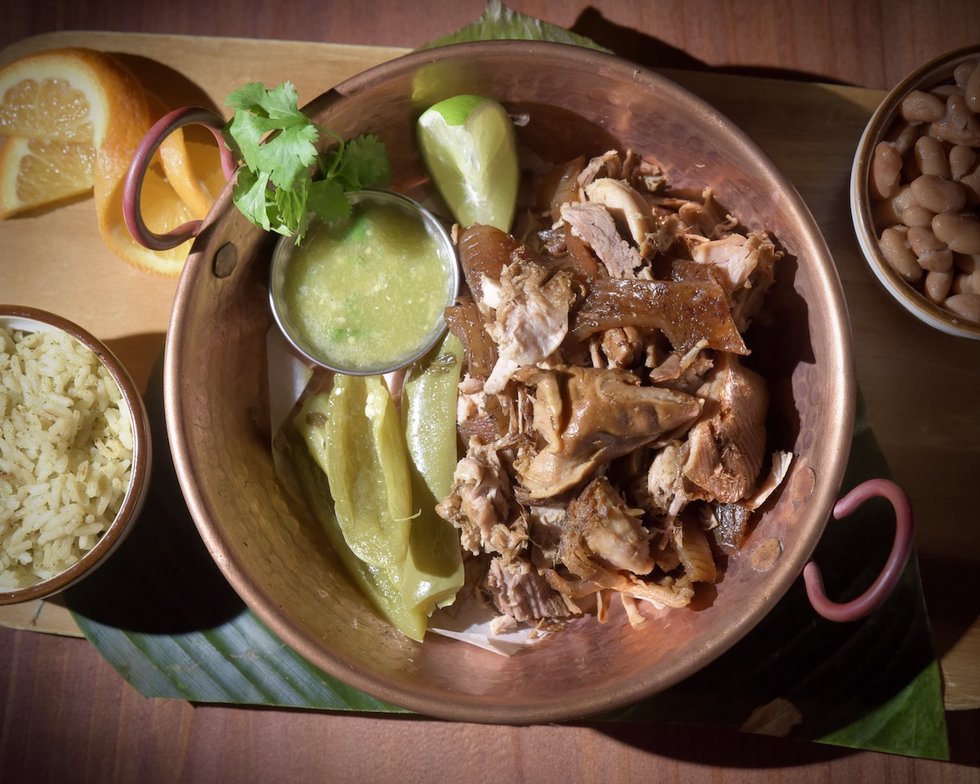
Cristian Aguilar
Abuelos Carnitas, a recipe from Yesenia Chávez's grandfather
Beyond Tacos and Burritos
From the start, Leña’s mission was to challenge stereotypes about Mexican cuisine.
“We wanted to change the perspective of what people think Mexican food is,” explains Chávez. “Everyone says the same thing: tacos, burritos, quesadillas. But there’s so much variety in Mexican food, depending on the region.”
That’s why they decided to create a unique menu. The recipes were born out of long family gatherings involving siblings, parents, and in-laws. The result is a deeply personal cuisine that combines heirloom recipes with contemporary reinterpretations.
“It’s a combination of recipes from us as siblings and recipes from my parents.” Among the most popular dishes is a reimagined green chili with pork belly, as well as the now-famous chamorro al pastor. “You find tacos al pastor in many places. We decided to make chamorro marinated al pastor. When the dish is served, we present the chamorro with the bone and all, so it’s very eye-catching.”
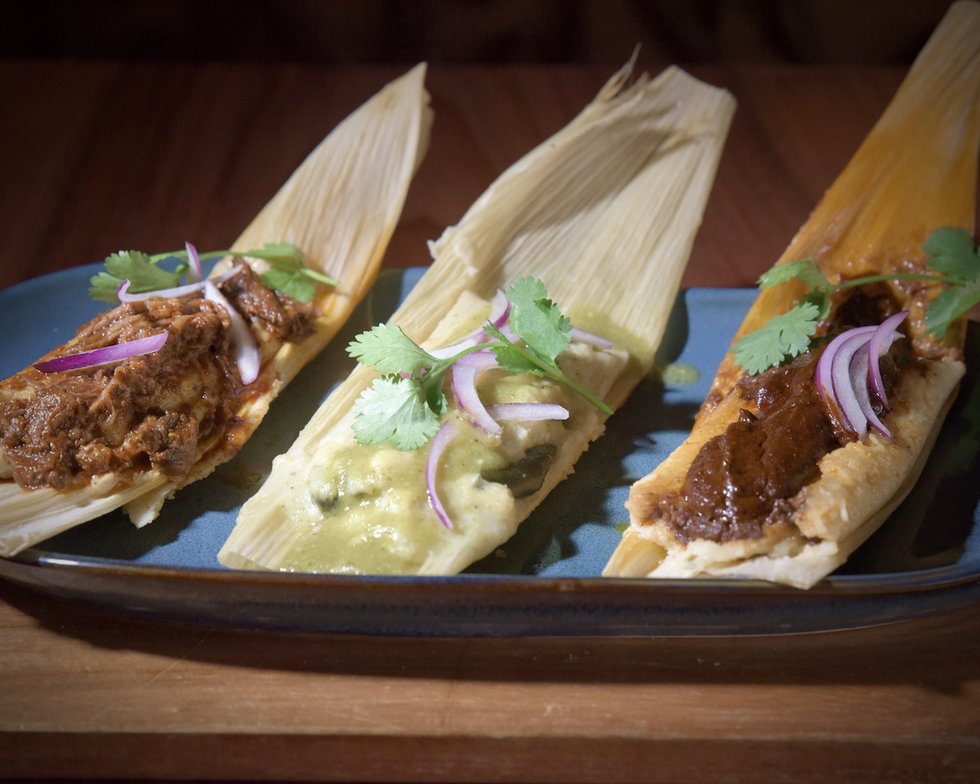
Cristian Aguilar
Tamalitos—with mole, birria, and rajas con queso—recipes from Yesenia's parents
But if there’s one dish that represents the heart of the Chávez family, it’s Doña Juana’s mole. “In our family, my mom’s signature dish is mole. We grew up on that mole. There are thousands of types of mole in Mexico, and depending on the region, you’ll find different colors and flavors. My mom’s mole isn’t sweet—it’s spicier.”
The customers’ reaction is usually memorable.
“There are people who say they hate mole because it’s too sweet and tastes like chocolate. They try it, and more than twenty people have told me, ‘Wow, this mole is fantastic. I’ve never tasted it like this before, and now I like it.’”
A Family Behind Every Dish
At Leña, the family not only inspires the menu—they also run the restaurant.
The older brother, Adan, works alongside executive chef Francisco, who is married to Angélica Chávez. Angélica herself oversaw the interior design. Their parents contribute recipes and experience. Yesenia manages front-of-house operations, including service and the bar.
“My brother and my brother-in-law are in the kitchen. I’m in charge of front-of-house operations, working with the servers, the customers, and the bar.”
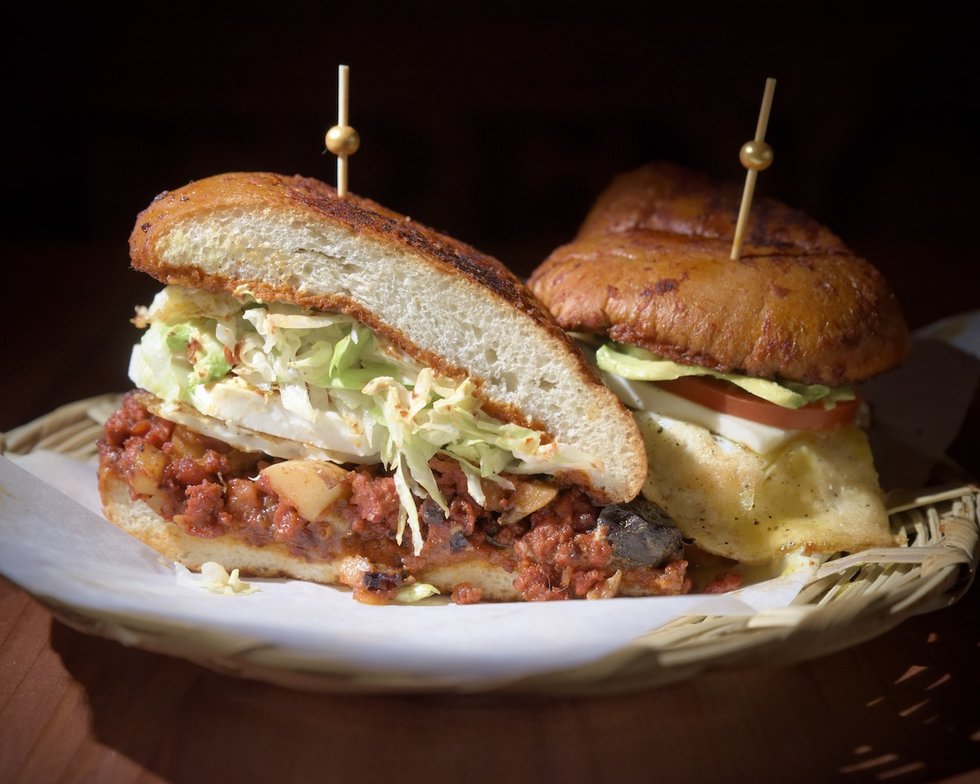
Cristian Aguilar
Pambazo Madrugador, recipe by Yesenia and her brother Fernando
Even the younger generations participated in developing the concept.
“My nieces and nephews watched this menu and this restaurant come to life. They were involved because they got to vote: ‘keep it or scrap it.’ It’s a blessing and something money can’t buy.”
The importance of sharing is also reflected in the size of the dishes.
“The dishes are large because we want people to share. When you share food with someone, it’s a different experience.”
The Meaning of Leña
The restaurant’s name perfectly sums up the philosophy behind the project.
“We named it Leña partly because my parents in Mexico used to cook with firewood.”
Childhood memories are tied to fire, to family trips to Guanajuato, and to gatherings with grandparents.
“There was no gas. We grew up using firewood as a source of fire and heat for cooking. At night, we’d build bonfires and gather together as a family to talk.”
That’s also where the restaurant’s motto comes from: Fire of Our Heritage.
“Everything we do comes from our heritage and from what motivates us and keeps us going.”
The connection to that legacy goes beyond the kitchen. The space itself was practically built by the family.
They secured the location in August 2025 and transformed a former comedy club into the restaurant they opened on March 28, 2026.
“We did everything by hand. Even the tables are made of redwood, and each one is different. Everything we did inside was handcrafted.”
The Dream is Just Beginning
Opening a family restaurant has been as rewarding as it has been demanding.
“It’s not easy. It’s very difficult, especially because we’re a family and we don’t have a lot of money to hire people for different positions. We’re managing it among ourselves.”
However, for Chávez, the effort is worth it.
“What I’ve enjoyed most has been working with my family.”
After years in corporate offices, her workdays are even longer now, but they feel different.
“Even though I work many more hours, it’s a very different kind of stress. Even if I work 12 or 14 hours a day, it feels different to be able to spend time with my family.”
And that’s precisely where she finds true success.
“Seeing my parents every day—even when I’m tired and stressed—in the end I say: Wow, it’s a gift to be able to spend time with my family every day.”