
By Alfredo Espinola
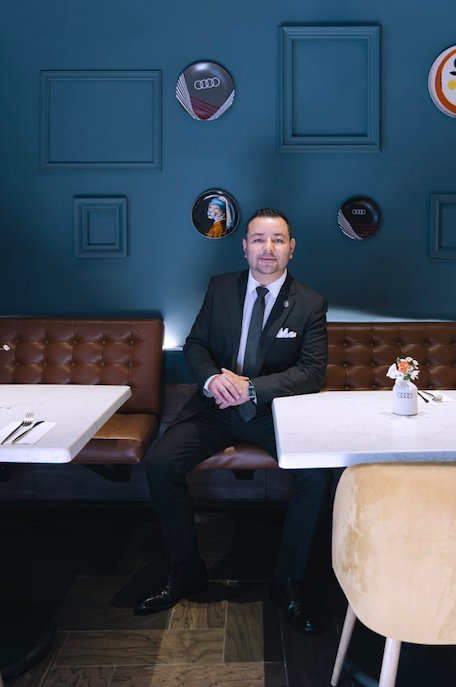
José Miguel Jáuregui Ramírez
At times, the story of José Miguel Jáuregui Ramírez seems to go against the grain.
He was born in 1989 in Ahualulco de Mercado, a small town in Jalisco where career paths seemed predetermined: doctor, teacher, or priest. In that rural setting, surrounded by fields of corn and agave, no one could have imagined that this boy would end up dedicating his life to wine and representing Mexico in international sommelier competitions. Least of all him.
Today, from Los Cabos, where he serves as Wine Manager at Maravilla Beach Club—one of the country’s most exclusive residential developments—José Miguel directs wine programs for various dining establishments, curates specialized wine lists, and continues to build a career that has placed him among Mexico’s most prominent sommeliers.
Earlier this month, his skills as a sommelier received high recognition: he won the 2026 Mexican National Sommelier Competition, organized by the Mexican Sommelier Association (ASM), which earned him the opportunity to represent Mexico in the ASI Best Sommelier of the World competition, to be held this coming October in Lisbon, Portugal.
However, the origins of this story lie far from the grand European wineries or haute cuisine restaurants.
It All Began in the Countryside
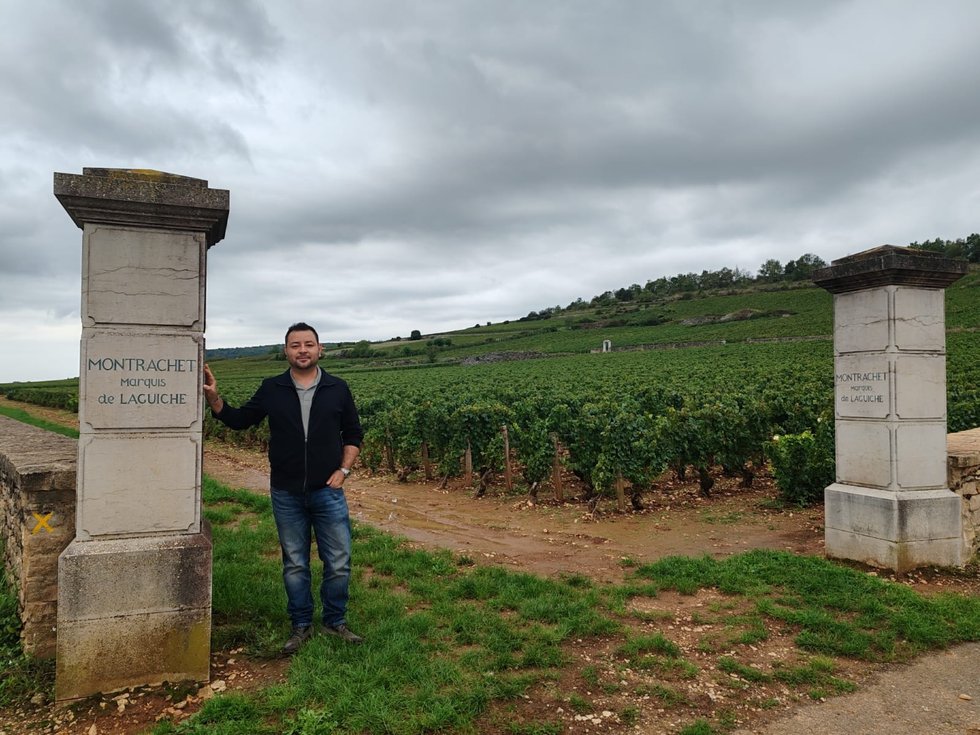
José Miguel Jáuregui Ramírez
His grandparents were farmers; his father, an agricultural engineer. From childhood, he learned to live alongside the land, corn, and agave; he even planted crops alongside his uncles. That closeness to the agricultural cycles left a deep impression on him, though he didn’t realize it at the time.
For years, he believed he would study medicine. It was the logical path, the respected profession, the family’s expectation.
But life had other plans.
In high school, he began working in restaurants and bars. There he discovered something that sparked a different kind of curiosity: service, beverages, and the experience that unfolds around a table. While others dreamed of hospitals or law offices, he began to feel drawn to the world of hospitality.
The Bottle That Changed Everything
The scene remains vivid in his memory.
His father organized a family barbecue and asked him to do a seemingly simple task: choose the wine.
José Miguel was working as a bartender at the time and took on the mission with confidence. He walked into a specialty wine shop for the first time and was fascinated by the diversity of labels, regions, and grape varieties.
From among hundreds of options, he chose a Spanish wine: Sangre de Toro. The recommendation seemed perfect, but the reality was quite different.
During dinner, the wine didn’t win anyone over—not his parents, nor himself.
“Although I pretended I had liked it,” he recalls with a laugh.
He didn’t want to admit he’d made a mistake.
What for many would have been a forgettable experience became an intellectual obsession for José Miguel. He wanted to understand why that wine tasted the way it did. Why were some wines pleasant and others not? What lay behind a bottle?
The Sommelier’s Discovery
When it came time to choose a college major, José Miguel had already ruled out medicine.
He was drawn to gastronomy, but found an alternative path in the Bachelor’s Degree in Tourism at the University of Guadalajara. That decision led him to Puerto Vallarta, a city that would change the course of his life.
It was there that the decisive encounter took place.
He had barely started college when he attended a lecture as part of a local wine festival. The speaker was sommelier Juan Carlos Alcántara.
Dressed in the traditional service uniform, Alcántara spoke about wines from around the world to an auditorium full of students. For many, it was just another lecture; for José Miguel, it was a revelation.
“That’s when I realized the profession actually existed. That it was possible to make a career out of wine in Mexico.”
From then on, he embarked on a period of voracious learning: magazines, books, tastings, and—above all—Mexican wines became part of his self-taught education.
What had begun as mere curiosity was starting to turn into a purpose.
Pursuing a Dream
After finishing college, he joined Vidanta Resorts as a concierge. The job had little to do with wine, but it allowed him to finance something he considered essential: his training as a sommelier.
That decision would mark the formal start of his career.
One of the main instructors in the certification program was none other than Juan Carlos Alcántara, the man who, years earlier, had first shown him that wine could be a profession.
That training opened the door to his first professional opportunities.
He worked at import companies, collaborated with restaurants, and later joined Grupo La Palapa, one of the most important schools in his career. There he learned the practical side of the wine business: costs, inventory turnover, menu design, sales strategies, and service.
It was there that he realized a sommelier doesn’t just recommend bottles—he creates experiences.
The next major turning point came in 2015, when he took second place in a national wine competition. The prize included a trip to Ensenada, where he spent time with some of Mexico’s top sommeliers.
That experience proved eye-opening. For the first time, he realized the gap between his own skill level and that of established figures in the industry. Far from discouraging him, he decided to turn that gap into motivation.
He realized that if he wanted to grow, he had to step out of his comfort zone. That decision led him to Los Cabos.
In 2018, he joined the team led by Gabriel Reynoso, one of the most respected figures in Mexican sommellerie. There, he found a highly demanding environment, more complex wines, fine-dining service, and a culture of continuous learning.
He also discovered the world of professional competitions. He participated in national contests, trained with discipline, and began organizing tasting groups with colleagues from the region. His efforts paid off.
In 2019, he won first place in the Chaîne des Rôtisseurs National Young Sommelier Competition, a result that allowed him to represent Mexico in South Korea.
That same year, he earned the Certified level from the Court of Master Sommeliers with the highest score in his class.
What’s remarkable is that behind every accolade lies a less visible story: endless hours of study, blind tasting sessions, service simulations, and a level of discipline that few imagine when they see a sommelier in a restaurant’s dining room.
Because wine, José Miguel insists, isn’t about memorizing labels; it’s about understanding, connecting, and constantly learning.
Perhaps that’s why one of the aspects he currently enjoys most is training new professionals. For years, he has guided young sommeliers through the process of preparing for competitions and certifications. Several of them have gone on to become national champions.
Far from keeping his knowledge to himself, he has chosen to share it.
In 2022, he began a new chapter at Maravilla Los Cabos. From there, he’s had the opportunity to travel to France, Italy, and other wine-related destinations, while continuing to advance toward the industry’s most demanding certifications.
One of his most significant milestones came recently when he earned the Advanced level from the Court of Master Sommeliers—an accreditation held by only a very small number of Mexican professionals.
The Invisible Compass Behind Every Victory
However, when he talks about his achievements, José Miguel often returns to the same memory: that competition in which he failed to advance to the finals. That moment when he walked out disappointed and found his mother waiting for him outside.
“You’ll see, next year will be better,” she told him.
Over time, that phrase ended up becoming a sort of personal compass.
Because if anything defines José Miguel Jáuregui’s story, it’s not the trophies or the certifications; it’s perseverance—the ability to keep going when results don’t come. The determination to keep learning, even after reaching goals that others would consider sufficient.
Perhaps that’s why today, when he returns to Ahualulco de Mercado and talks with his family, he smiles as he recalls that for a long time his grandmothers thought he went door to door selling wine.
Explaining exactly what a sommelier does remains complicated, but it’s no longer necessary. The travels, the competitions, the accolades, and his career speak for themselves.
And somewhere between the agave fields of his childhood and the extensive wine lists he manages today, José Miguel found something far more important than a profession.
He found his calling.