
Shawn Campbell
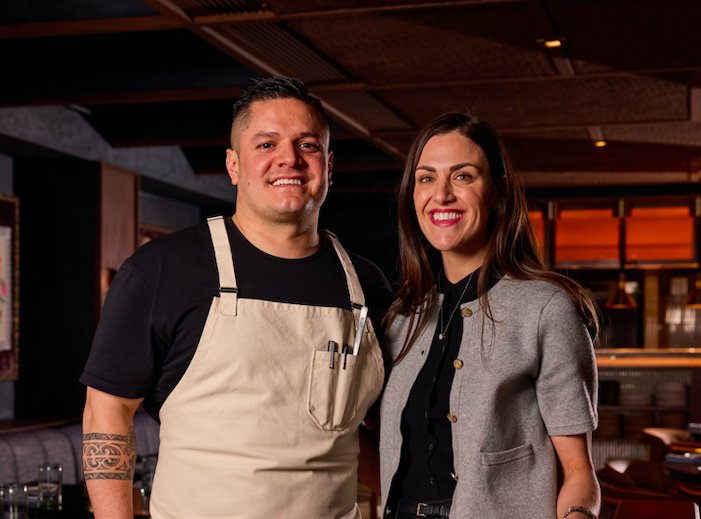
Johnny and Kasie Curiel
The Mexican chef turned memories of his family’s fondas in Guadalajara into the foundation of Alma Fonda Fina, which he opened in Denver in 2023 with his wife, Kasie Curiel, and has earned one Michelin Star. Today, through Fonda Fina Hospitality, he is building a growing restaurant group that celebrates Mexican culinary heritage while creating opportunities for his team.
Chef Johnny Curiel grew up in his family’s restaurants in Guadalajara, Mexico, where he learned early that hospitality goes far beyond serving food. His parents’ fondas, the guisados prepared throughout the week, and the regular customers who returned day after day left a lasting impression on him. Those experiences continue to shape the way he cooks and leads his restaurants today.
After working with other chefs and moving through different positions in the industry, Curiel decided to pursue his own vision. In 2023, he opened Alma Fonda Fina with his wife, Kasie, combining the flavors and traditions of Mexican home cooking with the techniques, service, and atmosphere of fine dining.
That first restaurant became the starting point for Fonda Fina Hospitality, a restaurant group exploring different stories and regions of Mexico. For Curiel, however, growth is not measured solely by the number of restaurants he opens. It is also about preserving culinary traditions, working with ingredients that tell a story, and helping his team build careers of their own.
In this conversation with el Restaurante writer Natalia Otero, Curiel discusses his journey, the importance of knowing when to listen and when to trust his own vision, the value of professional relationships, and his commitment to a Mexican cuisine that never loses its identity.
Natalia Otero: You have worked with some of the industry's leading chefs, and eventually decided to open your own restaurant. What is the difference between working for someone else and owning your own business?
Chef Johnny Curiel: There isn't the same sense of pride when the restaurant isn't yours. When you work for someone else, you have a structure, a leadership team, and an established way of doing things. But you can also learn a great deal from previous jobs. You can identify what worked and what you can do again, what you could improve, and what you thought wasn't right but had to do because you were working for someone else.
Shawn Campbell
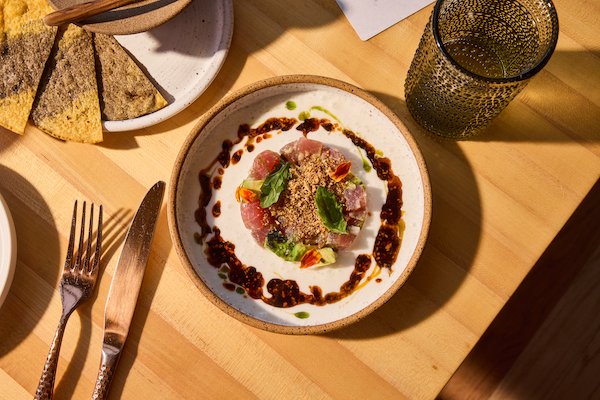
Ceviche de Atun
When you own your restaurant, you can make those decisions yourself. However, you also have much more to lose because you don't have the financial backing of a large company. A $10,000 mistake can represent a week's worth of food. You have to pay attention to detail, make intelligent decisions, and accept that some of them won't be good. The important thing is to learn from your mistakes and try again.
At the end of the day, we are restaurants, we are hospitality people. We can't take ourselves too seriously. We're feeding people and doing something we love.
What do you love most about what you do?
I get to feed people. I love doing events for people, too. If you take yourself too seriously, you take the fun out of it. You have to work hard and do things right, but above all, you have to enjoy it.
How has Guadalajara influenced your cooking?
Guadalajara has influenced my entire life and the person I am today, but so has the rest of Mexico.
I grew up in my parents' fondas, so I grew up seeing hospitality firsthand. I saw the same people coming in from Monday through Friday during their lunch breaks. I grew up chopping tomatillos, cleaning beans, and crumbling bread for milanesas. That shaped me.
But I was also shaped by the people I met later, the ones who helped me figure out what I wanted to cook, what I wanted to offer, and what message I wanted to communicate through a plate of food. I had to ask myself whether I wanted to serve food that was simply food or food with a story behind it. Did I want to do fine dining, or did I want to create fine dining that was also fun?
Guadalajara shaped me, but so did Colorado and the United States. I was fortunate to meet people who believed in me and mentored me from the time I was 18 until I was 30.
How did you find the balance between your Mexican heritage and your concept of fine dining with soul?
Do you want the truth or the lie? (Laughs.)
When I was the culinary director at another restaurant, I was cooking the food I had always wanted to cook. Even when I was younger, I knew I wanted to focus on Mexican food, but I also wanted to give it the respect it deserves. Some of the best restaurants in the world are in Mexico.
I wanted to make sure my food remained Mexican. It's easy to start cooking Mexican food and then lose yourself in ingredients that are difficult to find or in influences from Asian, Spanish, or other cuisines. There are so many ingredients and possibilities that you can end up moving away from what you originally wanted to do.
I knew I didn't want that. I wanted to cook traditional Mexican food. I didn't want to be known for having the coolest or most extravagant concept. I wanted to be known for being a badass Mexican restaurant.
I presented my idea, and some people told me it was stupid. So I told them they didn't understand what I wanted to do, and I opened my own restaurant.
Entrepreneurship also requires knowing whom to listen to and when to trust yourself. How did you learn to distinguish between advice that helps you and advice that takes you away from your vision?
I think it's a combination of both. When you work for someone else, you receive advice and ideas from people who have been successful. Those restaurant groups have a formula that works for them. Maybe they don't want to be too extravagant or 100 percent traditional. But that formula might not be what you want to do.
I see a lot of people who start working in the industry at 21 and immediately want to launch their own pop-ups, catering businesses, or private dinners. I think you have a responsibility to yourself to learn by working for other people first.
You don't have to listen to everyone, but you need to learn how to recognize which advice is useful. To do that, you need to have worked your way through the industry: dishwasher, server, cook, sous chef, chef de cuisine, executive chef, and culinary director. You also need to learn how to design a restaurant kitchen and understand how the business operates. All those experiences help make you who you are.
I've learned so much working in kitchens, especially about consistency. And I don't mean doing exactly the same thing every day. I mean delivering something exceptional every day. To do that, you need systems, and you learn those systems through experience.
When you're in your 30s, you've worked through those positions, and you can afford to open your own business, then you can give yourself that opportunity. Until then, work, learn, and take advantage of what others can teach you.
Once you work for yourself, nobody will push you as hard as you will push yourself. That's one of the biggest responsibilities of owning a restaurant: you can't afford to stop fighting for your project.
Are systems and protocols the secret to building a successful restaurant?
Systems are important, but I also have a badass wife. Everything operates and runs because of her and the work she does behind the scenes.
I also have a team of people who left their jobs to join us when we opened our first restaurant. At that point, we were nobody. All they had was a dream. They wanted to talk about Mexico and honor our culture.
Failing wasn't an option for us. Many of the people we hired had already been head chefs at other restaurants. They had experience and knew what they were doing. Success has a lot to do with people: my wife, the team, and everyone who joined the project.
Our photographer has been with us since we were taking pictures in our apartment. Our PR team has been with us since before the restaurant even had a name. We also have vendors and suppliers who have worked with us for years.
When you look at a restaurant, you realize that relationships are essential. A restaurant is built by people who believe in a project and in the message they want to share.
The name Alma Fonda Fina brings together several ideas. What does it mean to you?
Alma is my mom's name, so by default, the restaurant was going to be called Alma. And fonda fina represents what I grew up with and what I wanted to create.
I grew up in my parents' fonda, eating guisados such as lengua en salsa verde and bistec entomatado. They probably had another 150 guisados that were part of our everyday lives. That was my school.
Then I learned how to cook in fine-dining restaurants. I wanted to combine those two experiences: the food of a fonda with the approach to cooking and service of a fine-dining restaurant.
To me, fine dining means great hospitality, excellent ingredients, and a beautiful atmosphere. I wanted to preserve the soul of the fonda while bringing that experience to another level.
How does that hospitality translate into your ingredients and dishes?
It's in everything. The history of Mexico is present in the plate, the way we cook, and the ingredients we use.
In the past, for example, I could call my dad in Mexico and ask him to send me chiles from Yahualica, huitlacoche, or whatever else I needed. Now we've been able to build a network of growers in Colorado. Last year, 20 hectares of corn were grown for our company, and huitlacoche was planted as well. That allows us to have those ingredients closer to home.
For me, food is the history of Mexico. I'm never going to serve you something that doesn't have a story connected to Mexico.
Everything we bring to the table, from a small bite of birria to barbacoa, chilaquiles, or a little burrita filled with frijoles puercos, has a reason behind it. If a dish is on our menu, I can tell you where I went, where I ate it, what inspired me, or which market I visited where I discovered quesadillas that I loved.
Every dish has a story.
Now that you can grow some ingredients in the United States, do you still work with Mexican suppliers?
Yes. We can grow some ingredients here, but we continue to work with Mexican suppliers because there are flavors that, no matter how hard you try, you can't reproduce exactly.
I always use ketchup as an example. Nobody is going to make a better ketchup than Heinz for someone who recognizes that particular flavor as ketchup. Something similar happens with certain Mexican ingredients.
You can prepare recado negro, rojo, or blanco here and get a good result, but some flavors are connected to the place where you first experienced them. You can make your own version of machaca or dried meat, for example, but it might not have that flavor that moves your heart because it's what you ate in Mexico.
We're never going to make carnitas like the ones in Quiroga, Michoacán. Some flavors are tied to a place, a tradition, and a memory. Respecting Mexican cuisine also means recognizing that.
What's next for Alma Fonda Fina and Fonda Fina Hospitality?
Today, we have seven restaurants, and we've opened them in a very short time, since 2023. I'm living the dream.
Alma was the first, but each of our projects tells a different story about Mexico. We have excellent chefs de cuisine, culinary directors, and a great team. Sometimes they need me, and sometimes I feel like I'm in the way. But I'm always available to help whenever they need me.
I've always said I can have many restaurants, but I want to be present. I enjoy serving a customer a little mezcal, making some chilaquitas, and talking to people. The day I stop enjoying those things will be the day I sell my restaurants and retire.
I've always been open to that possibility. If I no longer enjoy being in my restaurants, I can sell them and invest in something that doesn't require the same daily passion. I grew up with nothing, and just three years ago, I had one restaurant. Now I have seven, and I feel incredibly fortunate.
Having seven restaurants in such a short time must have been a surprise. Did you imagine the business would grow this way?
Yes, it surprised me. We're preparing to open our eighth.
I was happy with Alma Fonda Fina when it was a small restaurant and I knew the names of the customers who came in on weekends. I still enjoy that relationship with people.
But I also have a great team, and I believe those people deserve the opportunity to grow. I want dishwashers to become cooks, cooks to become sous chefs, sous chefs to have the opportunity to become chefs de cuisine, and chefs de cuisine to move into executive chef positions.
I made a commitment to my team: to keep growing and creating opportunities for them to advance in their careers.
We had a meeting recently, and I told them that if I were selfish, I would say that having eight restaurants for my wife and me would be more than enough. It's far more than I ever imagined in my life. I could be happy with three restaurants, but I know my team wants to keep growing.
That's why we keep moving forward. I want to continue teaching, training, and learning alongside them. Growth should also give the people who work with me the opportunity to build their own future.
Chef Curiel has shared his recipe for Camote Asado. Click here to read it.
Shawn Campbell
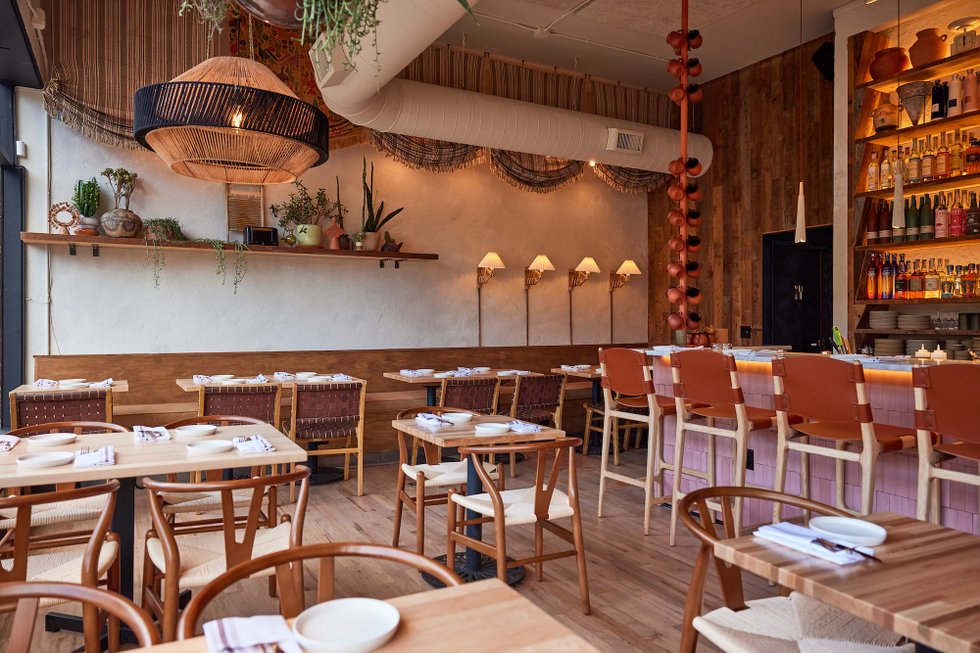
Alma Fonda Fina