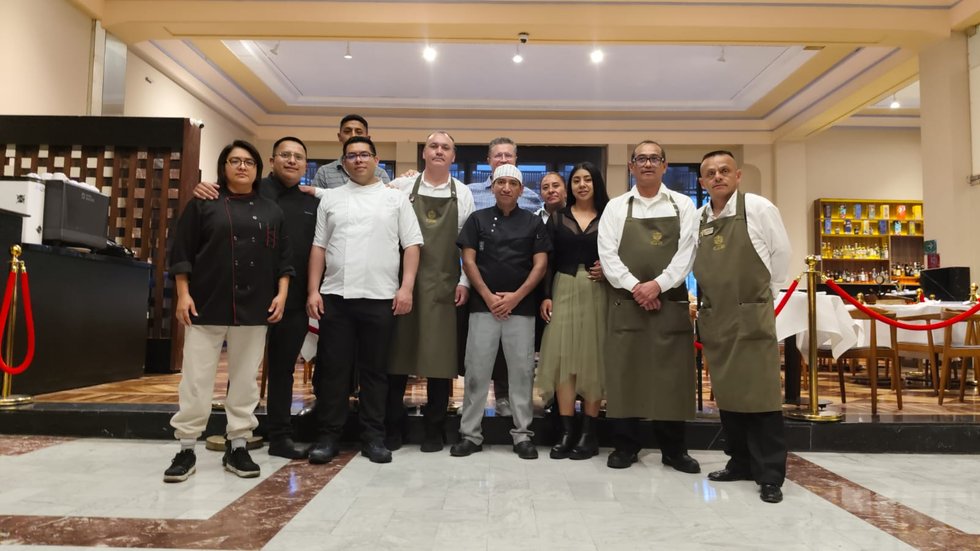
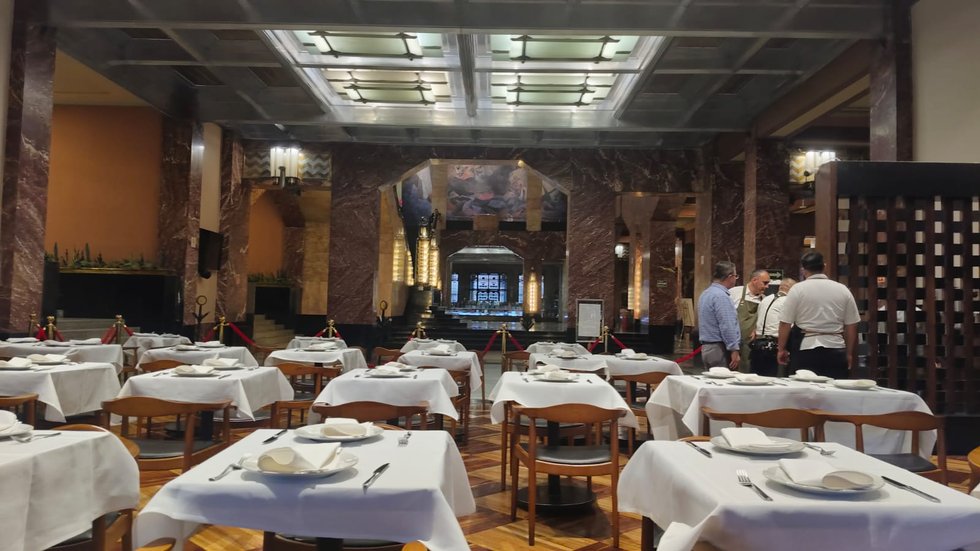
Interior of Café Bellas Artes in Mexico City.
By Alfredo Espinola
The Palacio de Bellas Artes in Mexico City is one of Mexico’s most iconic venues. Its architecture, murals, and the history it holds make every visit a journey through the country’s cultural heritage. However, behind the splendor of the marble and stained-glass windows lies another experience that has gradually begun to write its own story: gastronomy.
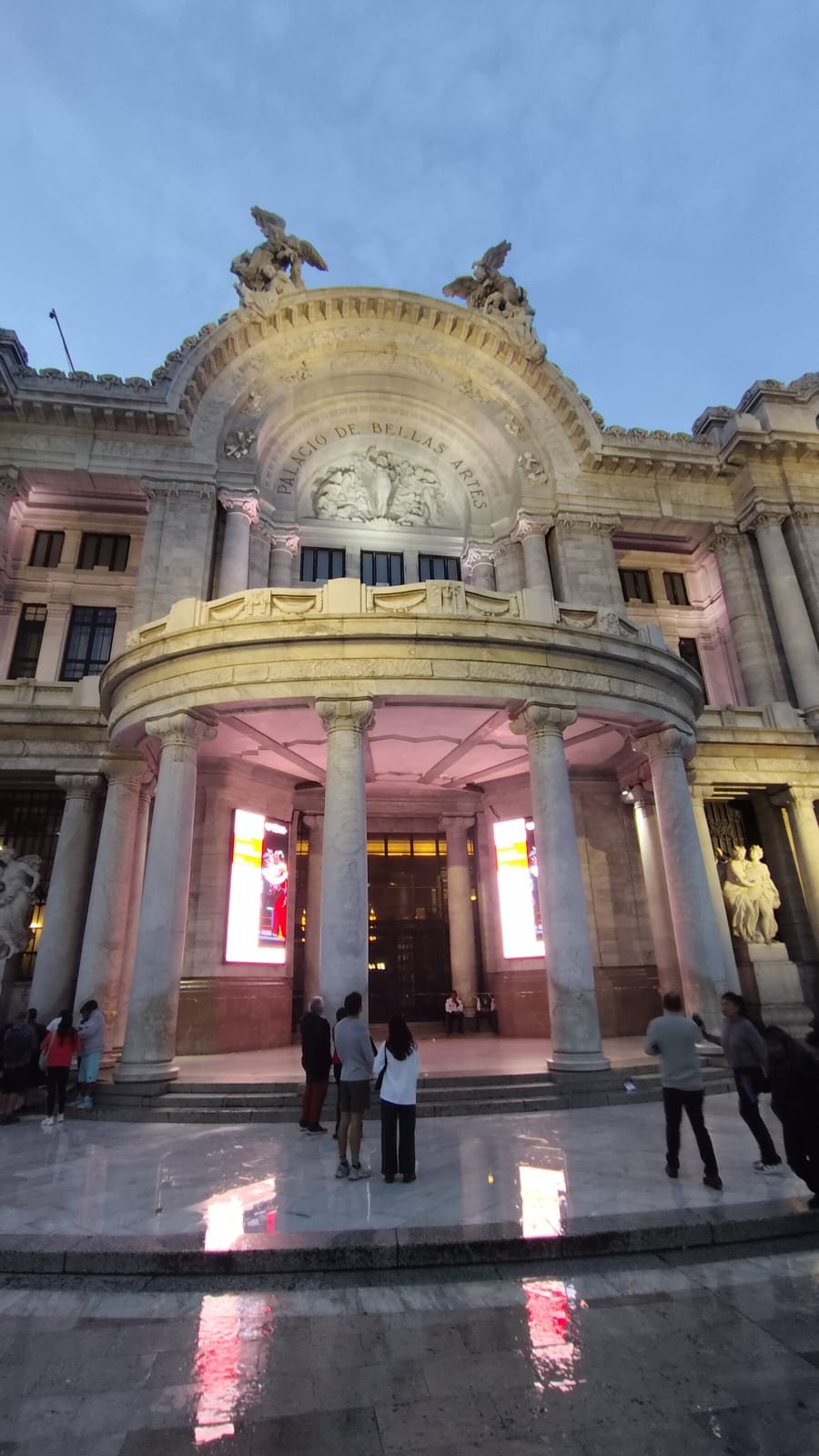
Palacio de Bellas Arte
Located inside the Palacio de Bellas Artes, Café Bellas Artes has established itself, in just two years, as a culinary destination in its own right. The café offers a journey through the flavors of Mexico’s different regions. The concept honors the national cuisine with recipes rooted in tradition, executed with a contemporary touch, and served with a spirit that understands hospitality is also part of the experience. This is the philosophy shared by operations manager Martín Covarrubias Fernández and chef Elihu Guzmán García, who have given this space its unique identity.
A Table That Takes You on a Journey Through Mexico
The essence of Café Bellas Artes stems from a simple yet ambitious idea: to offer a culinary journey through various regions of the country without the diner having to leave Mexico City.
The menu brings together dishes inspired by states such as Yucatán, Tabasco, Jalisco, and the nation’s capital itself. The result is a menu that invites diners to discover Mexico’s culinary richness from different perspectives, respecting the character of each recipe while incorporating the restaurant’s distinctive touch.
The concept strikes a balance between tradition and home-style cooking. It does not aim to compete with the authenticity of regional cuisines, but rather to make them accessible to a broad audience through approachable, well-executed dishes designed to spark curiosity.
A Meeting Place for the World
Few locations offer a diversity of visitors comparable to that of the Palacio de Bellas Artes. Domestic tourists mingle with travelers from the United States, Central America, South America, and other regions of the world.
For many of them, the building itself is the primary reason for their visit. Its architectural grandeur acts as an irresistible magnet; however, once the cultural tour is over, the dining experience becomes a natural extension of the journey.
According to Martín Covarrubias, foreign visitors find much more than just a restaurant here. They discover a cuisine that surprises with its breadth of flavors, the contrasts between intensely seasoned dishes and those with more delicate profiles, as well as a menu that includes breakfasts, desserts, coffees, and main courses capable of showcasing different facets of the country’s gastronomy.
“The intention has never been to simply sell food. The true goal is to offer a holistic experience.”
Every detail—from the service to the presentation of the dishes—is part of an experience designed to ensure that visitors leave with positive memories of their time at Bellas Artes.
The Chef Who Found a New Stage at Bellas Artes
Behind the kitchen is Elihu Guzmán García, a professional whose story shows that the paths to gastronomy don’t always begin at the stove.
He studied tourism in college, but discovered at a very young age that his true calling lay in gastronomy.
His career began at prominent hotels and restaurants, including the Hotel Presidente and Alfredo Di Roma. Later, he continued his professional development at the Club de Industriales and furthered his training through a certificate program endorsed by the Association des Maîtres Cuisiniers de France—an experience that strengthened his culinary vision and solidified a career built on discipline and constant practice.
His arrival at Café Bellas Artes resulted from a change of setting rather than a shift in philosophy. He was part of the team at the Pasillo de Humo restaurant when the management secured the concession for the space within the Palacio de Bellas Artes. With it came the opportunity to create an entirely new culinary concept—one capable of engaging with one of the country’s most important buildings while maintaining a close connection with diners.
Flavors That Take You Across the Country
If the Palacio de Bellas Artes represents Mexico’s premier cultural venue, the cuisine at Café Bellas Artes seeks to become a natural extension of that experience. It does not aim to compete with the building that houses it, but rather to complement it. Its mission is to demonstrate that gastronomy is also an artistic expression capable of telling the story of the country’s cultural diversity.
For chef Elihu Guzmán García, this vision translates into cuisine that invites diners to journey through Mexico via flavor. This philosophy explains the harmonious coexistence on a single menu of dishes that evoke southeastern Mexico alongside preparations characteristic of the country’s central and western regions.
Far from creating an encyclopedic menu, the chef opts for a carefully balanced selection. The intention is for each dish to have its own identity while, at the same time, engaging in a dialogue with the rest of the culinary offering.
The Chef’s Signature
Every cuisine ultimately reflects the personality of the chef who leads it. Although there are recipes that form part of the collective imagination and that any restaurant can offer, there are always dishes where the chef leaves a mark that is impossible to replicate.
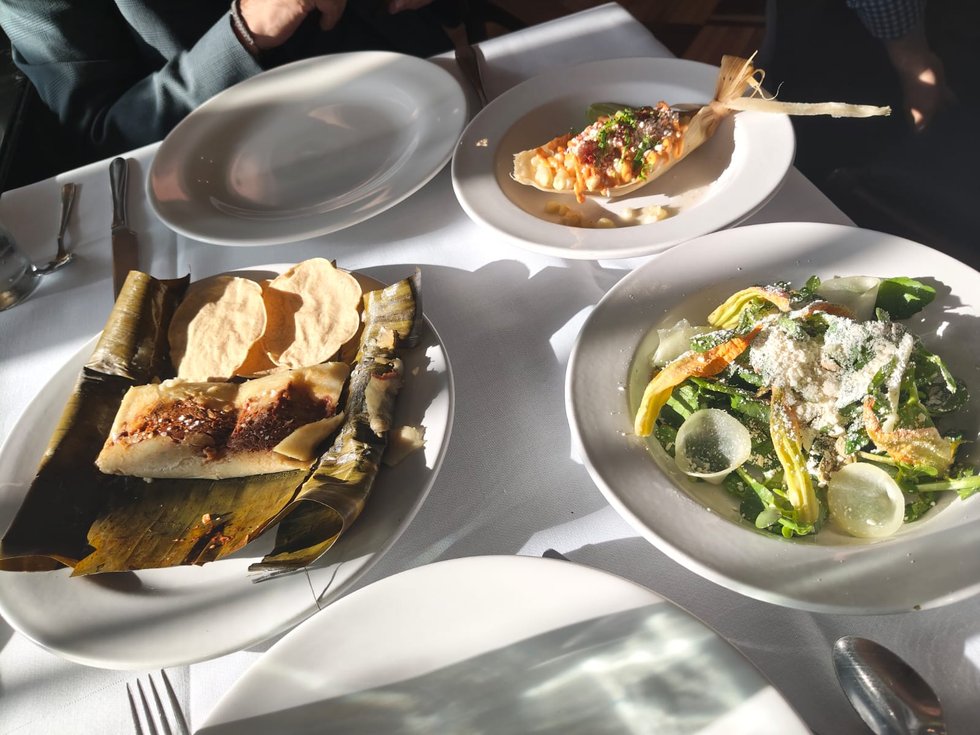
At Café Bellas Artes, that identity is evident from the appetizers onward, notably the esquites—one of the country’s most iconic urban snacks—which receive a unique interpretation that preserves their traditional essence while incorporating details that enrich their flavor. The aguachile, for its part, breaks away from conventional versions to present a unique balance of freshness, acidity, and texture.
Among the main courses, a fish dish stands out, served with lemon-infused cauliflower purée and fine herbs—a preparation that encapsulates the chef’s philosophy: respect for the ingredients, precise technique, and an elegant presentation that doesn’t sacrifice the depth of flavor. Added to this are specialties such as pacholas and the traditional pan de cazón, two offerings that have been particularly well-received by those who return to the restaurant in search of familiar—yet carefully executed—experiences.
The Importance of Consistency
In an era when many restaurants constantly change their menus to follow trends, Café Bellas Artes has opted for a different strategy.
Although seasonal offerings appear throughout the year, the main menu remains virtually unchanged. The reason is simple: customers return seeking the flavors that are already part of their experience.
Removing a successful dish would mean breaking the relationship of trust built with the diner.
Innovation, explains Elihu Guzmán, doesn’t necessarily mean replacing what works, but rather constantly refining it. For this reason, new offerings are introduced as temporary specials that enrich the menu without altering the restaurant’s identity.
A Young Chef with a Long-Term Vision
Despite his youth, Elihu Guzmán speaks of Café Bellas Artes as his life’s work.
When asked where he sees himself in five years, his answer doesn’t revolve around new restaurants or personal accolades. His aspiration is to establish this space as a culinary landmark in Mexico City.
His goal is to continue showcasing the richness of Mexican cuisine from a contemporary perspective, without losing respect for the recipes that have defined Mexico’s identity for generations. Rather than reinventing tradition, he seeks to engage with it and demonstrate that culinary evolution can coexist with the country’s gastronomic heritage.
Tradition and Evolution: Two Concepts that Should Not be Confused
One of the most revealing moments of the conversation arises when addressing a topic that often sparks debate among chefs: the relationship between professional chefs and traditional cooks.
The chef’s response avoids clichés.
He acknowledges that contemporary cuisine is constantly changing because it responds to new techniques, trends, and ways of consuming food. However, he believes that traditional cuisine belongs to another, much deeper realm.
The recipes preserved by traditional home cooks not only pass on culinary knowledge but also preserve family customs, community ceremonies, religious symbols, and cultural identities that are difficult to replicate within a professional kitchen.
From this perspective, he asserts that a chef can draw inspiration from these roots, learn from them, and even pay homage to them, but can hardly appropriate a tradition that belongs to specific communities and has been passed down from generation to generation.
It is an honest reflection that speaks of respect rather than self-aggrandizement.
In an era when haute cuisine often appropriates the discourse of tradition, it is refreshing to hear a chef acknowledge the boundaries between culinary reinterpretation and cultural heritage.
A Setting Where Culture is Also Served
To speak of Café Bellas Artes solely as a restaurant would be to understate the scope of its concept.
Each table becomes a meeting place for travelers, families, artists, students, and food lovers. Every dish serves as an invitation to discover the culinary richness of a country whose diversity can hardly be summed up by a single regional cuisine.
Perhaps that is the project’s greatest virtue: understanding that gastronomy is also part of Mexico’s cultural heritage.
Just as the murals decorating the Palacio de Bellas Artes tell the story of a nation through art, the cuisine that emerges from this space tells another story: that of ingredients, recipes, and traditions that have been passed down through generations until they reach a table where the past engages in dialogue with the present.
In a venue where painting, music, and dance have found a permanent home, cuisine has managed to carve out a place for itself with equal dignity.
Because in the end, a good dish can also become a work of art capable of lingering in the memory long after it has left the table.