
Ana Isabel Photography
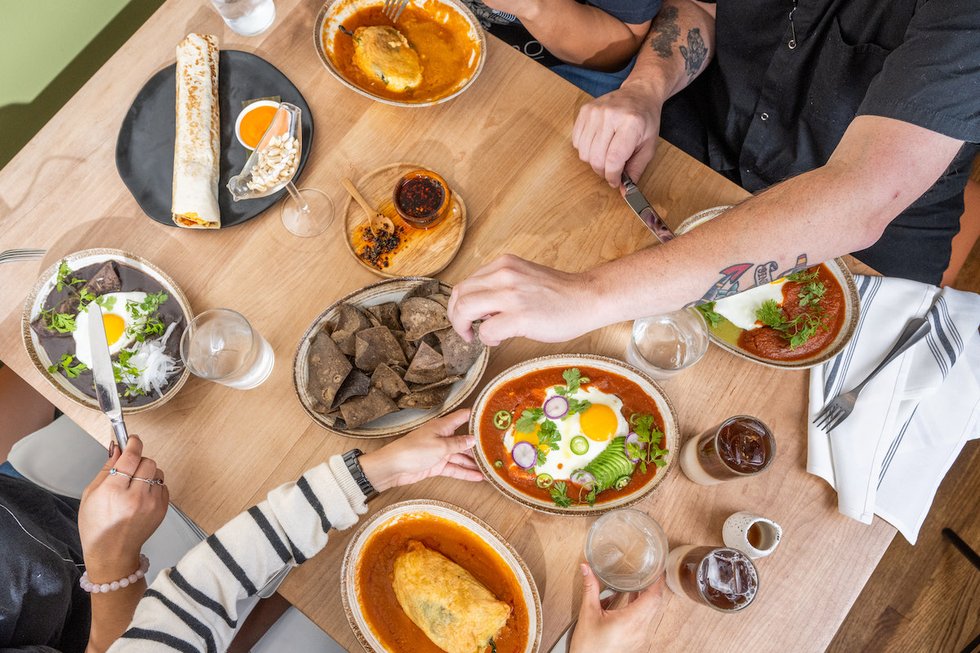
Amparo Fondita
By Natalia Otero
For Christian Irabién, cooking was never too far away, even though for a time he did everything he could—or at least followed the path his family had mapped out for him—to stay away from restaurants.
Born in Chihuahua, Mexico, Irabién grew up in El Paso, Texas, in a family with ties to the restaurant industry. From a young age, his first chores were the usual ones: washing dishes, cleaning tables, and helping out at the family’s restaurants. Not necessarily because that was the future his parents envisioned for him, but rather to keep him busy.
“My family didn’t want me to go into the restaurant business,” he says.
Jennifer Chase
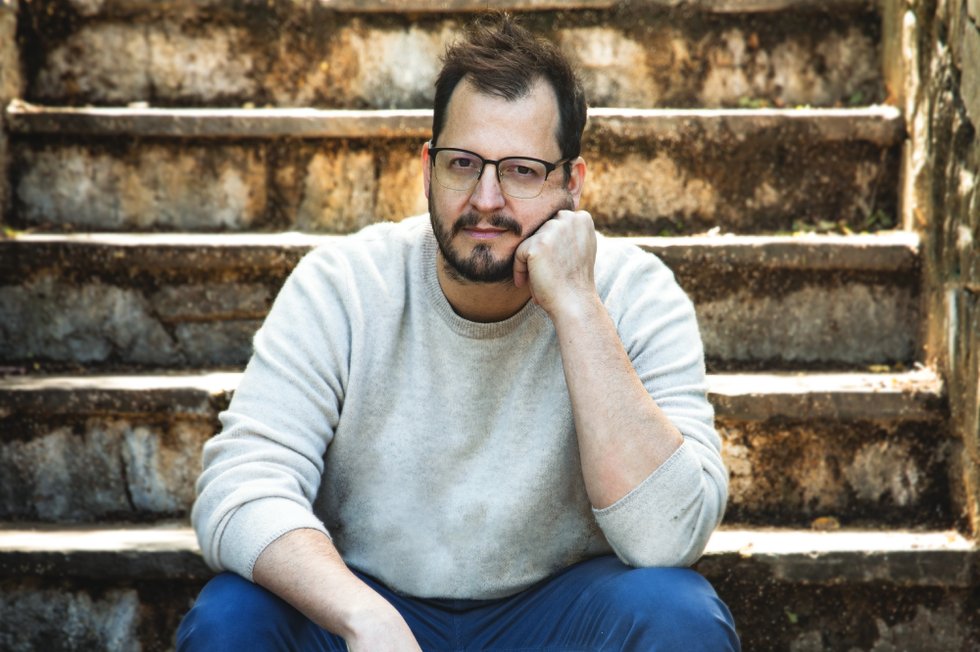
Christian Irabién
So when he arrived in Washington, D.C., in December 2000, while studying business administration, his first job was at the International Monetary Fund. The kitchen seemed, at the time, to be a world away.
But his childhood experiences left their mark and eventually he couldn’t resist the call to return to the kitchen. In 2008, he decided to study cooking and began working professionally in restaurants. Over the following years, he had the opportunity to work with different chefs, gaining knowledge and perspectives on the profession. Before founding Amparo, he also worked on projects related to chef José Andrés at Oyamel, where he continued to delve deeper into Mexican cuisine.
Amparo, which he opened in 2023, became the project where all those experiences came together.
A Family Story
Amparo is the name of his mother and grandmother, but it also means refuge, shelter, and protection. At the restaurant, that idea serves as more than just a definition: it’s part of the space’s purpose.
The concept aims to make guests feel at home—a sense of refuge and comfort. On Amparo’s website, the restaurant describes itself as a Mexican concept focused on exploring the diversity of Mexico’s regions and culinary heritages, from a perspective that blends tradition, evolution, and curiosity.
For Irabién, that connection to family is also directly linked to how he understands Mexican cuisine—as he experienced it within his own family.
He recalls meals in Mexico with his grandparents and uncles and aunts. The family table wasn’t necessarily set with individual plates of tacos. There was a pot of mole, rice, various side dishes, and tortillas to accompany the meal, and the tacos were in baskets for people to help themselves as they pleased, but they weren’t necessarily the centerpiece.
“When we had dinner with our grandparents and uncles and aunts, they didn’t give us a plate of tacos. It was a pot of mole and rice,” he explains.
That memory is behind a significant part of the experience he wants to create at Amparo: a meal that invites sharing, trying different dishes, and participating at the table.
The idea is that if, for example, four people come in, they don’t necessarily each order a single dish. They can order different things and try the chicken, shrimp, fish, beef steak, or pozole. The tortilla should be present, but it shouldn’t necessarily be the main dish.
“For me, the most important thing today is that relationships aren’t transactional—cold like a business deal. In the kitchen, I want customers to have a plate of food that isn’t transactional—not just something that’s served and that’s it—but a dish where you have to reach in, grab your tortilla, and put it together to your liking.”
It’s a way to recapture a dining experience that, for him, has a lot to do with family.
Tradition, but Not Stagnation
Amparo’s cuisine doesn’t seek to literally reproduce the dishes Irabién grew up with.
“It hasn’t intentionally been haute cuisine,” he explains. His interest lies in using modern techniques and applying them to traditional and ancestral recipes. Most of the dishes are based on family recipes and flavors that are part of his memory. But the technique can change.
One example is ceviche. In many traditional preparations, the fish is left to marinate in lime juice for an extended period. At Amparo, Irabién uses a process inspired by a technique more closely related to Japanese cuisine: the fish is sliced just before serving, and the lime juice is added only one or two minutes before serving. The goal is to preserve the integrity of the fish’s flesh.
The technique, then, does not seek to replace tradition, but rather to find new ways to express it. Washington, D.C., is also a place of learning for him. The American public is accustomed to certain representations of Mexican food: quesadillas, burritos, enchiladas, and tacos.
The problem isn’t with those dishes, but with thinking that Mexican cuisine ends there. “Mexico is a very international place,” he says. Its cuisine has evolved from the influences of communities from different parts of the world and continues to do so.
That’s why, for example, pasta specials might appear on the menu at Amparo. Not as a break from Mexican identity, but as a way to remind people that pasta is also eaten in Mexico and that the country’s cuisine cannot be reduced to a limited list of dishes.
Every menu change involves researching dishes, discovering new preparations, and figuring out how to present them to a crowd that may never have tried them before. The idea is for everyone to try everything, like a tasting menu. Each menu changes with the seasons: spring, summer, fall, and winter all affect the availability of herbs, vegetables, and fish.
In that sense, the restaurant becomes a platform to broaden the conversation about what Mexican cuisine can be.
Cooking Is the Easy Part
Opening his own restaurant gave Irabién something he considers essential: freedom. The freedom to define the restaurant’s culture, decide which ingredients to use, determine what message he wants to convey, and design the space without having to answer to a board of directors.
For him, one of the hardest parts of the job isn’t necessarily in the kitchen.
“Cooking is the easiest part. People are the hardest part.”
The people who work at the restaurant and the people who come to eat have different personalities, expectations, and needs. Leadership means learning to manage those individual differences.
His response to that challenge is relatively simple, though not necessarily easy to put into practice: listening.
“The most important thing is to listen,” he explains. And he makes a distinction that sums up much of his leadership philosophy: communication doesn’t end when you finish speaking, but when the other person understands. “Don’t listen to respond, but to understand.”
For Irabién, that ability to listen also requires empathy. And in an industry where people are an essential part of the operation, it may be one of the most important tools he has acquired throughout his career.
A Small Restaurant by Day, Too
The next phase for Amparo stems from a practical question: how to make the concept accessible to more people.
The restaurant is working on a lunch service that will allow customers to enjoy the concept in a quicker, more casual way. The idea was already explored through a three-month pop-up called Tacos El Gabacho.
The project allowed them to experiment with a more informal and accessible daytime version, in a format that didn’t require sitting down for 90 minutes or two hours to fully experience Amparo.
The intention is to maintain the same concept but adapt it to the rhythm of the day: fewer staff on the floor, faster service, and more affordable prices—all without losing sight of what gave rise to the restaurant in the first place.
Amparo was born from a family memory and a sense of hospitality that Irabién learned as a child. For him, that hospitality is deeply Mexican: welcoming someone, making them feel included, ensuring they have something to eat or drink, and fostering a connection that goes beyond a mere transaction.
That is, perhaps, what ultimately defines the idea behind Amparo. Not just a place to eat Mexican food, but a space built around memory, hospitality, and the opportunity to continue asking what it means to cook Mexican food today.
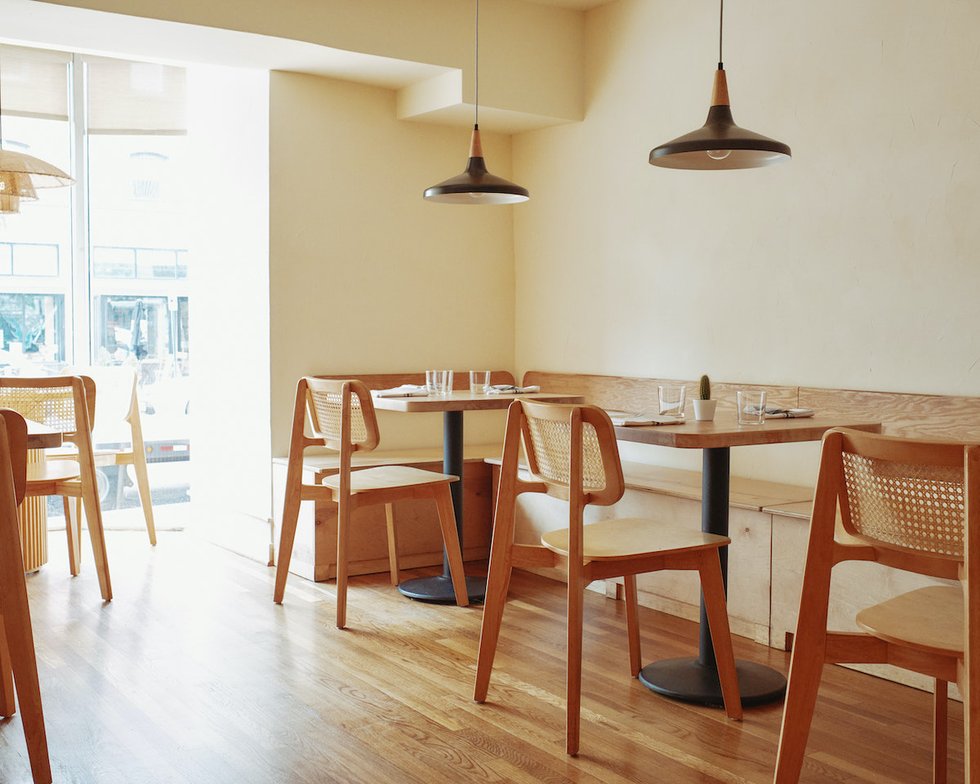
Amparo Fondita