
Mike Prince
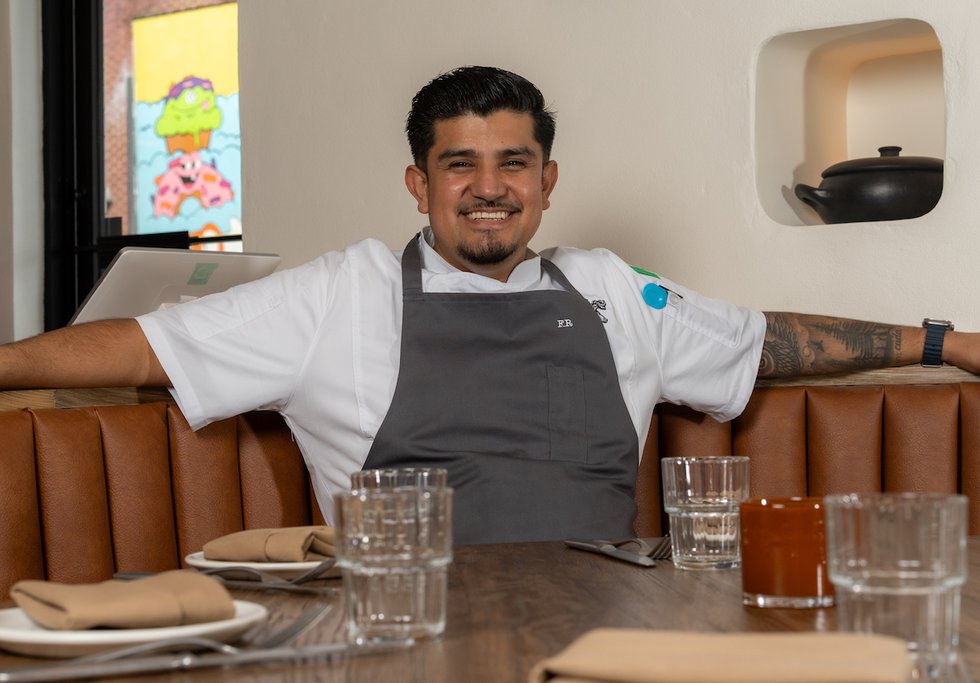
Chef Frankie Ramírez
By Natalia Otero
When Frankie Ramírez arrived in the United States more than 22 years ago, he never imagined that one day his name would be associated with one of the Hispanic restaurants highlighted by The New York Times. Much less did he imagine that what began as a job to make ends meet, when he was just a child, would eventually become the place where he would seek to showcase a different way of understanding Mexican cuisine.
Today, at the helm of Amá in Philadelphia, which opened in May 2025, Ramírez talks about food, but also about migration, learning, identity, and the possibility of creating a contemporary Mexican cuisine without severing the connection to what makes it recognizable.
“I feel happy, content,” he says, reflecting on the journey he’s taken.
The story began far from Amá’s kitchen. Ramírez was born in Mexico City, and his mother is from Puebla. He arrived in the United States at a very young age, after his family’s financial circumstances led him to seek opportunities. The day after he arrived, he began working at a restaurant in Washington Square.
“At that time, I was just a scared little boy walking through that kitchen, and to think that today the NYT recognizes me is a source of great joy.”
The beginning wasn’t easy. He didn’t speak English and wasn’t familiar with the rules of an industry that, in addition to demanding physical effort, had its own unwritten codes. “When I arrived, the restaurant had been open for two weeks. I didn’t understand a word of English. One day I started cleaning walls, sweeping—doing everything—thinking they were asking me to do it, when, in reality, they were telling me to go home and rest.”
Those were years of work and learning. He held three restaurant jobs at the same time to help his family, gradually discovering that cooking could be more than just a job.
Learning Beyond the Kitchen
Ramírez never attended a professional culinary school. His training was built through kitchens, books, restaurants, and many hours of research.
He also sought to learn from other chefs. He worked alongside chefs with different styles and sought out haute cuisine restaurants. In 2017, he even did an internship at Eleven Madison Park.
“I invested so much in myself, in trying out many places, often terrified to ask, ‘Let me work in your kitchen for two days.’”
That quest began with a question: Why couldn’t Mexican cuisine also have a place in that conversation about elegance, technique, and aesthetics?
“At that time, I started wondering why there was no elegance in Mexican food, and I’d tell Vero that.”
His wife, Verónica Ramírez, is also part of this story. They met while working at a restaurant; she was in the pastry department. Over time, they became a couple and, later, business partners.
The answer to that question began to take shape when Ramírez realized he didn’t need to become French, Italian, or Mediterranean to cook with technical skill.
“I became a total nerd; I started researching French, Italian, and Mediterranean cuisine, but something didn’t quite fit. Then I thought, ‘I’m neither French nor Italian, so I might as well do something that represents me.’”
And that’s when Mexico came into the picture.
Tradition and Technique
One of the defining principles of Amá’s cuisine is nostalgia. Not as a literal reproduction of dishes from a Mexican home, but as a way to reclaim familiar flavors and elevate them to a new level through contemporary techniques.
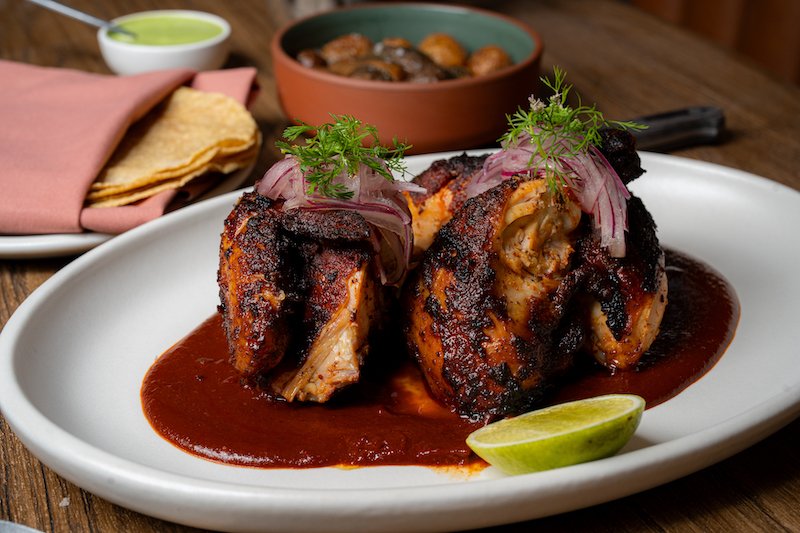
For Ramírez, technique doesn’t have to erase a dish’s memory. On the contrary, it can help highlight it. He speaks, for example, of a chicken dish inspired by memories of his father.
“My father worked as a laborer and got paid on Saturdays, and he’d ride his bike home whistling, then set the bike down and carry the chicken. If that happened, it meant it had been a good workweek, because there was chicken. So, I make that chicken in memory of him.”
That memory ends up becoming a dish that takes four days to prepare. Ramírez explains that he uses techniques such as dry brining, smoking, and grilling to transform the ingredient without losing the original essence.
Mike Prince
Pollo a la Leña
“First, we make a dry brine, a dry brine mixture with salt and sugar. Then we take the chicken out and let it dry. After that, we smoke it and rub it with adobo, using adobo powder. Then we bake it, and finally, we grill it. Grandma didn’t have time to do all that.”
That’s precisely where he finds the intersection of tradition and technique: taking something that belongs to the collective memory and asking himself what can be done with it in a professional kitchen.
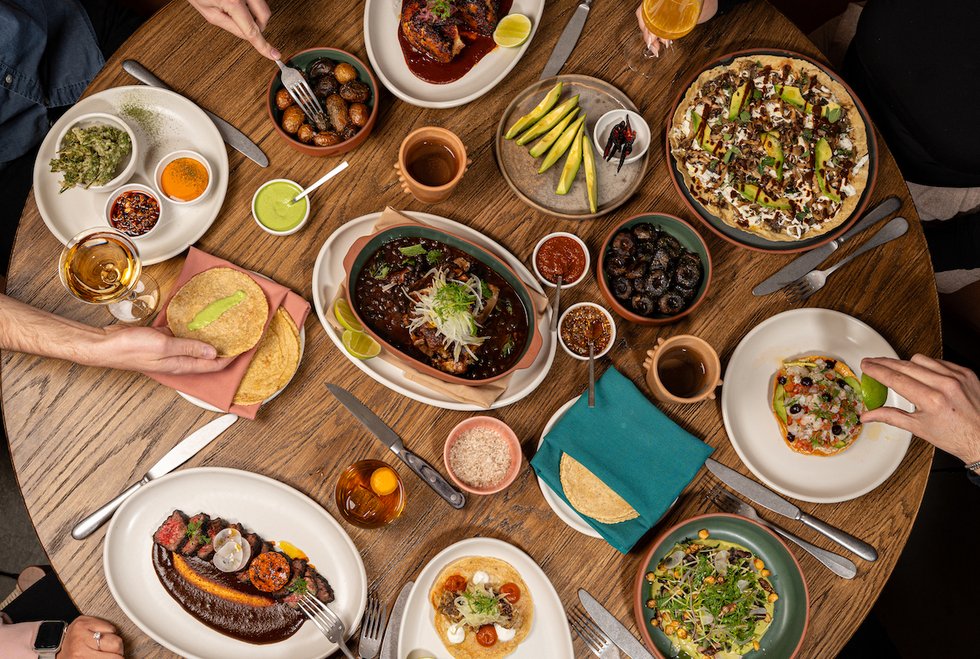
A birria, for example, can still have the recognizable flavors of Jalisco, but at Amá, they use lamb neck, bone marrow, and a slow-cooking process. “We have the patience to make birria, and all our dishes are like that: a blend of technique and nostalgia.”
The menu even serves as a sort of personal archive. “In the ‘bible’ menu, every dish comes with an explanation of its history and why it’s close to my heart.”
Getting to Amá also meant facing one of Ramírez’s greatest fears: the reaction of Mexicans themselves.
“We Mexicans are very protective of our cuisine; we’re very attached to what our mothers and grandmothers used to make.”
That’s why he spent years studying Mexican cuisine. And the more he learned, the vaster the territory yet to be discovered became.
“I studied for many years, and the more you study Mexican cuisine, the more you realize you know nothing; every region, every state is a world unto itself.”
Amá was born precisely from that space of exploration. It doesn’t aim to be a reproduction of a single region or limit itself to the most common expectations of what a Mexican restaurant should be.
Ramírez recalls that, when he began working on the project, some people suggested he incorporate elements more familiar to the public: nachos, fajitas, tortillas.
“But not me—I want to elevate it.”
The intention was different: to build a Mexican experience from his own perspective.
“Amá is my world—it’s Mexican food. It’s what I think about: how to innovate, how to reimagine it, how to do something no one has done before without disrespecting the boundaries.”
A Restaurant Still in Its Infancy
The seed for developing this concept came from famed Philadelphia restaurateur Stephen Starr, with whom Ramírez worked on a project related to Baja California. They worked alongside chef Óscar Torresto to explore a cuisine rooted in the freedom and creativity of that region.
Mike Prince
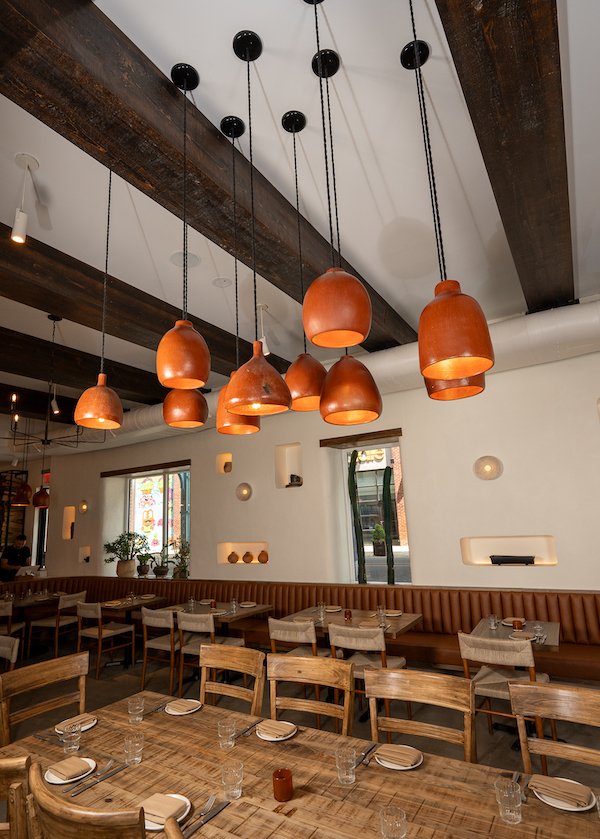
Amá
Eventually, Ramírez realized he wanted to create something of his own. His partners—Roberto Medina, Crisalida Mata, and Verónica—eventually came to share that vision.
For Ramírez, the restaurant also represents a conversation about what Mexican cuisine can be in the United States. It’s not just about the food. The design, the service, the cocktails, and even the comfort of a chair are all part of the experience.
The restaurant is beautiful, just like its dishes, flavors, and staff. Because, he explains, all those elements can determine whether a customer’s experience is good or bad.
Although the New York Times’ recognition marks an important milestone, Ramírez maintains a certain distance from the expectations that awards can generate.
“Amá is still a baby; even though I’m the owner, I don’t know it well yet—I’m still getting to know it.”
The possibility of earning more accolades excites him, but he doesn’t want to make them his sole objective.
“If it happens, that’s great—and it would be awesome. But if it doesn’t, we have to get back up the next day; it’s not going to define us.”
That perspective is also tied to his own story. After more than two decades in the United States, Ramírez wants Amá to be more than just a restaurant.
“All that time, I was searching for a voice and wanting to send that message to other immigrants: follow your dream; don’t hold yourself back.”
And he sums up that idea in a phrase that serves almost as a mission statement:
“Do something that represents who you are.”
At Amá, nostalgia can be a childhood memory, a recipe from Puebla, a birria, a chicken dish that reminds him of his father, or an ingredient that has been part of Mexican cuisine for generations. The difference lies in what happens when those memories come into contact with years of technique, research, and a unique perspective.
Because for Frankie Ramírez, cooking Mexican food in Philadelphia doesn’t mean repeating what already exists. It means understanding deeply where it comes from so that he can ask himself, once again, where it can go.
Mike Prince
The cuisine at Amá