
By Alfredo Espinola
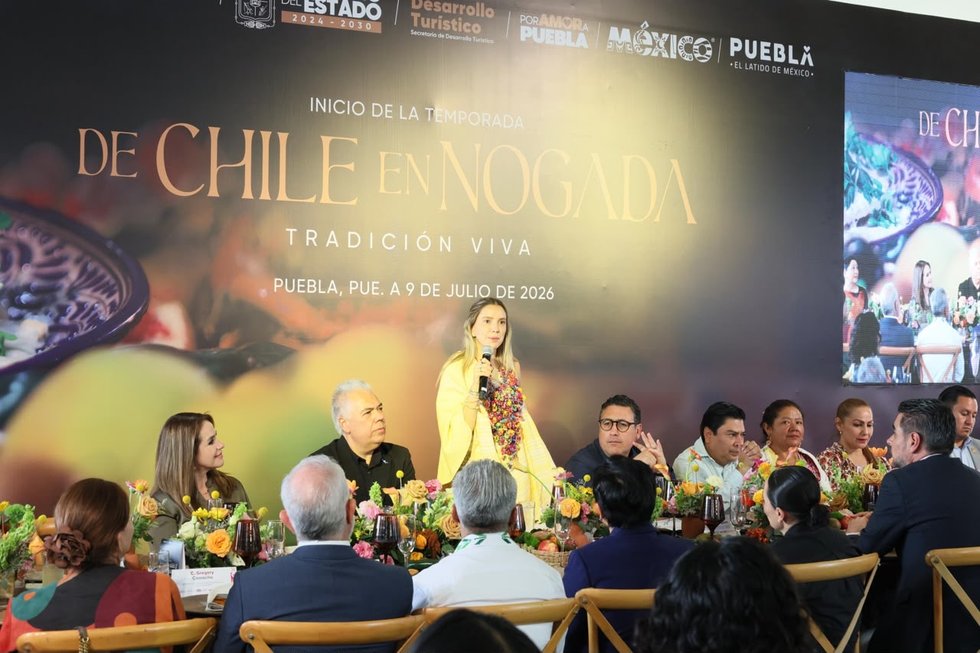
As part of the opening of the “Chile en Nogada, Tradición Viva” season, held in the Mexican city of Puebla on July 9, state officials, representatives from the restaurant industry, traditional cooks, and producers officially kicked off one of the country’s most anticipated culinary seasons—a celebration that each year boosts tourism, strengthens the regional economy, and preserves one of Mexico’s most iconic culinary traditions.
During the ceremony, Secretary of Tourism Development Carla López-Malo announced that 4.5 million dishes are expected to be sold in 2026, generating economic revenue exceeding 2 billion pesos—figures that cement Chile en Nogada’s status as one of Puebla’s main drivers of tourism and economic growth.
The initiative to promote Chile en Nogada encompasses its entire value chain: from the cultivation of ingredients to their preparation and promotion as a tourist attraction. Under an agreement recently negotiated between CANIRAC Puebla (the restaurant and food industry association) and the Ministry of Agriculture and Rural Development, affiliated restaurants will purchase products directly from farmers in the Izta-Popo region, thereby strengthening the local economy and promoting fair trade.
More than 220 family-run production units, around 70 traditional kitchens spread across 11 municipalities, and more than 2,000 establishments participate in this season, which attracts visitors from all over Mexico and abroad.
Each ingredient tells a story, and each dish reflects the efforts of those who, throughout the year, cultivate the Castilian walnut, the Panochera apple, the peach, the pear, the pomegranate, and the poblano chili—ingredients that give the dish its identity.
For those seeking to experience this tradition at its source, Carla López-Malo invited visitors to explore the Izta-Popo region, particularly the municipalities of Calpan and San Nicolás de los Ranchos, where they can visit orchards, participate in community-based tourism experiences, and share a meal with traditional cooks who keep this culinary legacy alive.
Perhaps the most valuable voices are those of the people who keep this tradition alive in their own homes.
Esperanza García, a native of Calpan, shared that preparing chile en nogada brings her entire family together every year around ingredients grown in the Izta-Popo region. Maricruz Morales Ochoa, from San Nicolás de los Ranchos, recalled that she has been preparing this iconic dish for 35 years and has participated in her municipality’s fair for the past 25 years, where the season represents an essential source of income for dozens of families.
From Tehuacán, Ofelia Guzmán Mora expressed her gratitude for the state government’s support in promoting regional cuisine through the recognition of community-based tourism experiences—a strategy that helps preserve traditions while opening new development opportunities for communities.
In Puebla, Chile en Nogada remains much more than just a recipe. It is a celebration of the land, of collective work, and of the identity of a state that, every summer, invites the world to discover that the best way to learn about its history is by sitting down at the table.