
By Alfredo Espinola
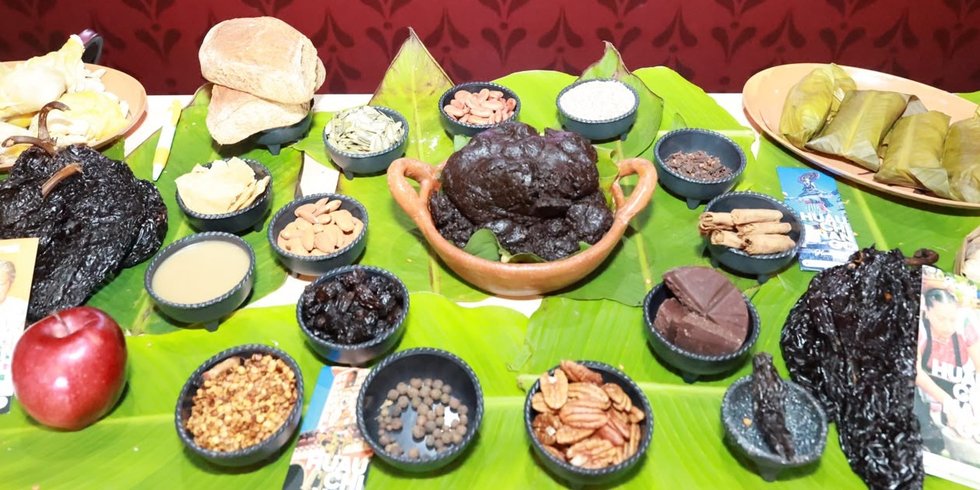
In a Poblano kitchen, mole is much more than a recipe: it is memory, patience, and knowledge passed down from generation to generation. Each ingredient adds a distinct note; together, they create a complex sauce that brings together sweet, salty, and spicy flavors, telling a story where cultures, regions, and expert hands converge.
This legacy was the focus of the Mole Poblano Tribute Dinner Between Flavors and Grandeur, held at the San Pedro Museum of Art on October 7. Presiding over the event, Governor Alejandro Armenta Mier recognized traditional cooks and artisans as guardians of a heritage that transcends generations. “They make it possible to preserve the culinary heritage of Puebla and Mexico for the world; that is the Heartbeat of Mexico,” he said.
The richness of mole poblano is measured not only by its more than 20 ingredients, but also by the expertise required to prepare it and by the stories that each family and community preserves around the hearth. This was noted by Carla López-Malo Villalón, Secretary of Tourism Development, who emphasized that the value of this dish is linked to the people who prepare it and the cultural heritage they keep alive.
For Lázara Pérez Silva, a traditional cook from Huauchinango, mole represents centuries of history, the meeting of two cultures, and the heritage of the indigenous peoples. The word, she recalled, comes from Nahuatl and refers to a sauce or mixture. Its history is also linked to the convent traditions of Santa Rosa and San Pascualito, references that are inseparable from Puebla’s culinary memory.
But mole does not belong solely to the past. Its story continues in the kitchens of Puebla’s 217 municipalities, where the produce of each region and the recipes inherited from their ancestors shape a culinary diversity that deserves to be discovered and preserved. In this endeavor, traditional cooks are not merely custodians of recipes: they are interpreters of a food culture that continues to evolve without losing its roots.
Traditional cook Liboria Solano, from San Nicolás de los Ranchos, also participated in the tribute and highlighted the importance of raising awareness of the work of those who uphold this tradition. Recognizing them means valuing not only the dish that reaches the table, but also the techniques, the time, the selection of ingredients, and the expertise that make each preparation possible.
Puebla’s cuisine also connects a broad community of producers. Behind every mole dish are people who work the land, grow and sell the ingredients, cook, welcome visitors, and share the history of their cuisine. The event also featured producers such as José Manuel Fernández Parra of Sidra Dorada; Esteban Patiño Lozano, a berry grower from Huejotzingo; and Reynaldo Mestre, a beekeeper from the same municipality, who highlighted the promotional and marketing opportunities for their products.
This cultural and economic dimension takes on greater significance as Puebla prepares to host the Tianguis Turístico from March 9 to 12, 2027. The state aims to showcase its identity, attractions, and hospitality to the world, supported by infrastructure improvements and air connectivity that, according to the state government, has increased from six to 20 domestic and international flights, with destinations such as Chicago, Newark, New York, Los Angeles, and Houston, as well as various cities in Mexico.
This increased connectivity can bring new visitors closer to the seasonal traditions and flavors that set Puebla apart: mole poblano, chile en nogada, and mole de caderas. The challenge is to ensure that this attention also translates into opportunities for small and medium-sized businesses, producer communities, and traditional cooks, whose work sustains a significant portion of the state’s culinary heritage.
In Puebla, mole is shared, celebrated, and transformed with each generation. Its greatness lies in the depth of its flavors, but also in the hands that roast, grind, mix, and taste; in the recipes passed down without losing their identity; and in the women who keep alive the memory of a cuisine that speaks of their land to the world.