
Den-T Shutterstock
2716425009
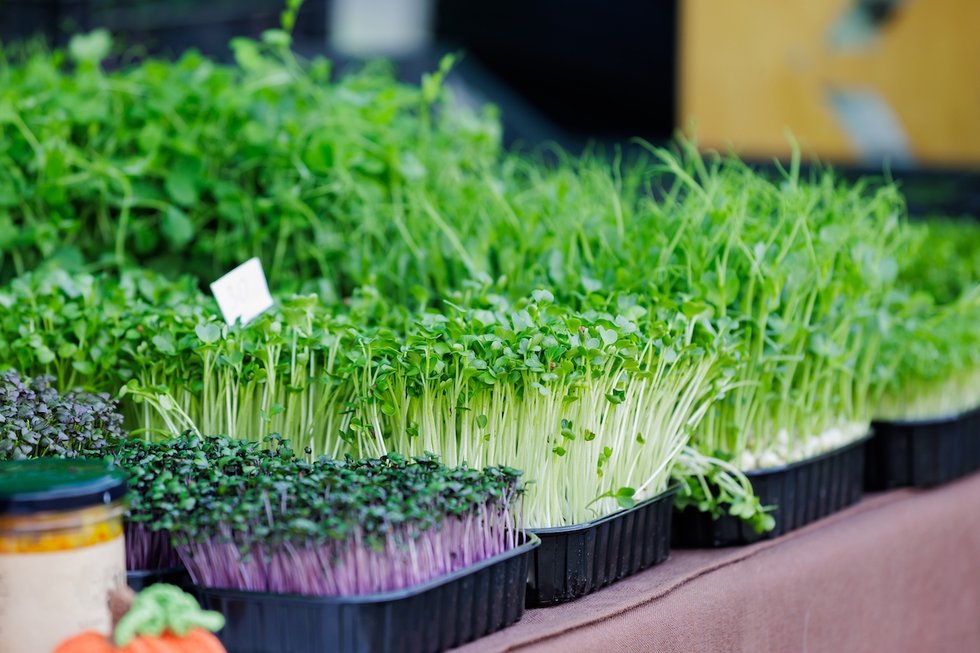
Assorted microgreens at local farmers market. Various types of fresh microgreens displayed at farmers market, concept of organic food, local farming and eco lifestyle.
By Kathleen Furore
When customers order the tuna tostada ceviche, tamal de huitlacoche, or pulpo al mojo de ajo at Manchamanteles in Chicago, they find a chef’s mix of delicate microgreens accenting each dish. Micro marigolds also show up behind the bar in the Flor el Caribe cocktail.
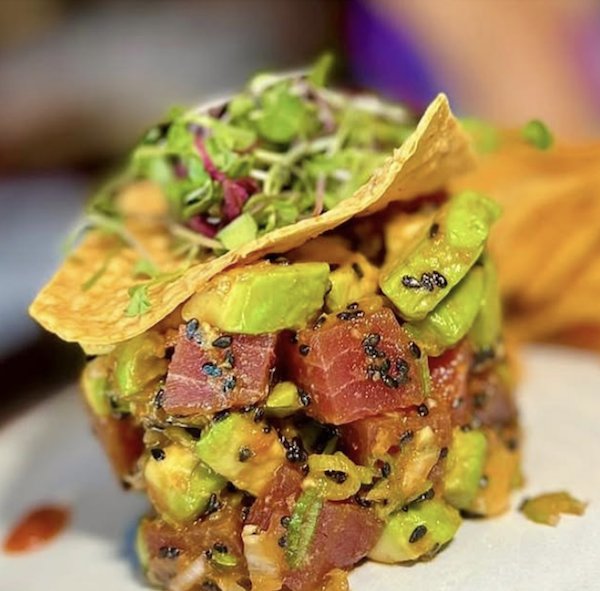
Manchamanteles Tuna Crudo Ceviche with Microgreens
For chef/owner Geno Bahena, those greens are more than garnish — they’re an important component of his culinary repertoire, too.
“I often think of microgreens almost like seasoning. A slightly bitter, spicy, citrusy, or herbal microgreen can help balance fat, sweetness, salt, and chile heat,” says Bahena, who sources most of his microgreens from California-based Fresh Origins. “The right microgreens add flavor, texture, color, freshness, aroma, balance, and visual height to a dish.”
Among his favorites: micro cilantro (for its “fresh herbal character”) and micro epazote (milder than mature epazote, with herby/spicy flavors of thyme, mint, and pine).
IDEAL FOR MEXICAN MENUS
Microgreens have become an often-used tool in chefs’ culinary arsenal thanks, in part, to the nutritional value they deliver. Harvested just after their first true leaves emerge, these young greens pack up to 40 times more vitamins and antioxidants than their fully grown counterparts, including vitamins A, C, E, K, and beta-carotene.
They also bring serious versatility: their flavor, aroma, texture, and color pair well with Mexican food, according to information from Texas-based ChefPax Microgreens, which says that three microgreens work particularly well with the cuisine:
Micro cilantro. It has “a brighter, cleaner citrus punch than mature cilantro, with none of the soapiness,” making it ideal for finishing tacos, ceviches, and salsas.
Radish microgreens. Its sharp, peppery flavor cuts through rich dishes including carnitas, fish tacos, and chicken tinga.
Arugula or mustard microgreens. “A spicy edge that slices through heavy, cheese-forward dishes” makes it a good choice for pairing with chilaquiles and quesadillas.
ChefPax also explains how to use microgreens in specific menu categories:
Tacos and tostadas. “Add raw, right before serving to keep the volatile oils, aroma, and crisp contrast against braised or grilled proteins.”
Slaws and salads. “Fold into shredded cabbage or corn-and-bean fiesta salads with a lime-chili-cilantro dressing.”
Sauces and moles. “[Add] a finishing pop of fresh, acidic green to balance rich, earthy, rustic flavor profiles — a move more chefs are borrowing for modern plating.”
Sidebar: Pairing Microgreens with Tacos
Since tacos are such popular items at most Mexican restaurants, knowing which microgreens enhance which taco fillings can help upscale a basic taco menu.
Radish microgreens are best for tacos when you want spice; sunflower shoots add crunch and substance; and pea shoots bring a fresh green balance to rich fillings.
Rambo radish microgreens add a horseradish-like bite and vivid magenta stems that stand out on the plate — ideal for fish, pork, and carnitas tacos.
Sunflower shoots add crunch while radish delivers a spicy finish that cuts through eggs, cheese, and avocado on breakfast tacos.
Pea shoots bring a light sweetness and fresh green note that balances richer taco fillings. They work particularly well with chicken, shrimp, or roasted vegetables.
— Source: ChefPax Microgreens