
By Kathleen Furore
Editor’s Note: Way back in the late 1980s and early 1990s, one of my favorite Chicago restaurants was Blue Mesa, a restaurant that served Southwestern and New Mexican cuisine in what was then a gentrifying neighborhood of the city. I enjoyed it so much that I ended up hostessing at and later doing public relations work for the restaurant. My favorite dish was one I couldn’t find anywhere else in the city: sopaipillas stuffed with ground beef, shredded chicken, or refried beans and melted cheese, then smothered in New Mexico red chile, Hatch green chile, or “Christmas style” (half red/half green) sauce. I hadn’t thought about those tasty pillows of dough until I started researching this story. It started as a primer on New Mexican food and quickly became a spotlight on one of the iconic dishes of the cuisine: sopaipillas.
Most Americans know sopaipillas as puffy pillows of dough served with powdered sugar or a drizzle of honey. Though often thought of as desserts or as a basket accompaniment to soups and entrees, they work as savory menu items, too, as Blue Mesa showed Chicago decades ago. That makes them ideal culinary canvases for Southwestern and Tex-Mex restaurants — and that versatility is key to their profitability, too.The dough uses pantry staples (flour, baking powder, salt, water or milk, and shortening or lard), so food cost is low. And restaurants can top or fill them with ingredients used throughout the menu, such as honey, chile sauces, beans and cheese.
They also can work on menus at Mexican and Latin-inspired restaurants eager to incorporate dishes from many culinary traditions, even though sopaipillas are not traditional interior Latin American or Mexican cuisine.
Think of the customer appeal, too. Diners will be tempted by pillows of fried dough dusted with cinnamon sugar or served with honey arriving at nearby tables. Adding stuffed sopaipillas goes a step further, setting your restaurant apart and letting you tell the story of a regional menu item not widely available across the country.
On Restaurant Menus
Restaurants that focus on authentic Mexican food don’t often feature sopaipillas on their menus. Those that do typically go the dessert route:
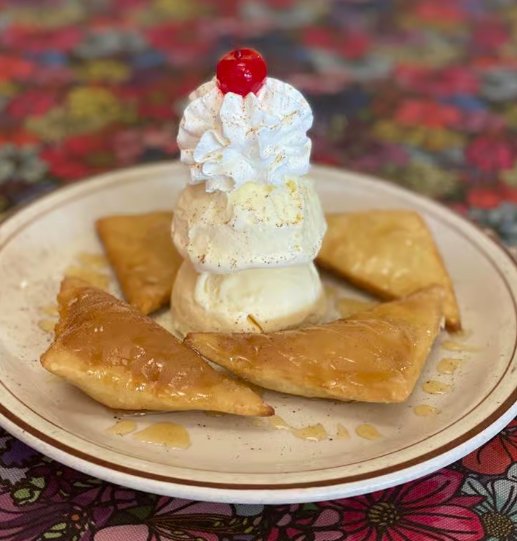
Tapatio’s Restaurante Mexicano
My Neighbor Felix, Denver. This restaurant’s dessert was the most creative we found: Cast Iron Sopapilla Cheesecake billed as “cinnamon puff pastry filled with cheesecake, topped with caramel, and house-made horchata.”
Tapatio’s Restaurante Mexicano, Lakeland, Florida. At Tapatio’s, the dessert tops “warm, golden sopapillas fried until perfectly crisp” with sugar, and serves them with vanilla ice cream drizzled with honey, whipped cream, and a cherry on top.
Pepe’s Mexican Restaurants, Chicago and Northwest Indiana. This local chain with more than 25 locations goes the more basic route: its sopapillas are dusted with powdered sugar and topped with chocolate syrup or honey, whipped cream and a cherry.
Stuffed, savory sopaipillas are found throughout New Mexico. Some of the most popular stops for these iconic New Mexican staples include:
Sadie’s of New Mexico, Albuquerque. In its blog post about sopapillas, Sadie’s calls its stuffed sopapilla — which can be ordered filled with spicy beef, a grilled hamburger patty, shredded chicken or carne adovada — “a hidden gem.
“Stuffed sopapillas turn this fried bread into a full meal,” the post says, noting that their “airy center” can soak up the last bits of red or green chile sauces, while their “soft edges grab every bit of flavor.”
Rancho de Chimayo Restaurant, Chimayo, New Mexico. According to the business, this was the first restaurant to put stuffed sopaipillas on the menu when it introduced them some five decades ago. Currently on the menu: the Sopaipilla Relleno stuffed with
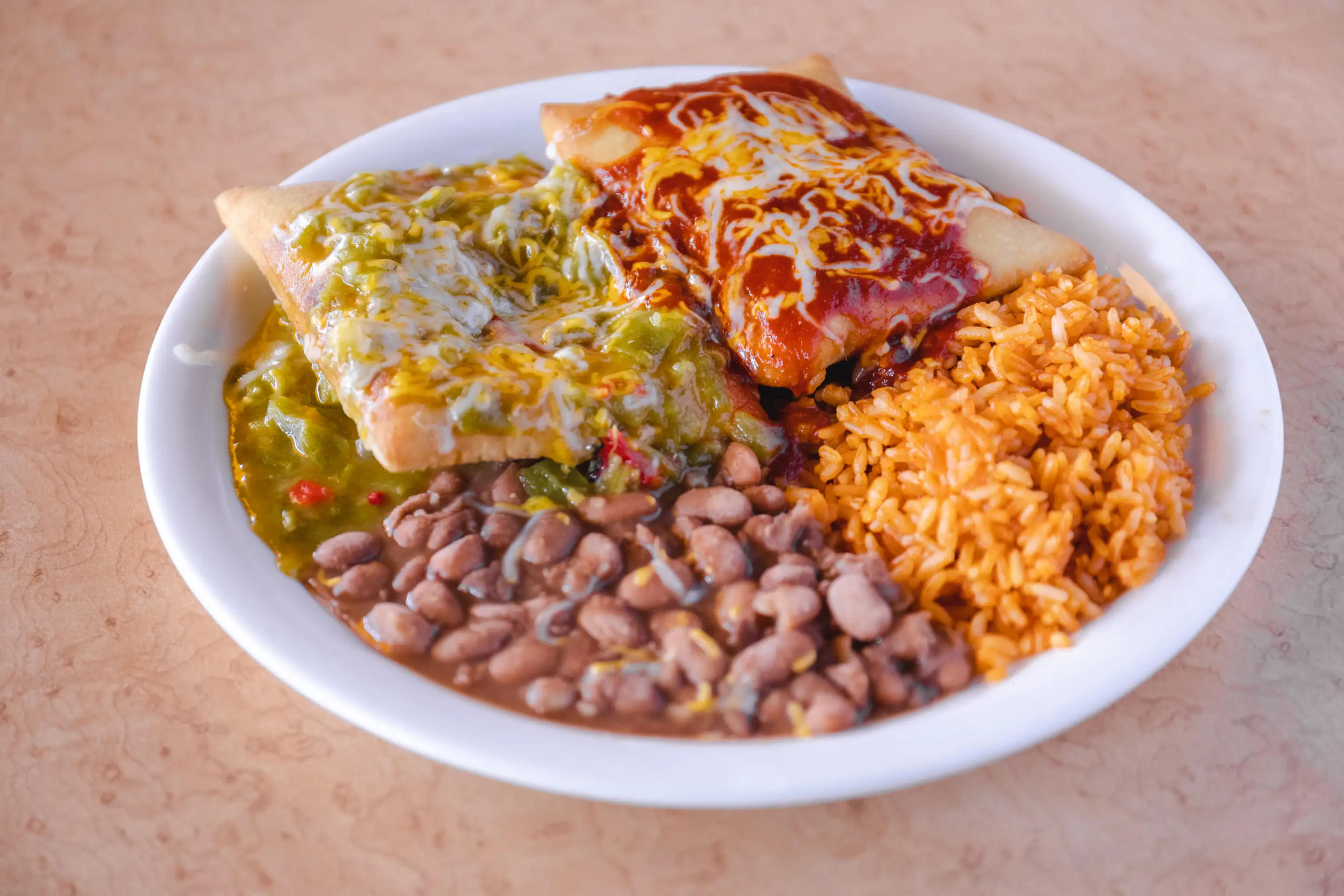
Hot Tamales Restaurant
beans, Spanish rice, and a choice of shredded beef, chicken or pork then topped with red or green chile, cheddar cheese and guacamole.
Hot Tamales Restaurant, Rio Rancho, New Mexico. Customers can order two sopaipillas stuffed with a choice of ground beef or chicken, green chile stew, carne adovada, beef and bean, bean, or chicharrón and bean and a choice of chile to top the sopaipillas. The dish is served with two sides.
Stufy’s, Albuquerque. Known as "the home of the stuffed sopapillas," Stufy’s has been serving New Mexico for more than half a century with authentic New Mexican food that today includes 14 versions of stuffed sopaipillas in a format that resembles a hand-held sandwich. Fillings range from bacon, home fried potatoes and fried egg to refried beans, ground beef, green chile, cheese and lettuce to apple pie filling, cheese and powdered sugar.
Sidebar: Consider the Cons
If you think sopaipillas might work well on your restaurant’s menu, consider a few things before taking the plunge:
*Do you pride yourself and market your restaurant on being a very traditional Mexican or Latin restaurant? If so, consider how customers might respond if you diverge from a menu of authentic cuisine by adding an item clearly connected to New Mexico and the U.S. Southwest.
*Do you have the kitchen space and staff to manage dough prep and frying? Frying dough to order requires dedicated fryer space, hot oil management, and fast assembly since sopapillas should be puffy and crisp when they arrive at diners’ tables.
Fun Fact: Spell Check: Is it ‘ai’ or just ‘a’?
That’s the question many people have when deciding how to spell sopaipilla/sopapilla. The answer is simple: You can’t go wrong, because both ways are correct!
“’Sopaipilla’ is the older, more traditional Spanish spelling. It comes from sopaipa, a term for fried dough used in southern Spain,” says family-owned Sadies of New Mexico, a restaurant with three locations in Albuquerque. “As the dish traveled through generations and across cultures, the spelling naturally shifted in different regions. In New Mexico, ‘sopapilla’ is more commonly used. That’s the version you’ll most often see on menus, cookbooks, and signage throughout the state.”
Note: el Restaurante’s style is to use sopaipilla; in this story, we’ve used the spelling each restaurant mentioned uses on its menu.
SIDEBAR: Red or Green, Chile or Sauce?
Some restaurant menus say customers can choose red or green chile with their stuffed sopaipillas, some say red or green chile sauce. Do they both mean the same thing? Yep! They both mean the sauce that will top the food.
And there’s an interesting story about how important that choice — red or green — is to the state of New Mexico!
Nearly every dish in the state can come smothered in chile sauce, so servers ask, “Red or green?” They’re asking which type of New Mexico chile you want. A 1995 bill to make “Red or Green?” the official state question was vetoed by Governor Gary Johnson. The legislature responded in 1996 with a House Joint Memorial, which didn’t need his signature, and in 1999 the question was written into the state-symbols statute, and "Red or Green?' was adopted as the official question of New Mexico." The measure was meant to signify the chile industry’s importance to the state’s economy
The way the “Christmas” option was added is equally entertaining.
Martha Rotunno, a waitress at Santa Fe’s Tia Sophia’s restaurant, got tired of watching customers agonize over red or green. She suggested to “do it Christmas” and serve the two side by side. Eleven years after establishing the official state question, the New Mexico Legislature added an official state answer and “‘Red and Green or Christmas’ was adopted as the official answer of New Mexico.”
— Source: Hatch Green Chile Store