
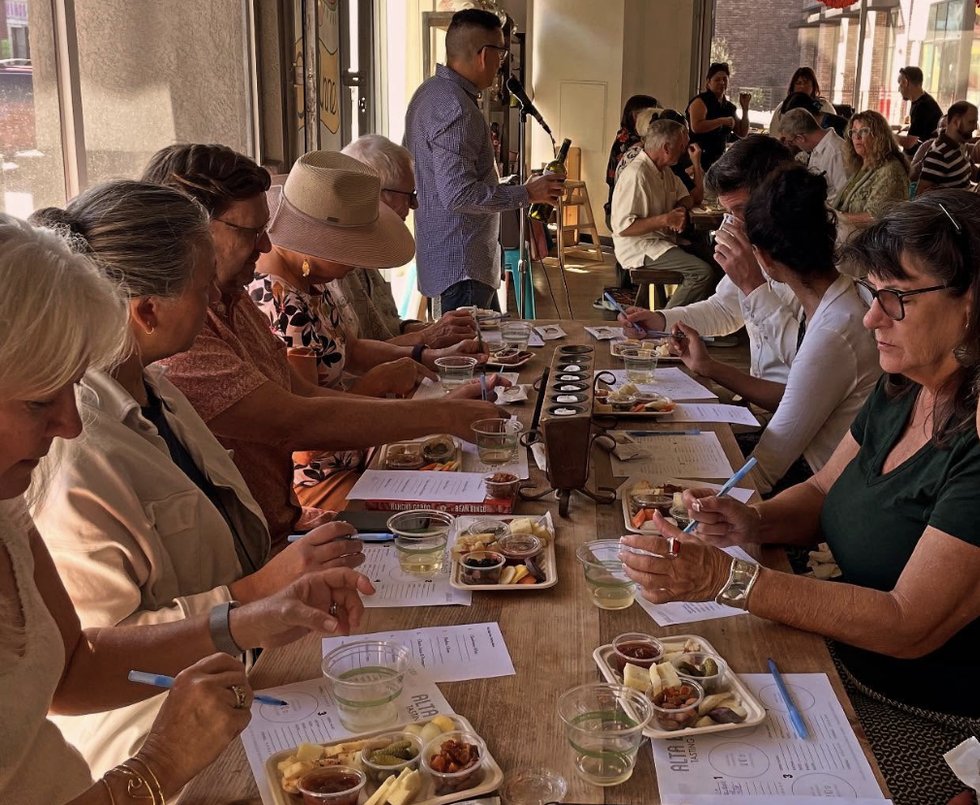
Attendees at Alta Baja's Encuentro event
By Ed Avis
People come to restaurants for lots of reasons – to eat, to meet with friends, to relax. But some restaurants give customers another reason to visit: to enjoy a special event such as a tasting, book signing, or educational event. These kinds of events can attract people who may not otherwise come to the restaurant, and they’re a way to build the community around the restaurant.
To learn more about the mechanics of restaurant-based events, el Restaurante Publisher Ed Avis interviewed Delilah Snell, owner of Alta Baja Market, a café and specialty grocery store in Santa Ana, California, that hosts special events ranging from Mexican wine tastings to sugar skull workshops to Pozole Sundays year-round.
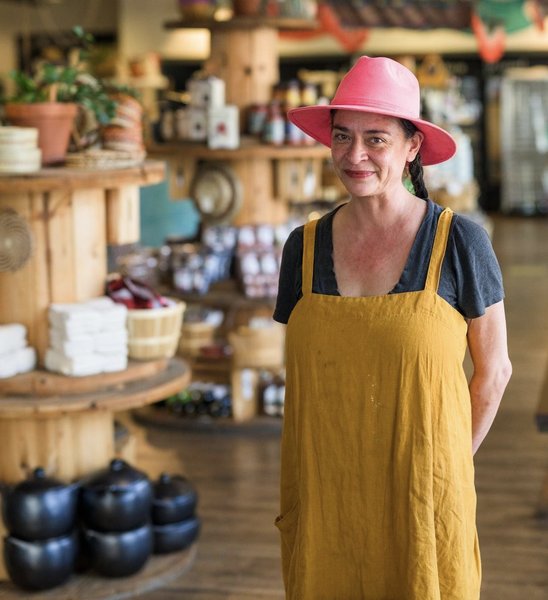
Delilah Snell
el Restaurante: Why do you host so many events at Alta Baja Market?
Delilah Snell: I always feel like it’s an interactive way to get people to participate in the business. It also highlights the people who make items or write items or produce items that are a part of the business. For example, we had Bricia Lopez from Guelaguetza Restaurant [in Los Angeles] here for a book signing and conversation. We sell her mole and we sell her books. So, I feel like it's just like a natural thing to do. I think it just like compliments the things that we have in here.
eR: Do the events bring in new customers?
DS: Yes, we do get new people because the person who is going to be highlighted will promote that they’re going to be here. For example, when Bricia Lopez is here, we start getting her fans that are in Orange County that might not be able to go to LA, so they’ll come in here. So, I want to say maybe it’s like 50-50 [new and existing customers]. And we always get more sales that day.
For example, yesterday we did a tasting with William Hoffman, an author who just did a book called “Exploring Southern California: 80 Outings for the Urban Adventure.” We did a tasting for 20 of his people and I sampled one mezcal, two micheladas and a wine. And then we did a short discussion on Mexican wine, and what mezcal is and how it’s different from tequila. Everybody loved it, and at least half the people bought bottles.
eR: How do you find the topics or presenters for an event?
DS: There are different ways. Sometimes I’ll get a rep that comes in that I feel like has a really good vibe and they bring in some products and I actually like them. I’ll ask them if they want to do a tasting and lecture. Likewise, if I find out about somebody that’s coming out with a book, I will ask them to do a signing here. I mean, there are obviously booksellers in Orange County, but there are not booksellers who just really focus on food.
The other thing is I just listen to my customers. For example, if I get a lot of people asking about Mexican wine, I’m like, “Okay, we need to do a tasting.” I have a book called “The Beginner’s Guide to Preserving” and I’ve been getting a lot of people now asking about that. People want to learn how to preserve their harvest. They want to learn about fermentation and canning. So, I’m going to try and do a fermentation class before the end of the year, and I definitely have six to eight classes for next year based on the book on specific ingredients and specific techniques.
eR: How much preparation does it take to hold an event?
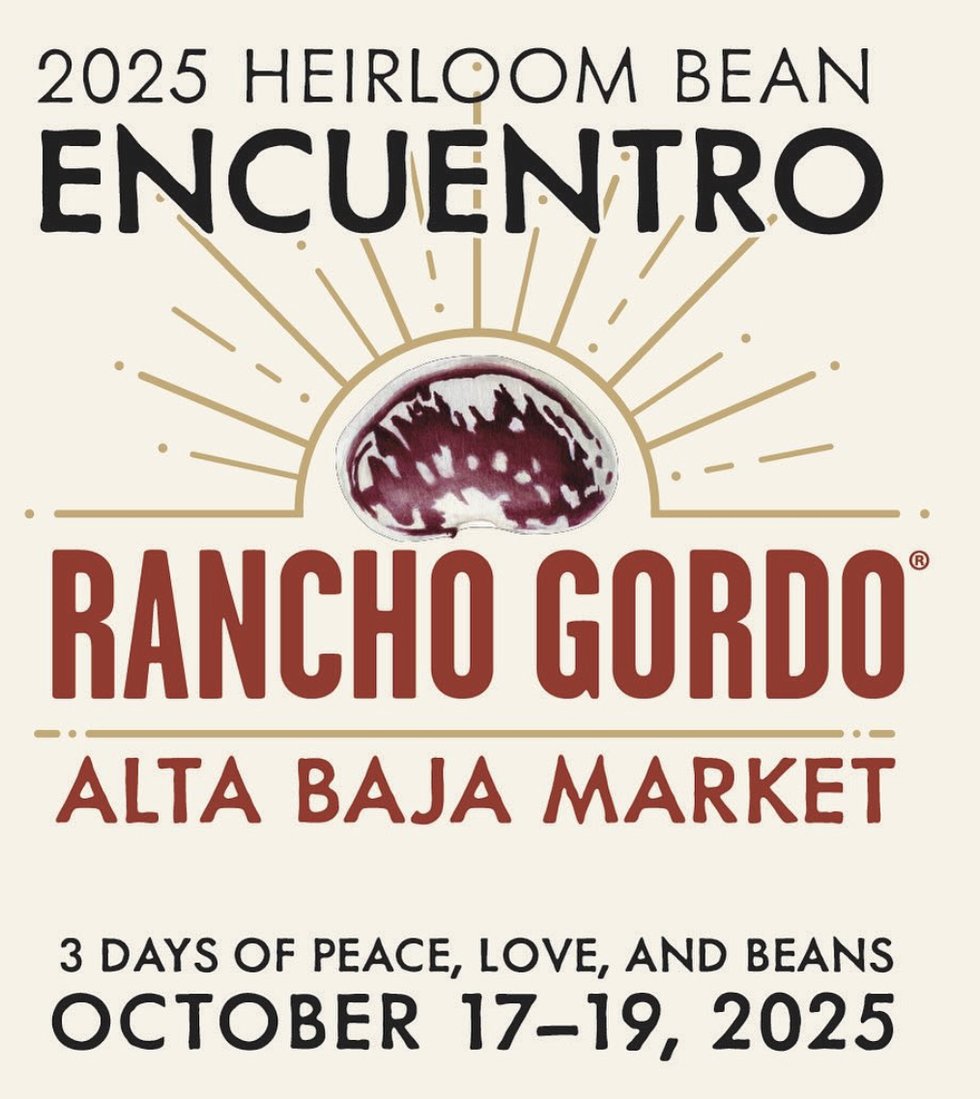
DS: Well, if it’s something like Encuentro, [an annual three-day event celebrating Rancho Gordo beans], I’m preparing for 10 months. It’s a big, big process. But if it’s something like a canning class, where we’ll have a max of 12 people, first I need to figure out what we’re going to make, then I make a little recipe book. And I always spend the day before practicing what I’m actually going to say. If it’s something like a book signing, I pick one item from their book to make. I usually try and pick something that's relatively simple so we don’t have to overextend ourselves. But other than that, we just prepare that day. We just set up the patio with chairs and stuff. So that usually takes an hour.
eR: Do you do all your events on the patio or do you have other places in the store that you can do them in?
DS: I prefer to have events outside because cars that are driving along 4th Street see what’s going on and they’re interested. But it depends on the event. Recently we did a musical event, like a secret concert. It was a local musician that’s a friend of mine and she wanted to play her new album. It was like 60, 70 people, and we did it inside. The fermentation class is going to happen in our kitchen. But the canning class is going to happen at our friend’s nonprofit, the Catholic Worker. It’s a women’s shelter down the street. They have a big industrial kitchen, so it highlights them, but we also get to use their kitchen.
eR: Do you make money on these events or do the ticket prices just cover your costs?
DS: We’re not making like a huge amount, but it covers the cost. And with every event we do, at least a few people buy stuff. I do want to make the events accessible. For example, with the sugar skull decorating class, we have somebody in-house that makes the sugar skulls. And we have all the ingredients for it. And then a friend of mine works at a creative reuse center, so she brings us all the decorations. And so all I do is make the frostings and bring glue and make snacks. It doesn’t cost too much.
We just try and get creative with what we do. The book signings, we definitely don’t make as much money because we’re serving all this food. We don’t serve big portions, but we’re still buying product and prepping it. But it comes back because people come in and buy product.
We always do well when we do events, but you know, it’s also labor, promotion, all that stuff.
eR: You have some events that are not even at Alta Baja, like the trip to wineries in Valle Guadalupe.
DS: Yes, we do that together with one of our importers, Vinos Los Angeles. It’s a little bit more expensive, but we have the shuttle that picks us up on the U.S. side and drives us across the border. We have three stops in Mexico, and one of them is with lunch. And then the shuttle brings us back across. The exporter makes the connections with the winemakers, and I’m in charge of rounding up the people and giving them emails to prep them and then promoting it.
We also do a historical tour downtown. And then I have a friend of mine who’s a local muralist and she does an art tour downtown.
eR: In those cases, the attendees are not shopping at your store, but you still find them worth doing?
DS: Well, we make very little money on those, but it’s people repetitively coming into the store and seeing what we do. They might not buy a bottle of mezcal at 9 a.m., but they do look around while they're waiting for the tour to start. So, it’s exposure.
eR: Any tips for others who might want to hold events?
DS: You have to be creative. You have to give people something that they don’t usually see. For example, a lot of people do wine tastings. But do a lot of people do wine tastings specifically on Mexican wine? So you have to do things that make you stand out a little more.