
By Ed Avis
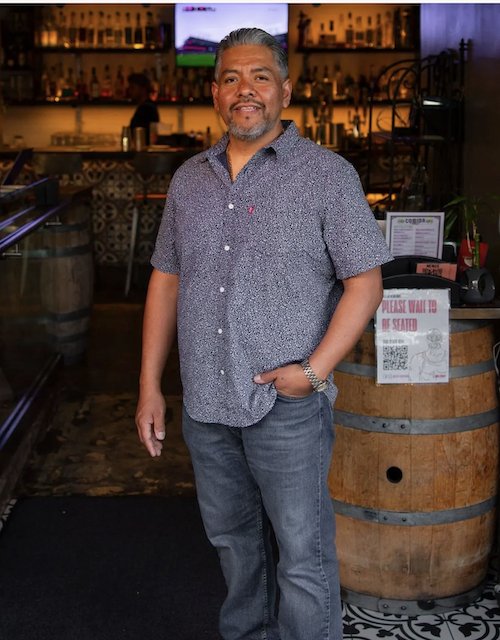
Manuel Martinez
La Viga — a Mexican seafood restaurant in Redwood City, California, part of the three-restaurant La Viga Culinary Group — is known for its coastal Mexican cuisine made from local ingredients and craft cocktails made with artisanal agave spirits.
“We are a family-owned business that cares for what is on the plate, from the creation to the use of fresh ingredients,” says Manuel Martinez, owner and executive chef of La Viga Culinary Group. “But we still remain approachable for guests.”
But it’s not been easy going for La Viga this year, Martinez says. Sales have been slightly down in 2026 compared to last year, while prices — especially for beef and liquor — have shot up.
“We had a dip in business last year, and this year remains on the same path with more stress, lower sales, higher costs,” he says.
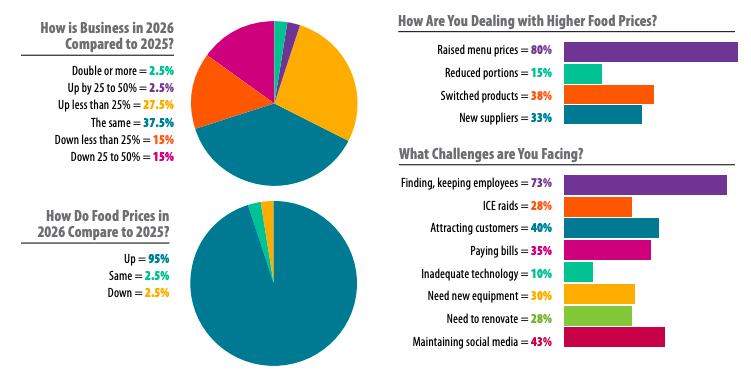
Martinez is not alone. According to the 12th annual el Restaurante State of the Industry reader survey about business conditions, 30 percent of Mexican/Latin restaurants have seen sales fall this year. About 38 percent reported that sales are flat, and about 33 percent said sales are up over last year.
However, there are bright spots in the industry. In fact, this year our survey numbers are slightly better than they were in 2025. Forty-two percent experienced a drop in sales in 2025, so the industry is 12 percentage points stronger in that category this year.
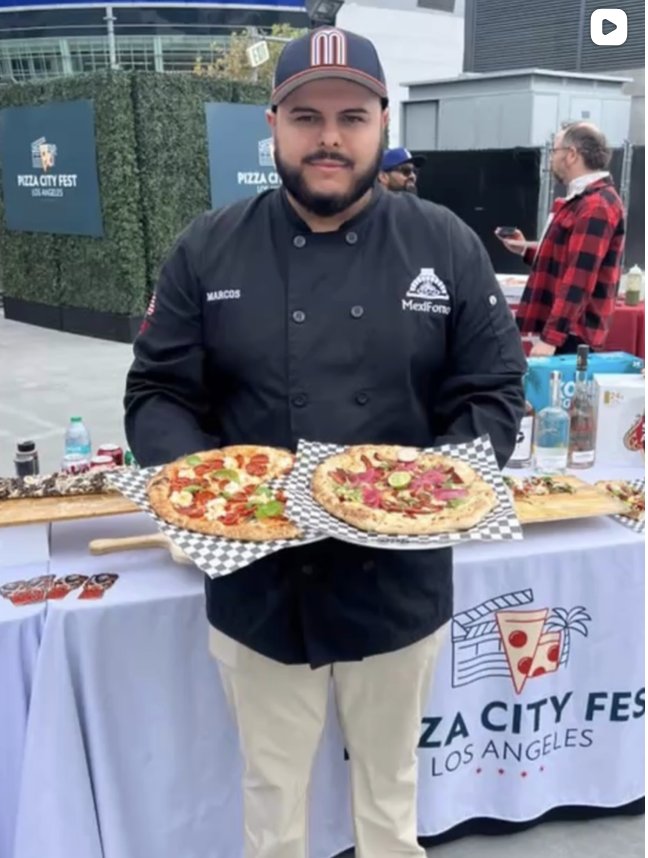
Marcos Buenrostro
Mexiforno, a Nipomo, California food truck that specializes in Neapolitan-style pizza with Mexican toppings, is one of the restaurants doing substantially better in 2026 over 2025. Sales are double what they were last year, according to Owner Marcos Buenrostro, who founded the business in 2019.
“Our community has been incredible,” Buenrostro says. “People have supported us through the good times and the difficult ones, and a lot of our growth has come from word of mouth. We’ve also been consistent with our social media and keeping our customers involved in what we’re doing. We’re grateful that people continue to come back and support us.”
Food Costs a Growing Challenge
Our survey, which 40 Mexican/Latin restaurant owners answered in late October, revealed inflation has pounded the restaurant business in 2026. Ninety-five percent of respondents said food prices are up — a full percentage point higher than in 2025.
“Food costs have definitely been one of our biggest challenges,” Buenrostro says. “The cost of ingredients, packaging, fuel, and just about everything else has gone up.”
The survey’s food cost question asked respondents to explain exactly what items had increased in price. Proteins led the list, especially beef — skirt steak, ground beef and fajita beef were all cited as more costly this year.
“A long time ago, the particular cut of meat we’re using for fajitas was a couple of bucks a pound, and nowadays it’s $11 a pound,” says Roland Laurenzo, owner of El Tiempo Cantina, which has 13 locations in the Houston, Texas area. “Four or five years ago it was maybe like $6 or $7, so it’s gone up 30 to 40 percent in just the last few years.”
Produce also is causing a lot of price pain. Twelve of the 31 respondents who answered the question about which food items had increased mentioned produce. And that’s not including the six readers who simply said everything has gone up!
A number of respondents also noted that the cost of paper goods, such as to-go packaging and condiment containers, has jumped this year.
Dealing with Painful Prices
How are our readers dealing with these increased costs? The number one tactic, according to the survey, is to raise menu prices: 80 percent have raised some or all menu prices.
“During the last four or five years, we’ve had at least four price increases, each one about 4 or 5 percent,” Laurenzo says.
La Viga’s Martinez also has used that tactic.
“We have been changing our menu constantly, raising prices here and there, trying to keep balance,” Martinez says. “We are still serving quality, value and enough food so guests are happy.”
These cost-challenged operators also are employing other tactics to mitigate the impact of escalating food costs: 38 percent of respondents have switched to less expensive products and 15 percent have reduced portions. However, even when they are doing those things, they are working hard to make sure they are still offering a good value for the money.
“We try to make adjustments wherever we can without compromising the quality of our food,” Buenrostro says. “Our biggest priority is making sure our customers are still getting a great product.”
Jon Rogan, head of culinary at rotisserie chicken restaurant Juan Pollo, which has 26 locations in southern California, echoes Buenrostro: “We are always looking for a better deal, but not necessarily the cheapest food. We want to maintain our quality.”
Juan Pollo has another idea for shaving costs, too.
“We’re going to build a commissary and we’re going to do a lot of the heavy lifting that’s done in the stores now,” Rogan says. “That includes things like making tortillas and potato salad.”
The commissary will allow for greater quantity purchases of food, and it will reduce labor costs, Rogan predicts.
Labor Supply, Costs Also Hurt
Another pain point for many Mexican restaurant owners is labor. Nearly three quarters of survey respondents said finding and retaining employees is a key challenge — approximately the same percentage as last year.
Growing labor costs go hand-in-hand with a labor shortage. Even though the survey did not specifically ask about labor costs, follow-up interviews revealed that those costs are skyrocketing.
For example, Laurenzo from El Tiempo Cantina says a dishwasher who made $20,000 a year a few years ago is earning $35,000 a year now.
But Laurenzo does not express any frustration at his employees about this situation; he knows they need the money.
“They’re asking for more because they need more just to be able to live, to pay the basics you know,” he says. “The rent, the gas money, the food money, their insurance.”
Another labor challenge that many restaurants have faced, which possibly will ease with recent change in Congress, is overbearing immigration enforcement, better known as ICE raids. Twenty-eight percent of respondents said they have been dealing with immigration raids or fear of those raids.
“I think that's just something that is in the environment,” Rogan says. “I mean, we’re in a very Latino neighborhood here in San Bernardino. We haven’t seen any ICE raids here, but they’ve happened close by.”
Stress Mixed with Optimism
There’s no doubt these are trying times for restaurants, with rising costs and customers who are counting their pennies.
“Generally, the experience I’ve had is that the last few years have been very difficult,” Laurenzo says.
Martinez from La Viga says it more succinctly: “It feels weird.”
However, there is still a streak of optimism in the industry. Rogan, for example, says the owners of Juan Pollo hope to double the size of the chain in the next five years.
“For this restaurant, I’m optimistic. I think it’s going to be good,” he says. “I think if certain economic things take place, you know, there’s a lot of reason to be optimistic.”
Buenrostro also foresees good things for Mexiforno. He says he hopes the restaurant eventually becomes a Mexican pizzeria franchise, combining authentic Mexican ingredients with authentic Italian techniques. But even in the shorter term he’s optimistic.
“Our goal is to eventually have a larger commercial space where we can operate more days, create more jobs, and provide a better experience for our customers,” he says. “We know there’s still a lot of work ahead, but we’re grateful for the opportunity to keep growing and doing what we love.”
And despite the tough years he has seen, even Laurenzo sees more success ahead for El Tiempo Cantina.
“It’s just kind of my nature, but I do believe things are going to get better. As long as we keep serving great quality and having great service.”