
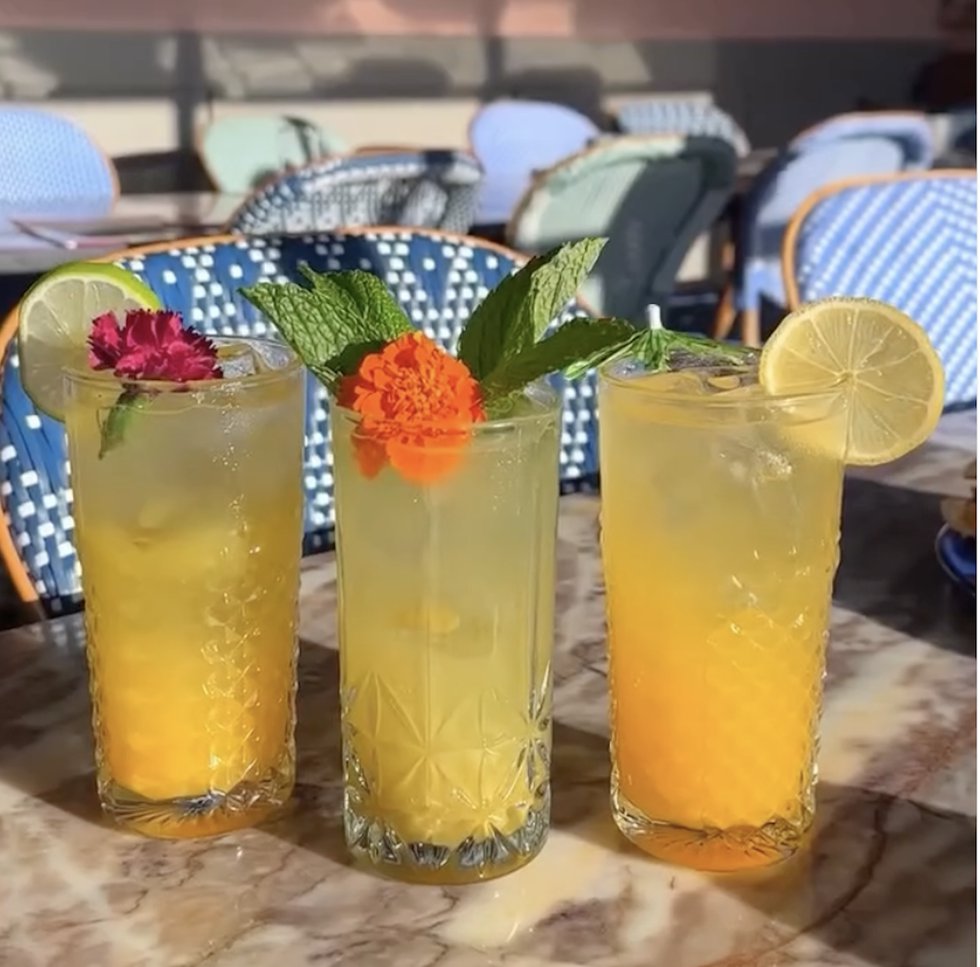
(l to r) Buena Vida Tapas Bar’s non-alcoholic Tiki Tango, First Kiss, and Agua Fresca
By Kathleen Furore
It’s that time of year when many of your customers are swearing off alcohol — at least until January 31. According to The State Of Dry January 2025, the first nationwide survey to examine the trend, 47 percent of those who drink alcohol at least once a month report they previously have participated in Dry January.
“Millennials ages 29 to 44 are the most likely to attempt Dry January, with just over half (51 percent) reporting that they have tried it,” the report says. Even Boomers have caught the spirit-free spirit: 30 percent of that demographic say they have participated in Dry Januarys past.
But focusing solely on Dry January doesn’t tell the whole story of consumers’ migration to non-alcoholic cocktails.
Gallup’s most recent annual Consumption Habits survey reveals that the percentage of U.S. adults who say they consume alcohol has continued to decline for the past several years. From 1997 to 2023, at least 60 percent of Americans reported drinking alcohol; that number fell to 58 percent in 2024 before hitting 54 percent in the most recent survey conducted in July 2025.
The James Beard Foundation’s 2026 Flavor Forecast also ac- knowledges the shift: Craft Cocktails Sans Booze is one of the trends highlighted in the Trending Cocktail Flavors and Styles category.
“With more consumers moderating their alcohol consumption, restaurants and bars are crafting top-notch cocktails without booze,” the forecast says.
Echoing the Gallup findings about Dry January participants, the customers most frequently consuming those cocktails are apt to be Gen Z and Millennial consumers, according to Zach Poelma, senior vice president of commercial intelligence at Southern Glazer’s, an alcoholic beverage distributor that also distributes non-alcoholic beverages.
“They are more likely than older generations to explore a wider variety of non-alcoholic beverages, purchase functional drinks, and generally engage more with beverage options,” Poelma says.
A VIEW FROM BEHIND THE BAR
Mexican and Latin-themed restaurants around the country have embraced Dry January, offering special zero-proof options.
For example, “The Art of the Zero Proof” collection debuted on January 1 at dLeña by Chef Richard Sandoval in Washington, DC. Created by Chef Sandoval and Head of Mixology Riesler Morales, the menu — available through the end of the month — includes:
• Aloe and Apple White No-groni with Seedlip Garden 108 (a non-alcoholic herbal spirit), aperitif bianco (a non-alcoholic vermouth), verjus (a non-alcoholic, tart grape juice), apple, aloe vera, and green grape
• Coco and Mango Milk Punch with Almave Blanco (a non-alcoholic agave spirit), pineapple, coco, mango, lime, and dried chile
• Margarita Verde with Almave Blanco, orange sec (a non-alcoholic orange liqueur), lime, pandan (a tropical leaf with vanilla-like flavor), jalapeño, hoja santa, and salt.
At Buena Vida Tapas Bar in Atlanta, Georgia, Dry January means more than capitalizing on customers’ pledge to skip spirits for the month; General Manager Lorenzo Masini calls it “an opportunity to showcase the standards we maintain year-round.
“While the public focus on non-alcoholic options increases during this time, our execution remains consistent,” he stresses. “We find that guests are embracing the concept because we provide them with a choice that does not feel like a compromise. Excellence in our beverage program means every guest has an elevated option, regardless of the season.”
The menu — dubbed “Spirit-free Elixirs” — includes the First Kiss, which combines passion fruit, honey, vanilla, and ginger beer; and the Tiki Tango made with mango, cilantro, lime juice, and tonic. Both are permanent fixtures on the Buena Vida Tapas menu.
“We do not relegate non-alcoholic excellence to a single month. Our standard is to provide a premium experience for every guest, every day of the year,” Masini stresses. “We host a high volume of families and guests who choose not to consume alcohol; it is our responsibility to ensure their experience is as sophisticated and intentional as those ordering from our spirits menu.”
That approach is important considering the “definitive shift in guest behavior” Mesini says he’s observed.
“The trend of high-volume alcohol consumption is declining,” he reports. “Our guests are now intentional consumers who prioritize quality over quantity. They no longer seek multiple drinks to sustain an evening; they seek one or two exceptional experiences.”
Last year, in response to that shift, Buena Vida introduced THC Margaritas, which “have quickly become a staple for our guests for several reasons,” Masini says.
“Guests are increasingly mindful of the physiological impact of alcohol. Unlike alcohol, which is inflammatory and can lead to hangovers, THC offers a social experience that many find more compatible with a wellness-focused lifestyle,” he explains. “We proactively provide these alternatives because we recognize that the modern guest expects their social life to align with their health goals.”
The fact is that most customers aren’t in the “no alcohol” or “always alcohol” camp exclusively.
“Importantly, non-alcoholic consumption isn’t an ‘either-or’ choice. Many consumers buy both alcoholic and non-alcoholic options for on-premise and retail occasions, sometimes alternating between them within the same drinking occasion, which is a behavior often called ‘zebra striping,’” Poelma says.
ABOUT THE BOTTOM LINE
As mocktails hit the mainstream, the question of pricing is moving to center stage: Are spirit-free cocktails really less expensive to create and more profitable to pour?
The answer: They could be.
“For operators, non-alcoholic beverages present a compelling margin opportunity, especially amid rising input costs. These drinks often deliver higher margins than food items, and because beverages typically carry lower absolute prices, consumers are more willing to accept percentage-based price increases,” Poelma says. “New offerings are particularly attractive since consumers lack established price expectations, making premium pricing easier to justify. Introducing innovative beverage options allows operators to boost profitability without alienating price-sensitive patrons.”
Note that Poelma says “often” and not always. That’s key, because the final profit picture depends on an operators’ approach to crafting compelling mocktails behind the bar — something Masini feels strongly about.
“There is a misconception that spirit-free cocktails are more profitable because they lack liquor. This is not the case in our operation,” says Masini, who notes that he and his team prioritize high-level ingredients “above all else,” which impacts ingredient costs and ultimately, profits. “The base for these cocktails consists of high-quality fruit pulps that we import directly from Colombia. This is a non-negotiable standard for flavor and authenticity,” he explains. “When alcohol is removed, we increase the volume of these premium purees. We also incorporate expensive components like vanilla, honey, and premium ginger beers or tonics. Because of these high-level inputs, spirit-free drinks often cost the same to produce as traditional cocktails.”
Masini also notes that mocktail menu prices aren’t set based on alcohol content, but on the craftsmanship and the quality of the raw materials used to make them.
“Our guests receive a sophisticated, high-value beverage that meets the Buena Vida standard of excellence,” he stresses.
Whatever your approach to zero-proof cocktails, the message from the front lines is clear: “Non-alcoholic beverages aren’t just a trend, they’re here to stay,” says Poelma, whose assessment is based on analyzing takeaways from Southern Glazer’s recent Liquid Insights Tour to Paris and London (taken to uncover what beverage trends are emerging before they hit the mainstream). “In markets where this movement started earlier, the category is even more popular, with consumers embracing creative, premium options across non- alcoholic wine — sparkling in particular and sometimes tea-based — and spirits. That’s a strong signal for us: this isn’t a passing fad. It’s a shift in how people drink and socialize.”
His advice for operators and for brands?
“The message is simply get started if you haven’t already, but be patient. Growth takes time, and setting realistic expectations is key,” Poelma cautions. “This category is evolving quickly, but it’s still building its base. The payoff will come for those who invest thoughtfully and stay the course, because demand for non-alcoholic choices will only keep growing.”
SIDEBAR: A Brief History of Zero-proof Options
Zach Poelma, senior vice president of commercial intelligence at Southern Glazer’s, shared these insights about the growth of the spirit-free category:
“Beer was the first category to embrace non-alcoholic offerings in the 1980s and 1990s. Recent innovations featuring unique flavors and craft styles revitalized the segment in the mid-2010s, driving renewed growth. Today, non-alcoholic beer represents nearly 1 percent of total beer sales, with dollar growth up nearly 50 percent. Around the same time, non-alcoholic spirits and wine emerged in the UK and soon thereafter launched in the U.S., fueling significant though smaller growth compared to beer. While these categories remain a fraction of their overall segments, non-alcoholic wine and spirits are growing rapidly on-premise, up over 100 percent and 20 percent in dollars respectively.”