
By Alfredo Espinola
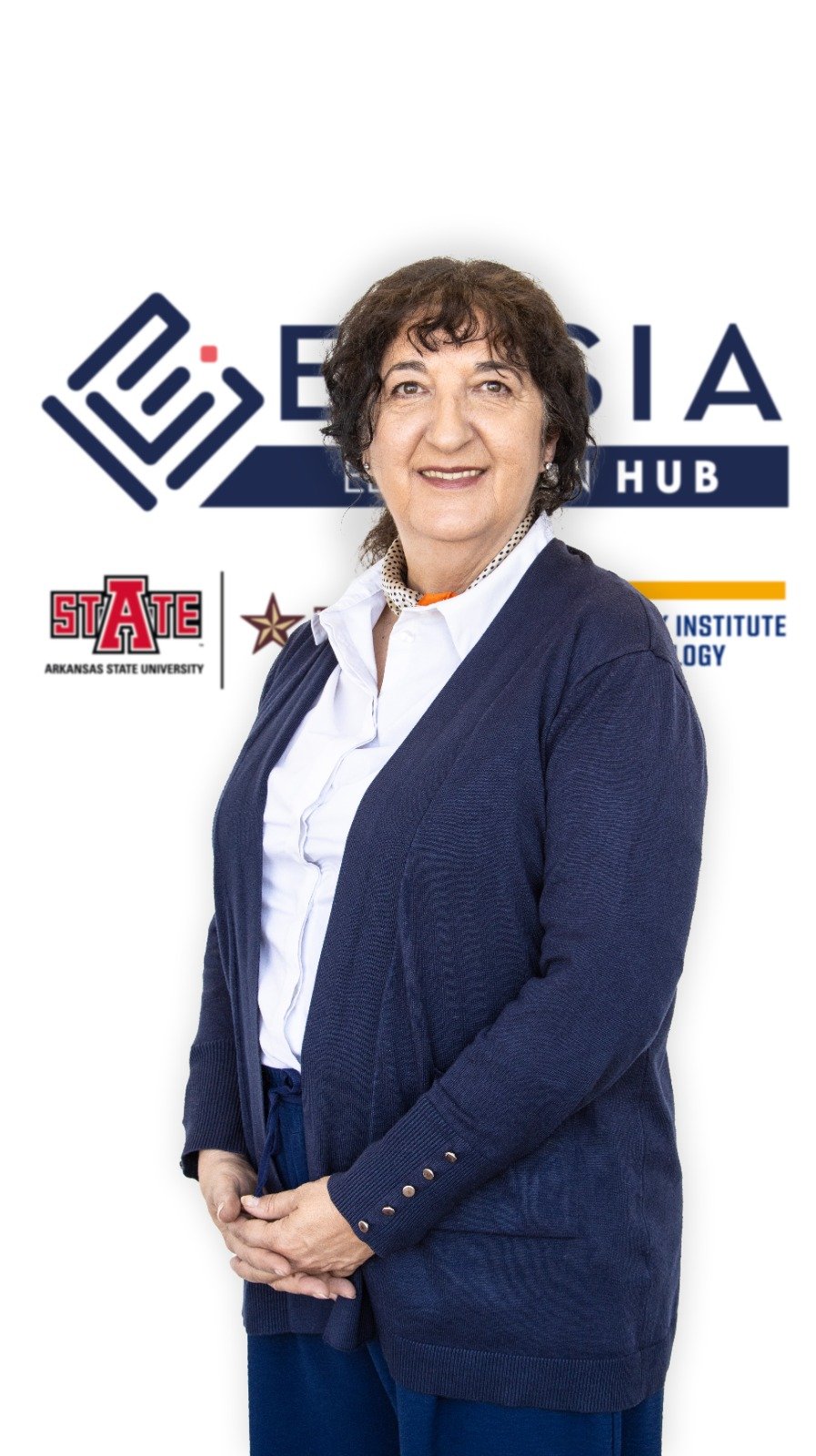
Dr. María de la Soledad del Río Álvarez
All good wine has “terroir,” the unique combination of regional environmental factors that influence the wine’s flavor, character and quality. Wines produced from grapes grown in well-known regions, such as La Rioja in Spain and Bordeaux in France, have a distinctive terroir.
But how are wine regions, and their respective terroirs, identified? You might think they are identified by great winemakers or wine merchants, and in most cases, that’s probably right. But in the case of Querétaro, a wine-growing region in north central Mexico, the credit goes to an astrophysicist.
Dr. María de la Soledad del Río Álvarez, the heroine of Querétaro’s wine region designation, was born in Spain. She studied theoretical physics at the Autonomous University of Madrid and obtained her PhD in Galactic Astrophysics at the University of La Laguna, in collaboration with the Canary Islands Institute of Astrophysics. She is now on the faculty of Arkansas State University Querétaro Campus.
From galaxies to the land of Querétaro
The story of how Dr. del Río Álvarez identified Querétaro’s wine growing characteristics begins far from Mexico and even further from the vineyards. At the age of fifteen, a school talk about the book “The First Three Minutes of the Universe” marked her destiny. “That's when I knew what I wanted to be,” she recalls. Physics and astrophysics ceased to be school subjects and became a vocation.
For years, she looked up, studied galaxies, analyzed images of the cosmos, and deciphered distant structures. Then, eight years ago, life brought her to Querétaro, and her horizon literally changed.
“It's a 180-degree turn,” she explains humorously. “If you look at the sky, you look up; if you look at the Earth, you look down. But in both cases, you analyze images. The structure changes, the method remains.”
What seemed like a radical break turned out to be methodological continuity: science as a lens, regardless of the object of study.
The discovery of Querétaro's terroir
When she settled in Querétaro, she found herself immersed in an expanding wine-growing region, so she decided to apply her scientific training to her surroundings. Her first intention was to carry out traditional physical-chemical analyses, but she soon discovered that the available data was insufficient.
The solution lay in open data, satellite images, and scientific cartography.
In meetings with the then Technical Committee of the Querétaro Winegrowers' Association, now the Querétaro Wine Cluster, interest arose in the maps she was beginning to develop. From that dialogue, the wine zoning project was born.
The starting point was clear: to know precisely what characteristics exist:
· Soil type.
· Climate.
· Slope.
· Rainfall
· Maximum and minimum temperatures.
· Permitted land uses.
“First you have to understand the basics. Then you can ask yourself which varieties are most suitable, which regions of the world your climate resembles, what will be easiest to grow and what will not,” she emphasizes.
The altitude of nearly 2,000 meters above sea level proved to be a determining factor, as did a winter cold enough to allow the vines to rest vegetatively. These are conditions that, over the years, many producers have learned to manage through trial and error.
Zoning offered something different: a scientific basis for reducing uncertainty.
Surprises and certainties
One of the findings that surprised her most was the climatic and edaphological similarity to historic regions such as La Rioja in Spain, Chianti in Italy, and Bordeaux in France.
“That seemed to me to be an excellent starting point,” she confesses. The scientific evidence was in line with a tangible fact: the growing accumulation of international medals for Queretaro wines.
From her perspective, the uniqueness of the region lies in a combination of factors, but especially in the altitude. Hence, the term “extreme viticulture” was coined. It is not the highest region in the world, but it is one of the pioneers in producing wine at such elevations.
The terroir provides identity and the winemaker provides artistry; without a balance between the two, there can be no great wine.
Applied science and shared pride
The process to accurately identify the zone took between two and a half and three years. After zoning, the next step was to apply for Protected Geographical Indication (PGI) status, granted by the Mexican Institute of Industrial Property.
Today, the “Wines of the Querétaro Wine Region” can boast this seal.
For Dr. del Río Álvarez, the achievement had a deep personal meaning. Being Spanish by birth and Mexican by naturalization, she feels she was able to give something back to the state that welcomed her.
“Researchers tend to stay behind the scenes. But we also have our hearts. Being able to contribute in some small way to Querétaro was a source of pride,” she says proudly.
The PGI marks a turning point, allowing us to talk about “a Querétaro” in the same way we talk about a Rioja or a Bordeaux. It is not just a name, it is a guarantee of traceability, minimum quality, and an integrated process within the region.
International recognition
Dr. del Río Álvarez presented the study at the 44th World Meeting of the International Organization of Vine and Wine in Cadiz in 2023 -- an astrophysicist talking about wine zoning before one of the most important forums in the world.
“It was the best conference of my life,” she admits. Colleagues from different countries came up to congratulate her, ask questions, and propose collaborations. The work, unusual for its methodological depth, attracted attention.
She also presented it to French delegations; even there, in territories with centuries of tradition, they recognized that they did not have such a systematic study. The experience confirmed something essential: tradition does not exclude the need for scientific documentation, especially in the context of climate change.
Living science: water and the future
Zoning is not a static document. While it is true that the soil and topography change little, it is also true that rainfall and temperatures require constant updating.
She is currently working on a new project based on optimizing irrigation using models developed by the Food and Agriculture Organization of the United Nations (FAO). The goal is to characterize specific plots to accurately determine their water needs.
In a state where average rainfall is around 540 millimeters per year with increasingly unpredictable variations, the balance is delicate. Water shortages and excess water pose different challenges. Science seeks to anticipate these challenges.
Academia and industry: a necessary dialogue
Collaborations between academia and the wine industry arose organically. The cluster had a specific need and the university had the technical capabilities. Cooperation agreements were signed that also allow students to do internships in wineries, restaurants, and tourism projects linked to the sector.
But no project of this magnitude can be sustained alone.
“I must mention that I have received support from both the university and the Wine Cluster and, in particular, from Freixenet, whose participation was key at different stages of the process. The zoning and the path to Protected Geographical Indication were not the work of one individual, but the result of a shared commitment. It has been a collaborative effort,” she says.
And that phrase sums up the spirit of the project: academia, industry, and producers moving in the same direction, each contributing from their own experience, with a common goal: to build identity, rigor, and international projection for Queretaro wine.
Mexico as a wine-producing powerhouse
From her perspective, Mexico is already making steady progress. The idea that good wine only comes from Europe is a thing of the past. Argentina, Chile, and Mexico are proving that the New World produces high-quality wines.
Zoning and future geographical indications or appellations of origin will strengthen this international profile.
Science that gives Mexican wine its identity
From the universe to the vine, Dr. María de la Soledad's scientific perspective today strengthens the identity of Mexican wine, demonstrating that here too, the cosmos can be deciphered in a glass.
When asked if she finds poetry between galaxies and vineyards, she smiles:
“There's nothing like watching the stars with a good glass of wine.”