
By Natalia Otero
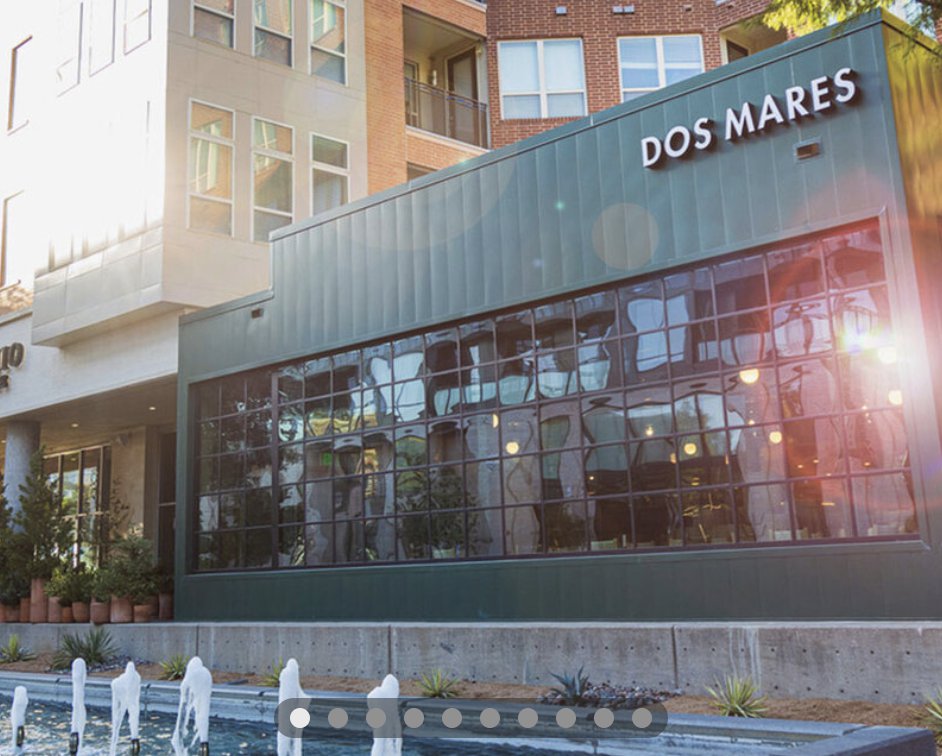
Don Artemio Restaurant in Fort Worth, Texas has wowed diners with upscale Mexican cuisine since 2022. Now the restaurant’s founder, Chef Juan Ramón Cárdenas, has opened Dos Mares right next door. The new restaurant is not just a casual extension of Don Artemio. It is the result of years of observation, research, curiosity, and a deep conviction: to honor Mexican coastal cuisine from its roots, with exceptional products and a clear narrative. In this interview with el Restaurante contributor Natalia Otero, the chef shares the origin of the concept, the lessons that sustain it, and the vision that drives it into the future.
Why did you decide to open Dos Mares?
It was a series of circumstances that came together. The first, and most important, is that when we arrived in the Dallas area, we realized several things: that they had—and still have—top-quality products in every sense. The best sea bass from Chile, the best lobster from Maine, octopus from Spain, all fresh and immediately available.
We realized that this access to such great seafood is thanks to Texas' infrastructure: the airport, its transportation routes, and its supply chains.
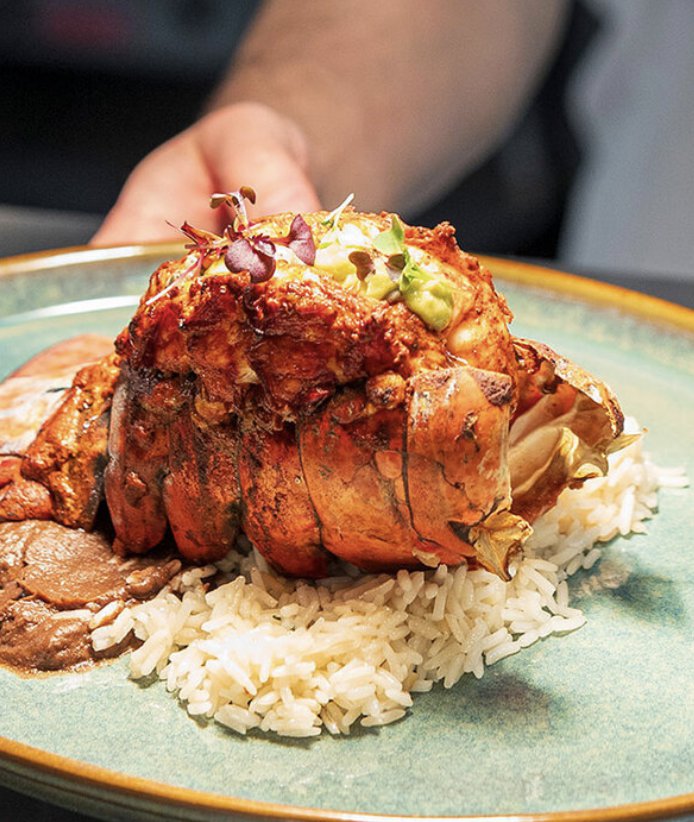
At Don Artemio, my son, chef Rodrigo Cárdenas, and I created a dish of sea bass with black mole sauce made from scratch. It was very successful, and we began to sketch out and entertain the idea of opening a seafood restaurant with the high-quality products available here, but prepared with Mexican techniques and ingredients.
Dos Mares is a restaurant that honors Mexican coastal cuisine. Mexico has 17 coastal states out of a total of 32, and each one—Tamaulipas, Tabasco, Campeche—has its own cuisine. We set out to research and document recipes from across the coastline.
In addition, the space next to Don Artemio was available, and we decided to take it so it would be easy to move from one place to another. The outline began in 2022; in January 2023, we began working on the project formally. We wanted to open in 2025.
What lessons from Don Artemio have you been able to apply at Dos Mares?
As always, there are great lessons to be learned. One fundamental lesson is to have a solid concept. And when I talk about concept, I don't just mean the menu, but everything we want to communicate; everything has to come from within.
Our desire to honor our land is genuine, it's real. We want to show that to our customers, the community, and ourselves: to honor our culture and our ancestors. And also to honor Texas, because it really is a great state, full of advantages and extraordinary products. It has the best seafood, meat, you name it.
We also learned how projects can be delayed by small things that end up taking months. That teaches you to move projects forward with patience and to understand timing. If at any point we wanted to open something else, we could do it more quickly.
We also liked having two restaurants running continuously, because it creates a natural synergy.
Did you worry that Dos Mares could cannibalize Don Artemio?
Yes, of course we had that fear. Competing with our own customers was a possibility. But we decided to create two sister concepts, albeit totally different ones.
On one side is the serious, formal brother; on the other, a slightly younger, more rebellious, more playful one. They are two brothers who resemble each other, who share the same DNA, but who express themselves differently. And that DNA has been multiplying.
Curiosity seems to be a central driver in your creative process. How do you experience it personally?
I am a native of Saltillo, Coahuila, a semi-desert location. I grew up in the desert, with goat. My family has worked with goat for multiple generations; they are countless. That knowledge was passed down orally and practically: from my father, my grandfather, and my grandmothers.
I trained as an engineer in the food industry, and thanks to that, I was fortunate enough to study in places like Napa Valley, Europe, and New York. That training further fueled my curiosity.
I like to satisfy my curiosity with research: books, magazines, studies, field research. For more than 15 years—almost 18—we have worked on projects such as Guerreros del Maíz (Corn Warriors), presented at the book fair, where we talk not only about corn, but also about all the chefs who fight for Mexican cuisine and culinary research.
This also led me to spend time with great minds, such as chef Ricardo Muñoz Zurita, one of Mexico's leading gastronomic researchers, who has deeply inspired me to study our traditions.
When you broaden your view to the Mexican coast, you don't just stay in Sinaloa or aguachiles. You start to think about lobster tacos with Ensenada beans, tacos gobernador, and then you move to the Gulf: la reina del comal, picadas gigantes, empanadas, quesadillas, arroz a la tumbada, salsa cordobesa. Expanding the coastline gave us enormous creative breadth.
Dos Mares is clearly a collective project. Who has been key in its development, especially in terms of design?
We worked hand in hand with architect Luis Díaz, from Torreón, Coahuila. We've known each other for over 10 years and have a very deep creative understanding. He has extraordinary talent.
My wife Beatriz, who is a pastry chef; my son Rodrigo, who is an engineer and chef; Beatriz in marketing; my daughter María Gabriela, who painted one of the restaurant's works of art, with sea graphics inspired by Japanese art: octopus, fish, crab.
And, of course, the entire kitchen and management team. We are almost 60 people working together. Two of my children are still younger and are still studying. This is a family and community project.
At Don Artemio, Mexican wine is a big feature. Do you maintain that line at Dos Mares?
At Don Artemio, we have a very solid cellar of Mexican wines, but at Dos Mares, we wanted to give it a twist. It shares the same DNA, but it's different.
Here we focus on coastal wines from around the world. We want wines that are no more than 30 miles from the coast, to reflect those distinct flavors that maritime wines have and to be able to pair them with Mexican coastal cuisine.
We have wines from Portugal, Spain, Greece, New Zealand, Australia, Ensenada, and we continue to search for expressive wines. We also work with underwater wines, which are stored under the sea for a period of time.
All under the same concept: the coast. Seeing how a Chardonnay from New Zealand or South Africa pairs wonderfully with a zarandeado fish from Sinaloa gives us those pleasant and beautiful surprises that arise from experimentation and culinary and oenological creativity.
2025 was a difficult year for many restaurants. How are you closing 2025 and what's coming in 2026?
I close with gratitude to God, first for the health that allows us to be here every day. In terms of business, we are closing on a positive note: Dos Mares is up and running, Don Artemio is doing very well and has been very well received.
We continue to strive to do different and artistic things, such as art exhibitions. We currently have David Yarrow, an English photographer, with two monumental works in Texas, and Alejandro Fuentes Gil, a Mexican sculptor. Starting in January, we will have a sculpture exhibition of horses, honoring the Western culture of Fort Worth, which is part of this city.
I believe that cooking is not always, but can be, an artistic expression. When it is merely functional, it fulfills its purpose of feeding people; but when it is an expression of the human being, it becomes art.
Next year (2026) will be about consolidating both restaurants, continuing to refine the service and cuisine, continuing with seasonal menus that showcase the richness of different areas of the country, and continuing to serve others, which is a very beautiful business: serving.
Below Chef Cárdenas shares his recipe for Caldo Dos Mares

Ingredients
● Garlic
● White onion
● Fresh thyme
● Vegetable oil
● Celery
● Guajillo chili peppers, seeded
● Tomatoes
● Shrimp shells
● Red snapper (spine or fish trimmings)
● White wine
● Tomato paste
● Marinated chipotle chili peppers
● Salt
● Water
Preparation
- In a large pot, heat the oil over medium heat and sauté the garlic, onion, thyme, celery, guajillo chilies, and chopped tomato until the vegetables are lightly browned.
- Add the shrimp shells and red snapper trimmings and sauté for a few minutes to blend the flavors.
- Pour in a splash of white wine and let it reduce slightly.
- Add the tomato paste, chipotle chili, and enough water to cover the ingredients. Season with salt to taste.
- Bring to a boil, lower the heat, and simmer for at least 4 hours, skimming off any foam that forms on the surface.
- Strain before serving.