
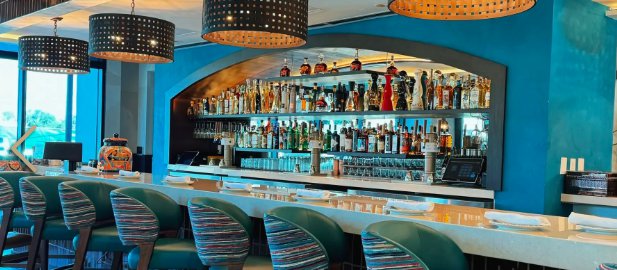
Mexican Sugar's Houston location
By Natalia Otero
Few restaurant groups have managed to grow as rapidly — and as gracefully — as Mexican Sugar, a concept that debuted in 2013 in Plano, Texas. With locations now in Plano, Las Colinas, Uptown Dallas, Houston, and the newest in Addison (opened in September), the brand continues to redefine Latin dining in Texas.
We talked with Justin Beam, director of operations for Mexican Sugar, to learn the secret behind their expansion, how they keep consistency across locations, and what’s next as they prepare to enter Austin and Frisco’s Fields West.
el Restaurante: Your Addison location is described as a “true multi-sensory experience.” How do you translate that immersive energy — ambiance, lighting, service, and plated dishes — into each new location?
Justin Beam: When we say “multi-sensory,” we mean that every element of the restaurant is designed to immerse guests — from the smell of handmade tortillas to the Latin music pulsing softly through the space.
We approach every detail with intention, including uniforms, lighting, culinary development, beverage innovation, wallcoverings, and artwork. The artwork is custom, the tilework is bold and textural, and the lighting shifts naturally from brunch to dinner to late-night, helping the space evolve as the day goes on.
Our brand DNA is the filter we use to bring the ethos of Mexican Sugar to life in every space and every service moment. No two restaurants are exactly alike. We keep each location rooted in its community while still delivering the soul of the brand. The feeling you get when you walk into a Mexican Sugar is unmistakable. It’s warm, immersive, and designed to transport.
el Restaurante: Mexican Sugar is growing fast, with locations in Plano, Las Colinas, Uptown Dallas, and Houston — and more on the way. What has allowed you to scale so quickly without losing consistency?
Justin Beam: Real estate is important, and we feel great about the sites we’ve secured, but it all starts with people. The most important decision we make is building a Familia of talented, engaged individuals who live and breathe the brand.
This year, our training has focused on going deeper — beyond just technique or steps of service. We’re leaning into the stories behind the food and the authenticity of agave to build a more emotional connection between our teams and our guests. It’s not just about knowing what’s in a dish or a cocktail — it’s about being able to share where the heirloom corn came from or why a certain tequila means something to our bar team. That shift has created new opportunities for our teams to lead with purpose, to educate and connect in meaningful ways, and to elevate the experience without ever feeling scripted.
el Restaurante: One of your brand promises is “bringing the heart of Latin cooking to every meal.” How do you protect authenticity and craftsmanship across multiple kitchens and bars as you expand?
Justin Beam: We focus on quality over cost, prioritizing what matters most to our teams and our guests. From heirloom masa and corn from Masienda to agave nectar from Backyard Agave and our exclusive Barrel Select Reposado from Fortaleza, every ingredient and partnership is chosen with care. It’s about intention, not perfection.
el Restaurante: Since opening in Addison this past September, what has resonated most with guests — dishes, design, or otherwise — and how is that informing what’s next?
Justin Beam: We kept an existing hearth oven and incorporated it into the design. It gave us the opportunity to create some new menu items. We crafted three signature dishes exclusive to Addison: the Chimichurri Basted Hearth Roasted Coliflor, Queso Flameado with aged Spanish chorizo torched tableside with Ilegal Mezcal, and a Crispy Mexican Flatbread made with heirloom masa from Oaxaca. These have resonated deeply with our guests and have been among our top sellers since opening.
On the beverage side, innovation starts with the fresh-pressed juices our bar team hand-presses daily and batched cocktails in small quantities.
We also introduced the Agave Collector’s Cabinet in Addison, showcasing rare and allocated agave spirits. Each tequila and mezcal can be enjoyed as a one- or two-ounce pour or as part of a customizable flight, all served tableside from our Margarita Carts. These special touchpoints have been so well received, we’re even considering bringing elements of them back to our other locations.
el Restaurante: What’s the most important advice you’d offer to other restaurant owners on building sustainable, successful growth?
Justin Beam: It starts and ends with people. From our passionate culinary teams to our front-of-house leaders, vendor partners, and, of course, our guests — we make every decision with them in mind. Our Familia is our greatest asset, and our guests are our most important audience. We’ve also stayed fiercely committed to our brand values. Our dedication to quality, over-delivering on value and service, and staying true to who we are has never felt stronger.
Here Justin shared a classic Mexican Sugar recipe:
Crispy Mexican Flatbread (Tlayuda)
Yields: 1 each
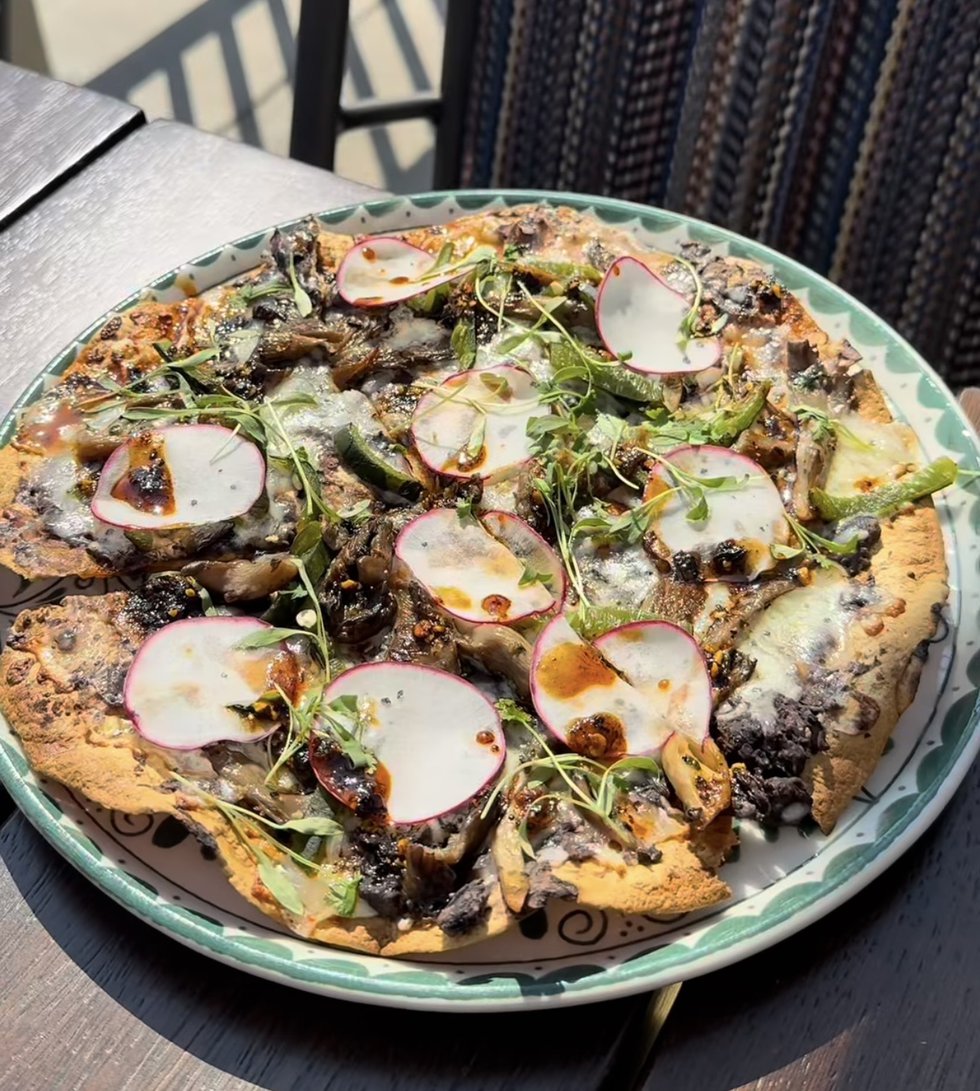
Crispy Mexican Flatbread
Plate: 12" Blue and White Anfora Plate
Ingredients
For the Tlayuda Shell
- 4 oz yellow corn tortilla masa
Base Layer
- 3 tbsp black bean purée
- 3 oz quesadilla cheese mix
- 1.5 oz wild mushrooms, chopped very small
- 2 tbsp roasted poblano peppers (peeled, seeded, diced 1"x1")
Toppings (After Oven)
- 2 tbsp pickled red onions
- 8 radish circles, ultra-thin
- 1 tbsp matcha pepita salsa
- Dash of black lava salt
Instructions
1. Make the Tlayuda Shell
- Roll 4 oz of yellow corn masa into a ball and place it between two sheets of plastic on a large tortilla press.
- Press once, flip, and press again to evenly flatten.
- Remove the top plastic, place a parchment ring on top, flip onto parchment, then peel off the second plastic layer.
- Place the tortilla onto a seasoned comal or plancha at 375°F.
- Cook for 1 minute, flip, then cook an additional 2 minutes until golden brown.
- Transfer to a cooling rack to dry. Store uncovered in a labeled, dated Lexan at room temperature for up to 24 hours.
2. Assemble and Bake the Flatbread
- Place the tlayuda shell on a clean cutting board.
- Evenly spread black bean purée across the surface.
- Sprinkle with cheese mix, followed by mushrooms and roasted poblano.
- Transfer to the hearth oven and bake for 3 minutes, or until cheese is melted and edges are crisp.
3. Finish and Plate
- Remove from the oven and return to the cutting board.
- Top with pickled red onions, radishes, matcha pepita salsa, and a dash of black lava salt.
- Slice into 4 equal triangles.
- Garnish evenly with micro cilantro.