
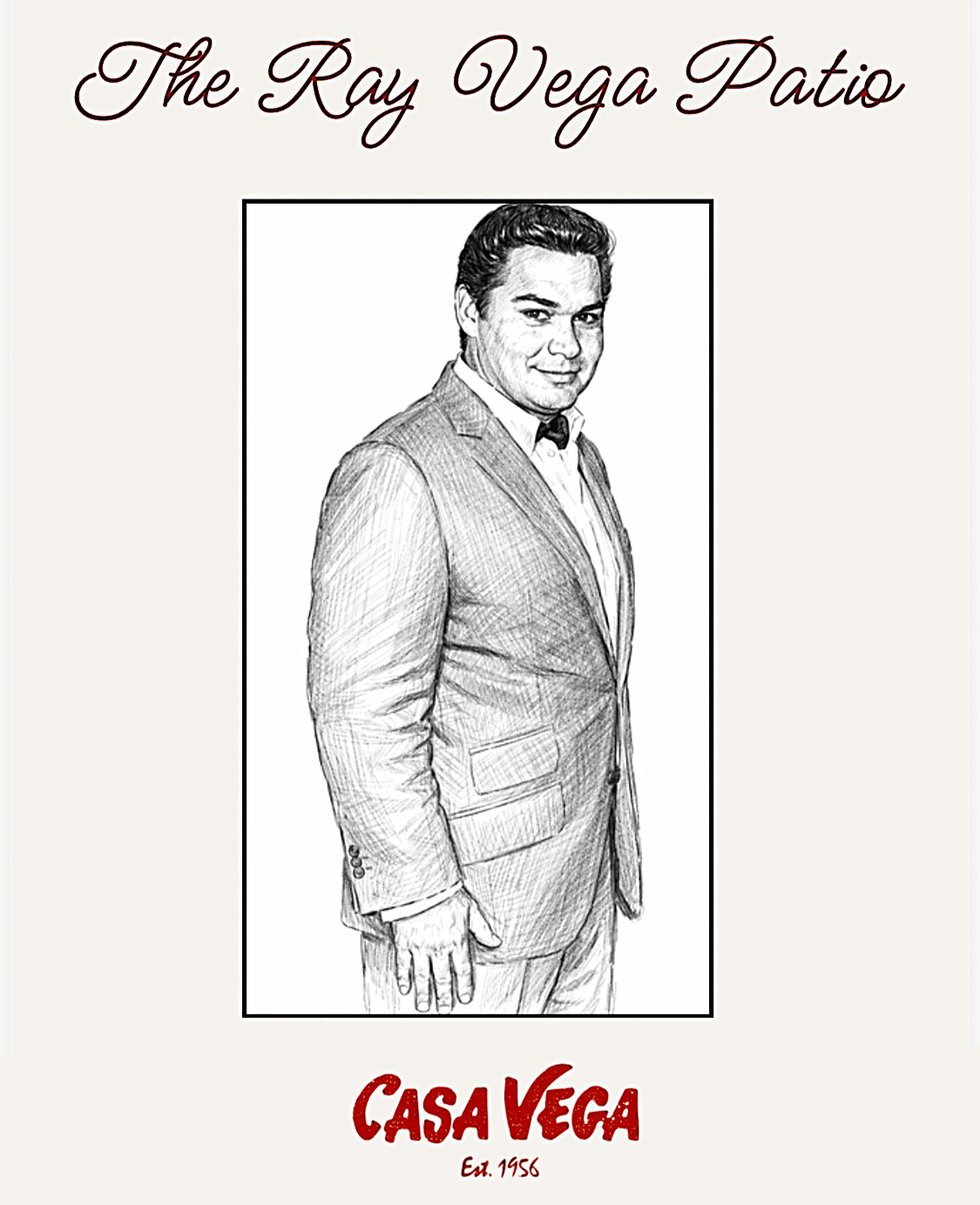
Casa Vega, a historic Mexican restaurant in Los Angeles opened in 1956, will soon unveil The Ray Vega Patio — a new, 3,000-square-foot expansion honoring founder Rafael “Ray” Vega, Jr., and commemorating 90 years of Vega family restaurateurs in Los Angeles.
The new patio, which will be revealed during a private family gathering on March 7, nearly doubles the restaurant’s footprint and represents one of the most significant transformations in its history.
The patio has converted two former parking lots into a new gathering space. It features a retractable roof, seating for 100 and an 18-seat bar. A focal point is a central fountain surrounded by seating for 24.
“Casa Vega has always been more than a restaurant,” says Christy Vega, third-generation owner and CEO. “It’s where Los Angeles comes to feel something — where Chicano culture, Old Hollywood, and a Mexican family’s dream intersect. My father and grandparents built this place with immigrant grit and relentless discipline. The Ray Vega Patio is my way of honoring that foundation while ensuring we remain relevant for the next generation.”
An Immigrant Story That Built an Institution
The Vega family’s restaurant legacy began in 1936, when Rafael and Maria “Mary” Vega immigrated from Tijuana and opened Café Caliente on Olvera Street — at a time when Mexican-owned businesses operated on the margins of the city’s dining landscape.
Ray Vega opened Casa Vega in 1956 at 22 years old, working days selling insurance and nights inside the restaurant alongside his parents. He brought his mother’s recipes — mole, albondigas, carne asada, enchiladas — to the San Fernando Valley long before Mexican cuisine was embraced beyond downtown Los Angeles. Casa Vega was the first sit-down Mexican restaurant on Ventura Blvd.
In 1958, Casa Vega moved to its current location. Hollywood figures including Marlon Brando, Cary Grant, Rock Hudson, Nancy Sinatra, and Dyan Cannon became regulars — helping normalize Mexican cuisine within mainstream Los Angeles culture during a time when few Mexican-owned establishments enjoyed that visibility.
Over the decades, Casa Vega became both neighborhood staple and industry haunt — a rare space where Valley families, studio executives, musicians, and immigrants shared the same dining room.
In 1977, Ray opened Casa Vega II across Ventura Boulevard to accommodate demand. He later sold the second location and expanded to Las Vegas, where he built one of the largest Latino-owned casino hospitality businesses in the nation, earning placement on the Forbes List.
Yet despite his growth beyond California, Ray kept Casa Vega rooted in Los Angeles — preserving it as the emotional center of the Vega family legacy.
A Cultural Landmark, Reinforced
In 2019, Casa Vega entered the cinematic canon when it was featured prominently in Quentin Tarantino’s Academy Award–winning film “Once Upon a Time in Hollywood.” The booth shared by Leonardo DiCaprio and Brad Pitt in that film has since become a cultural touchstone for a new generation of diners.
When Ray Vega passed away in 2021 at age 86, he left behind a business built not only on recipes, but on discipline, resilience, and pride in Mexican heritage.
In 2022, Casa Vega received the James Beard Award as an “American Classic,” affirming its national cultural significance.
In 2025, Maria Christina “Christy” Vega purchased the Ventura Boulevard property — fulfilling her father’s decades-long goal of ownership and securing the restaurant’s permanence in a city where few independent institutions survive beyond a generation.
Now, in its 70th year, Casa Vega expands once more with the debut of The Ray Vega Patio.
From Olvera Street to Ventura Boulevard to the Las Vegas Strip and back, the Vega family story reflects a broader Los Angeles narrative — one of immigrant ambition, cultural influence, and generational permanence in a city defined by reinvention.