
By Alfredo Espinola
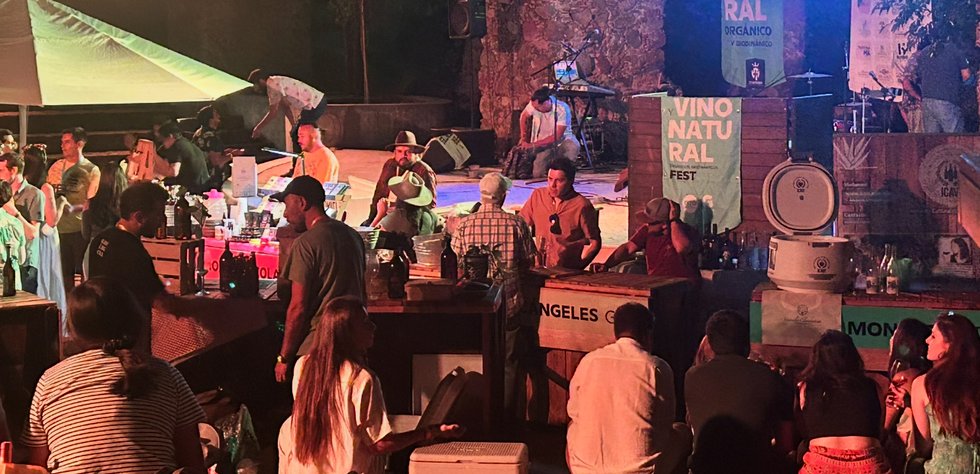
On March 28, 2026, the iconic Foro El Obraje will once again beat to the rhythm of wild yeasts. In the heart of San Miguel de Allende, Mexico, the fourth edition of Fermente Fest will put the spotlight on natural wines and fermented spirits made with minimal intervention.

Paulina Cadena
“Fermente Fest brings together more than 100 labels of minimal intervention and nearly 30 national and international exhibitors under the same premise: to celebrate fermentation as a cultural, agricultural, and deeply human act,” says Paulina Cadena Gallardo, director of the festival.
The memory of fermentation
To talk about fermentation in Mexico is to talk about memory. From ancestral pulque to everyday tepache, from cacao to nixtamalized corn, the country has historically been a territory where time and microorganisms work in silence.
Fermente Fest understands natural wine as part of that lineage: a practice that listens to the environment and privileges minimal intervention.
In this edition, Guanajuato and Querétaro confirm the consolidation of the Bajío as a wine-producing territory with its own identity. Their wines speak of freshness, altitude, and tension, of climates that imprint character and precision.
Projects such as Cava Garambullo, also pioneers in wine education through their school Vinograd, Dos Búhos, Nat Clandestine, Casa Anza, Tres Raíces (which will present its new organic label) and Vinos Salvajes, reveal a region that has learned to translate its landscape into liquid expression.
In contrast, proposals that have redefined contemporary Mexican viticulture are coming from the north. The Guadalupe Valley, Ensenada, and Tecate bring maturity, history, and a broader exploration of varieties and styles: Pouya Wines, Ojo de Liebre, Vinos Meillon, Cuchu Wines, and Drosophila expand the country’s sensory map. Altos Norte (Jalisco) and Bodegas de la Parra (Aguascalientes) join in, broadening the dialogue between freshness and experimentation.
Beyond the grape, shared alchemy
Fermente Fest recognizes that fermentation is a universal language. For this reason, the curatorship expands to include kombuchas, meads, ciders, and craft beers.
Projects such as Labo Fermentos, Malaquita, Hidromiel Vallehia, Sidra Robin Hood, San Roque, Simbiótica, Silphium, and Ginger Birra confirm that the act of fermenting is, in essence, a form of listening: allowing nature to complete what humans have barely begun.
Cuisine of origin: natural affinities
The experience is completed with a culinary offering that honors Mexican heritage. Traditional cooks from the region will prepare handmade corn tortillas, and fresh oysters from Bendito Mar will arrive from the Pacific. Cheeses, cajeta, black garlic, and Marca Guanajuato products will coexist with a design bazaar that brings together textiles and designer jewelry.
A wine with minimal intervention requires an equally transparent cuisine, based on the product and seasonality. Attendees will enjoy organic affinities: acidity that accompanies freshness, texture that embraces fat, salinity that resonates with minerality.
For more information, visit https://sanmiguellive.com/event/fermente-fest-4th-edition