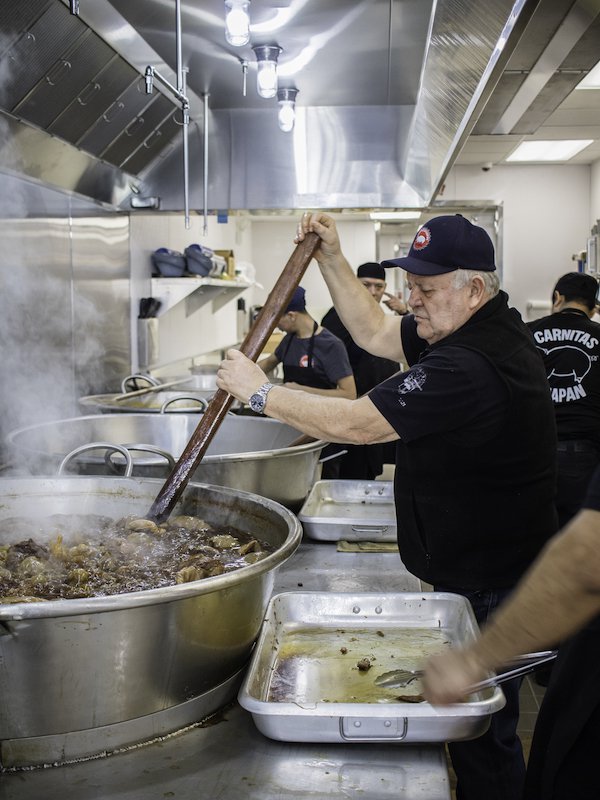
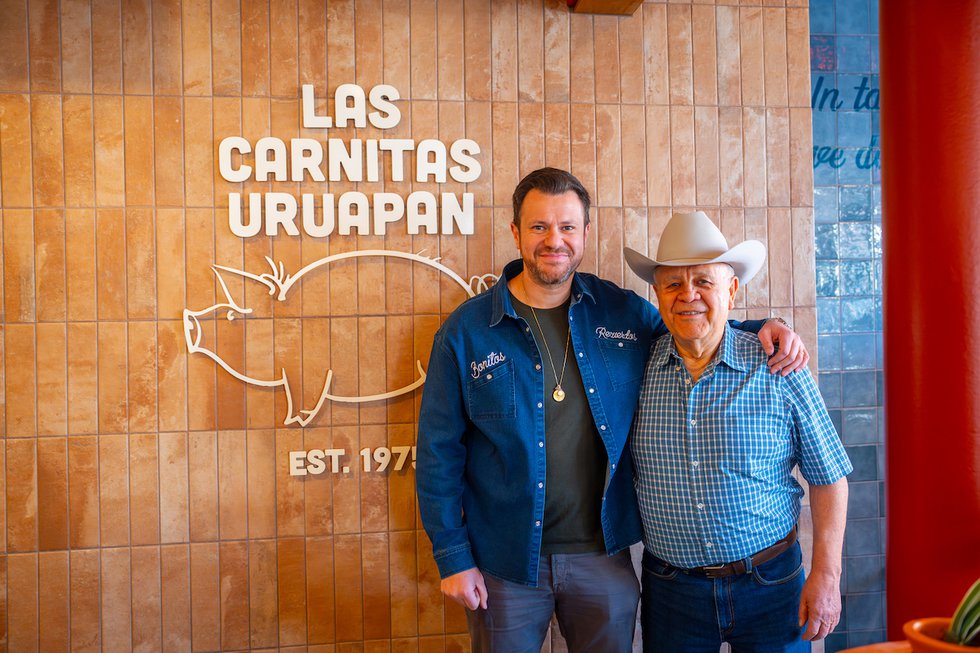
Marcos Carbajal with his father, Inocencio “El Güero” Carbajal
By Natalia Otero
On the corner where 26th Avenue breathes history, resilience, and the aroma of freshly made carnitas, the Carbajal family has sustained one of Chicago's most iconic Mexican businesses for nearly five decades: Carnitas Uruapan. They have done so with a unique blend of Michoacán tradition, entrepreneurial vision, and a deep sense of community. But in 2025, this legacy has been tested like never before.
Since the second Trump administration began, especially since the ICE raids in September, October, and November, sales have fallen 35 percent, according to Marcos Carbajal, current owner and heir to the brand founded by his father, Inocencio “El Güero” Carbajal.
“We have helicopters, trucks, drones... it’s like a movie. But it’s real. And it’s happening right outside our business,” Carbajal says.
Carnitas Uruapan—a true guardian of traditional Michoacán cuisine—has responded with a mix of strategy, financial prudence, community support, and something that has never changed: the cultural dignity of remaining authentic. As they say, they are “unapologetically Mexican.”
Here are the six keys Carbajal has used to sustain, protect, and strengthen his legacy amid uncertainty.
1. Honoring family roots: a business that was born in Uruapan and matured in Chicago
The story began in Uruapan, Michoacán, in the 1940s and 1950s, when Francisco Carbajal, Marcos' grandfather, and his uncle Silvano operated one of the most respected butcher shops in the region. On weekends, the carnitas they prepared became part of the cultural landscape of the town. That's how Inocencio grew up, learning authentic recipes by watching. The same thing happened to Marcos Carbajal; he grew up in the kitchen and learned by watching.
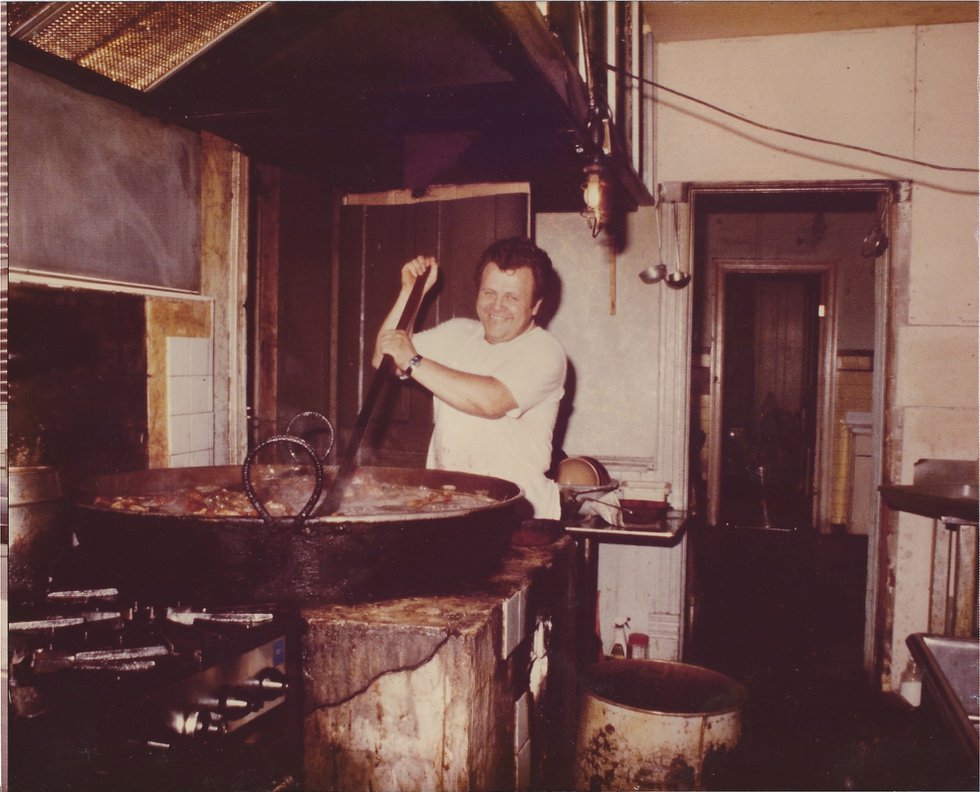
Inocencio “El Güero” Carbajal in 1975, preparing the carnitas
When Inocencio Carbajal arrived in Chicago in 1969—drawn by the pork packing plants that employed hundreds of Michoacán butchers—he continued that tradition. After years of grueling work in the stockyards, he opened a small shop in Pilsen in 1975. He sold carnitas only on weekends: authentic, uncompromising, made just like at home. With the essential guacamole, prepared with avocados brought from Michoacán.
The recipes remain unchanged to this day. So do the suppliers, as they are the same ones Inocencio migrated with, and whose families have inherited and maintained the legacy, as Marcos Carbajal does: Michoacán avocados from suppliers with whom they have had relationships for decades, meat from former packing plant colleagues, vegetables from family friends. Among the most notable suppliers are Peoria Packing Butcher Shop for meat, and Enriquez Produce and La Hacienda for vegetables.
This circle of trust—among Mexican, Italian, and Greek immigrants—keeps alive the spirit of a Chicago built by working communities and has guaranteed the quality of the restaurant's food throughout the years.
2. Heritage, plan, and structure
Although Marcos Carbajal studied economics at the University of Michigan and worked in corporate finance until 2013, the call of the family business was inevitable. But returning was not a leap into the unknown: it was a plan. Carbajal also had the assurance of studying for an MBA at Northwestern University Kellogg School of Management, which gave him even more of a foundation to contribute to the business on the financial side.
“To leave a stable career and enter such a volatile industry, I needed clarity,” he explains. “Succession plan, agreements, percentages, responsibilities. And the trust between father and son is invaluable.”
According to him, he had inherited the entrepreneurial spirit from his grandfather and father. Of course, as an only child, the pressure falls solely on him, but, as he points out, there is also an advantage in that he has no siblings to argue with.
“Now that I have three children, I see that they can't even agree on which toy to choose. I can't imagine what it's like when your life depends on the same business,” he says with a laugh.
In any case, the process and attention to financial structure—rare in many small family businesses—became a key strength during both the pandemic and the current migration crisis. There are no internal disputes. There are no conflicting voices. There is a clear direction. Especially in the last five years, which have been so difficult.
3. Diversify to protect yourself: a financial lesson for the community
Beyond his experience in the restaurant business, Marcos Carbajal brought to the company an approach that many Latino businesses rarely have the opportunity to learn: never depend 100 percent on a single source of income.
“We invest in real estate, retirement funds, moderate portfolios,” he explains. “You can't build your entire future on a restaurant. No matter how successful it is.”
That philosophy is what allows them to survive a sharp drop in customers due to the raids.
“In our community, we don't talk about savings, moderate risk, or diversification. But it’s essential. You have to proceed conservatively. You can’t put everything in one place, not even your entire savings, because the whole operation could collapse. And you can’t depend on it 100 percent, and at the same time, your operation must be able to withstand times when there is no income.”
He also comments on the importance of this passive income in order to have a good quality of life: not devoting your entire life to the business, spending time with your family, having hobbies outside the restaurant. After all, a person’s productive life comes to an end, and it is important that not everything depends on the hours you can work.
4. Adapt to the moment to become stronger
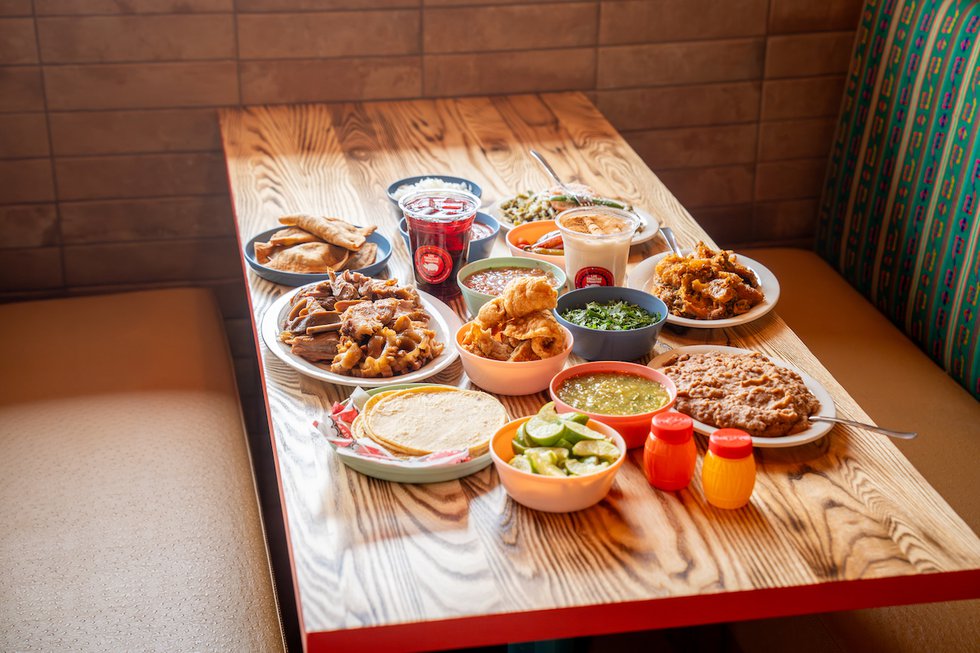
A delicious spread at the new location
Carbajal opened the third location of the restaurant on 26th Avenue in Chicago, which is a very famous corridor for Mexican carnitas, just one day before Trump took office and unleashed the raids.
This has been a huge challenge, but Carbajal has managed to overcome the crisis.
Among his strategies, he has turned to the media, where he has explained the cuisine prepared at the restaurant. In this way, he has managed to attract new customers who are not part of the Mexican community. He has achieved this without having to change his standards, but rather by maintaining the original recipes and educating a new audience.
Because people in the Mexican community are afraid to leave their homes, and people are no longer traveling between states to go to restaurants, the restaurant has had to seek out new customers.
In addition, he says, “We have had to have a direct dialogue with the staff to identify expenses that can be reduced. And to make them see that we are in this together, we are all united against this injustice. There have been many negative things, but on the positive side, we have expanded to a different clientele and have solidified ourselves as a team.”
5. Maintaining cultural dignity as an act of resistance
In times of uncertainty, some establishments choose to modify their menus to attract new markets. Carnitas Uruapán does not.
“We have never changed our recipes to appeal to the American public,” says Carbajal. “Authenticity is our duty to our community. It is what makes the bond with our community so strong. I believe this will result in greater brand loyalty, pride, and support for preserving our food, as well as making us an amplifier. I think that is our role: dignity and resistance.”
In a city where Mexicans represent nearly a million residents, that authenticity has become a unifying force. Customers from across the city—Mexican and non-Mexican alike—travel to support businesses they recognize as cultural pillars.
Despite the challenges, Carbajal remains hopeful. Chicago is still a sanctuary city.
The mayor and local leaders are seeking measures to protect the community. And above all, there is a growing pride in authentic Mexican food, which Marcos believes will one day be as iconic as Chicago-style pizza, Italian beef, or Polish sausage.
“Chicago carnitas are already on that path. I hope that Mexican food will be seen by the Chicago community as an iconic Chicago food. Once we move on to the third generation, especially on this avenue where we are, we will be recognized for what we already are: the best carnitas in the United States. They have been growing since my father's time, when they also had to face raids that, although not as severe as today’s, made them stronger.”
Today, Inocencio Carbajal still walks among the tables, greeting people and checking on details. His hobby has always been working. His legacy is to see the restaurant full and his son leading the next stage.
6. Community support: the key to surviving raids
Immigration raids not only generate fear: they paralyze entire commercial corridors. 26th Street, the economic and cultural heart of Mexicans in Chicago, saw its traffic plummet.
“No one wants to be on the street when there are raids. No marketing strategy can compensate for that fear.”
His invitation to supporters, or potential supporters, is clear:
“Remind people that we need to support local businesses right now. It's very important to provide financial support: if you see that they are hitting an avenue or a section hard, those are the ones that need the most support, because these police interventions freeze their business for a day or two, and it takes time for the economic recovery to revive. I invite you, if you see activity in a business, to go in, support it, go out, go to the supermarket, leave a good tip. We merchants are paying the price of politics every day, and we need people to support us to get through this moment.
“I'd like five years without headaches,” says Marcos Carbajal with a laugh. “But we're moving forward. Good service, good attention, good food. That never goes out of style.”
Don't miss a thing! Subscribe to el Restaurante's digital publications for free by clicking here.