
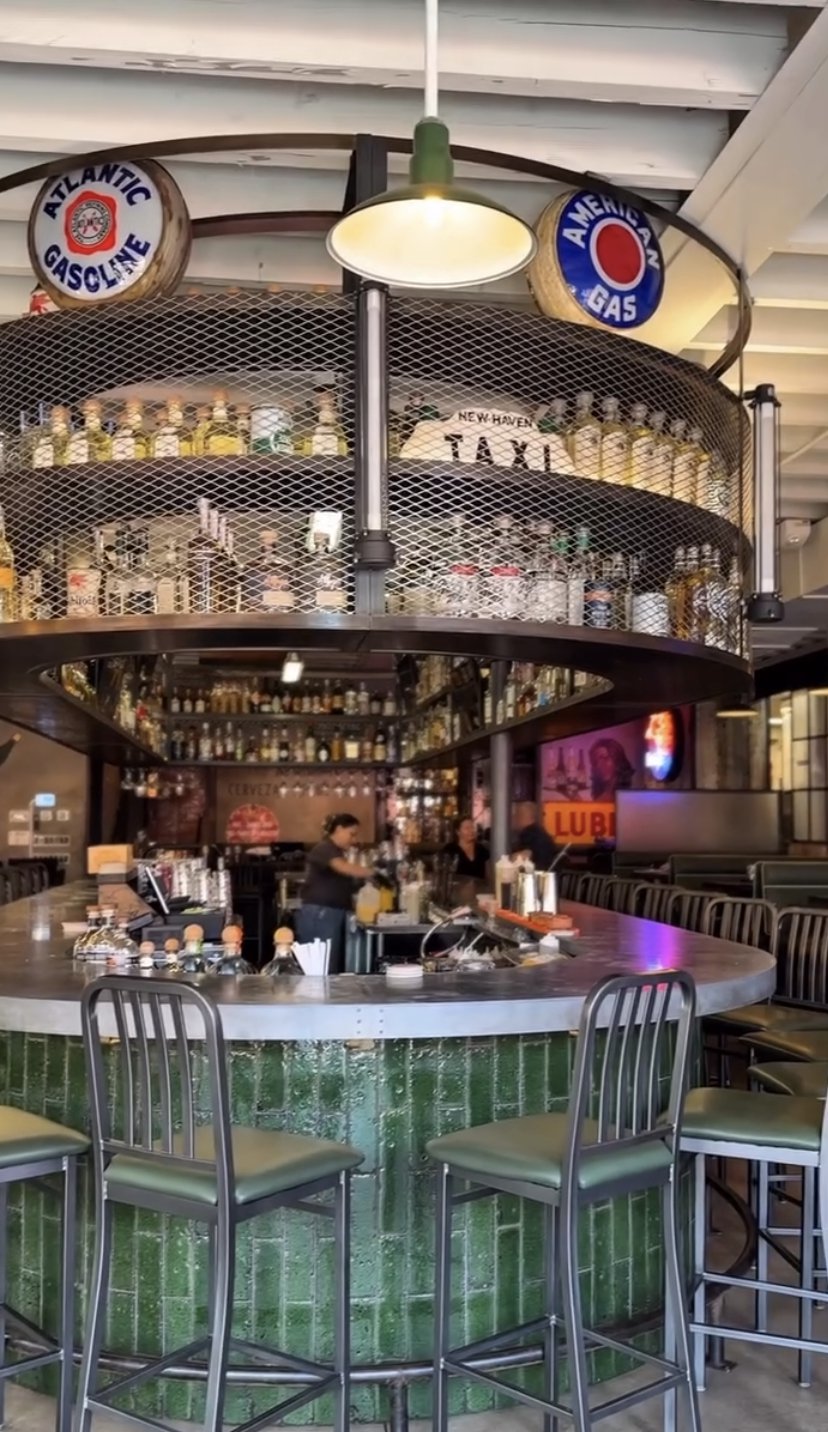
The decor at Camacho Garage fits the name
By Natalia Otero
In the vibrant Westville neighborhood of New Haven, Connecticut, Camacho Garage has become a meeting place where sophistication blends—without asking permission—with the honest rawness of Mexican street food. The concept, led by Chef Franco Camacho, was not born in a boardroom or as a branding exercise: it was born in a real garage, with the smell of fiberglass, hot tortillas, and the echo of a family working together.
“It was something that I think when you connect with yourself and your roots,” recalls Chef Franco Camacho, “it gives you a lot of drive, a lot of ambition to prove to yourself that you chose the right thing, and the nostalgia of representing your roots.”
That is precisely the essence of Camacho Garage: it's not just about elevated Mexican food, but a deeply personal story. Passing down from generation to generation the idea that, both in the car garage and in the restaurant, Rolls Royces and Renaults are equally welcome; everyone is welcome. Under that premise, there is also the richness of combining the sophistication of a professional culinary career with the everyday street and home cooking of childhood.
The roots: a garage, eleven siblings, and improvised tacos
As a child, Chef Camacho's weekends were not for rest. His father worked in a garage specializing in fiberglass Corvettes, painting and repairing them. He and his siblings had to accompany him so they could learn from their father.
"There were 11 of us; it was a very large family, and in those days it was difficult to provide for everyone. The way to do that was to work on our days off.“
In that garage, there was a small stove salvaged from a camper—the famous Magic Chef—where his father would prepare something to eat before Franco's soccer game. ”When I tasted it, I would say, ‘This man makes such good food!’ For me, it had to be the Magic Chef stove," he recalls with a laugh.
Those improvised tacos were the first spark. "Those memories you create are the ones that leave a mark. At first, I had a hard time going to work with him, but then I got excited about going because I knew that in the end, there would be food. It was the only way I connected with him. Since the Latin American father figure is more about providing, sometimes it seems like he lacks affection. But they give us so much joy and blessings, as best they can, and only when we are older can we appreciate them."
That emotional bond—between hard work, family, and simple but perfect food—is now the backbone of the restaurant.
His destiny was to cook, because from a young age he watched his mother and grandmother prepare food in the restaurant they owned in Mexico. Unlike his restaurant, his mother's was born out of the need to support the family. At the same time, she was an excellent cook. He learned from them, but his mother always insisted that he not follow in her footsteps and that he pursue a career.
Although he tried to study dentistry, he soon discovered that his path lay elsewhere. He cooked in small restaurants, traveled to Hawaii, worked in haute cuisine hotels, and was even part of the culinary team on Queen Elizabeth II's ship, where he sailed around the world five times. “I looked at the chefs and said, ‘This is where I belong, this is my tribe.’”
He later studied gastronomy and opened Rumba, a pioneering Latin American cuisine concept that became a benchmark in Connecticut. Then came Jerónimo, burrito carts around Yale, and the successful taco bar Tacocuba.
But one promise remained unfulfilled: to pay tribute to his father.
Street food with soul, technique, and memory
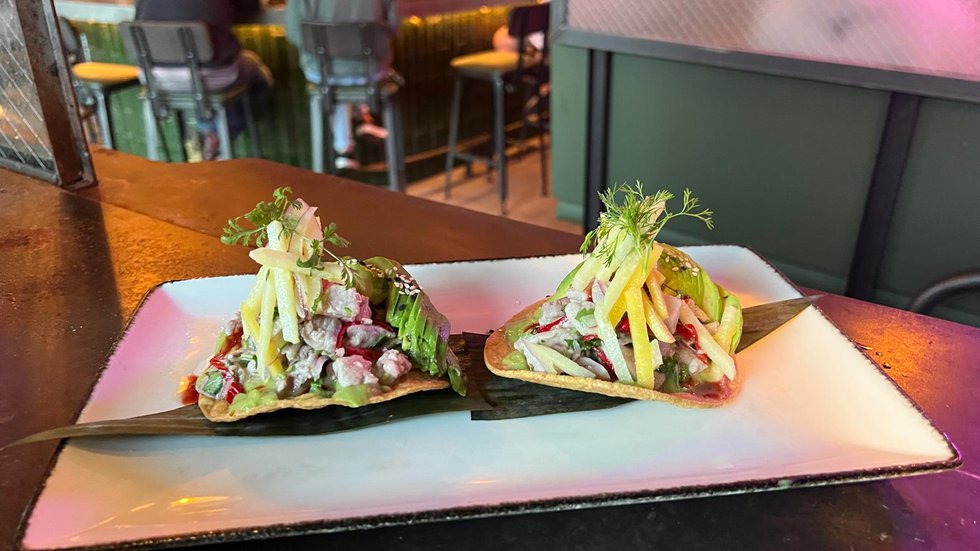
When the opportunity to create a new concept arose, someone asked him why he had never put his own surname on a restaurant. That was the moment when everything fell into place.
“I thought it was a good idea to express it and pay tribute to my dad. I told them about Camacho Garage.”
The concept had to honor his family history, but also his culinary vision: street food with refined technique, elevated presentations without losing authenticity, and an inclusive space where everyone fits in. The restaurant space he found is not an actual garage, but the decor is inspired by his memories.
“All kinds of cars fit in a garage, a Rolls Royce or a Renault. People come here for good food, not social status.”
That is his philosophy: accessibility with excellence. “The presentation is elevated, but the idea is that people don't expect something like this and leave happy because they get more than they thought they would. The flavors are very authentic because I have always been fascinated by Latin American food. Anyone who has not tasted black beans or ripe plantains has not felt the love of God.”

Checks are presented on license plates at Camacho Garage
Each dish—from tacos to aguachiles, from birrias to craft cocktails—seeks to capture the essence of neighborhood food, like the food his father used to make for him on work weekends, taking it to a level where professional technique coexists with deep emotion.
For the chef, Camacho Garage is not just a restaurant: it is a cultural, transgenerational bridge. Families who used to go to Rumba now take their children to Camacho Garage. His own daughters take their school friends there. And so, the kitchen becomes a form of cultural education, a living exchange.
Perhaps the most fascinating thing about Camacho Garage is its duality: rough appearance, refined soul. An industrial space that houses dishes worthy of haute cuisine. A street spirit served with precision and sensitivity.