
By Alfredo Espinola
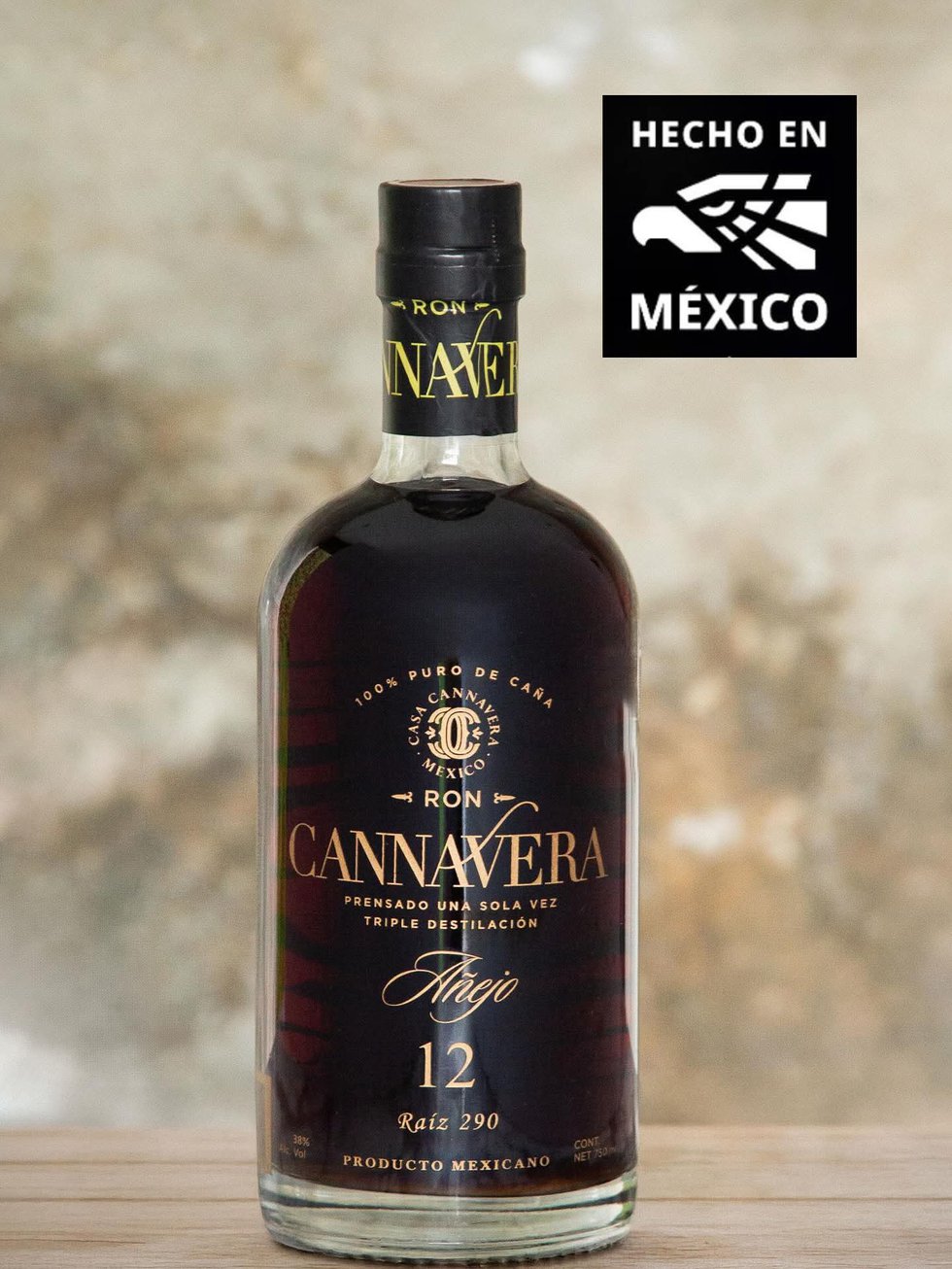
There are a number of quality makers of rum in Mexico, but the idea persists that rum takes a back seat to tequila and mezcal in that country. Among the companies that is changing that idea is Ron Cannavera, located in Campeche, in southeastern Mexico. We spoke with Gabriela Luna Pulido, a biochemical engineer and head of production, who has been instrumental in the development of this brand that is committed to quality, history, and local roots.
The origin of a rum with identity
Casa Cannavera was born from the desire to transform sugar cane into something that transcended its common destiny. “The founders are passionate about rum and wanted to add value to our raw material,” recalls Gabriela. Thus began a project that, thirteen years later, has become an artisanal rum, deeply linked to its origins.
The brand found its own story in Campeche, anchored in the figure of the pirate William Dampier. During one of his voyages, Dampier arrived on these shores and used rum as currency to obtain food and local products. “That exchange marked one of the first traces of rum consumption in the region,” explains Gabriela. Cannavera draws on that memory to construct a narrative that honors the territory and its history.
An artisanal rum from the roots up
Cannavera is a rum whose process is literally from the earth to the bottle.
The cycle begins in the sugar cane plantations cultivated in reddish, mineral-rich soils, formerly worked by the Maya. The harvest is done by hand and the juice is extracted with a single pressing, preserving its purity. After triple distillation, the rum is aged in white oak barrels in the so-called cava del brujo, an underground space where time dictates the pace.
The character of the rum is defined from the moment it is planted, especially by the 290mx variety of cane, whose personality is reflected in every sip. “The aging is real,” Gabriela emphasizes. “Unlike many commercial rums that use ozone to speed up the process, we let time do its work.”
The sensory profiles are developed in the barrel:
- A dark amber rum with a robust body.
- Woody notes with pronounced tannins.
- Fruity aromas from American oak.
- Hints of vanilla characteristic of white oak.
Today, the company has mother rums—those that rest in barrels—aged 3 months, 5 years, 8 years, and 12 years. The latter is the source of its flagship label: the 12-year-old premium extra-aged rum.
Sustainability; nothing is wasted
For Cannavera, craftsmanship goes hand in hand with sustainability.
“Nothing is wasted,” says Gabriela. The bagasse is dried and used as biofuel for the boiler.
In addition:
- The bottles are made of reusable glass.
- The cap and cork are natural and biodegradable.
- The vinasse is treated in oxidation ponds and then applied as diluted fertilizer.
“We can't avoid waste, but we can give it a purpose,” she explains.
A project that grows step by step
Although the original plan focused on exports, the brand decided to move forward in parallel in the domestic market. They are not yet in commercial chains, but they are working on certifications, distribution, and presence at craft fairs, tastings, and restaurants.
“The reception has been extraordinary,” says Gabriela. “At our plant, almost 90% of visitors take a bottle home with them. That's a huge satisfaction.”
Tourism and experience: the 15-meter cellar
Casa Cannavera also created an immersive experience to connect visitors with the origin of rum.
The tour includes:
- Cutting cane in the field.
- Grinding in a manual mill.
- Visiting boilers, mills, fermentation, and distillation.
- Access to an underground cellar with 600 barrels 15 meters underground.
- Tasting or professional tasting guided by a sommelier.
“We are visited by groups of all ages,” she says. “Young people tend to lean toward mixology; older consumers prefer to drink it straight or on the rocks. But everyone finds a way to enjoy it.”
Market challenges: taxes and stigmas
The biggest challenge, Gabriela acknowledges, is the IEPS (a tax on non-essential or potentially harmful goods), which limits the competitiveness of artisanal alcoholic beverages. Added to this are the myths that persist around Mexican rum.
“Many believe that rum must come from abroad,” she explains. “That's why we revisited Dampier's story: to show that rum has deep roots in Campeche and that it didn't always arrive with violence, but as part of a cultural exchange.”
Looking to the future: special rums and new explorations
In addition to premium rum, the distillery is preparing new lines:
- White rum.
- Amber rum.
- Añejo and extra añejo.
- Special solera series.
- A smoked rum, inspired by the trend of mezcals and tequilas with smoky notes.
In five years, Gabriela envisions Cannavera as solid and well-positioned. “We have the raw materials, the capacity, and the experience. And most importantly, consumer acceptance.”
At events and bazaars, they have served hundreds of people a day. Only a few, she says, find the rum too sweet: “That's a personal taste. But in terms of quality, we deliver what we promise.”
Gabriela's journey: passion, perseverance, and resilience
Gabriela joined the project in 2014, fresh out of college, when the plant was still under construction. “Studying is not the same as facing the real world,” she recalls. There was fear, learning, experimentation, and long hours.
Today, more than a decade later, she feels deeply connected to the project she is passionate about. “To the 21-year-old Gabriela, I would say that yes, it was possible. That I am proud. That all the effort was worth it.”
Don't miss a thing! Subscribe to el Restaurante's digital publications for free by clicking here.