

Marcos Castillo Shutterstock
2544922573
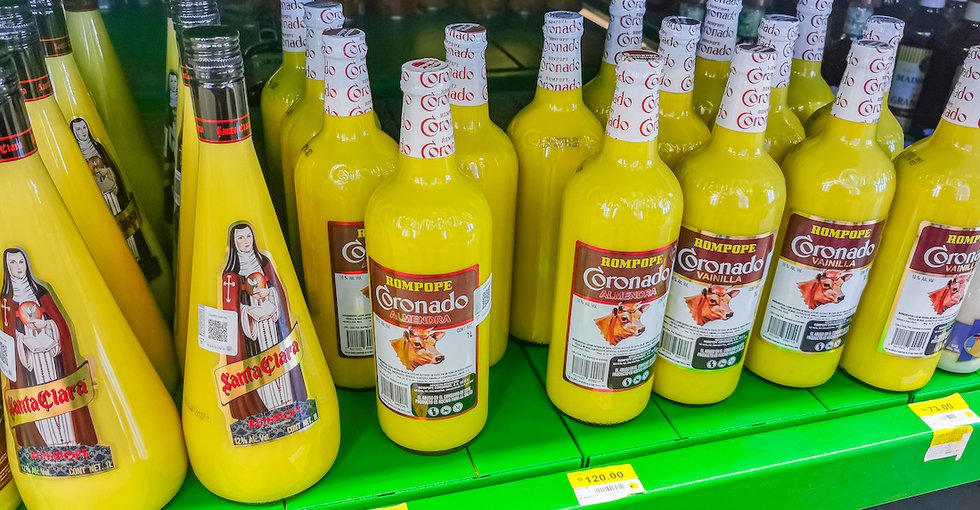
Rompope vanilla liqueur eggnog drink made with eggs in Mexico, traditional for Christmas season
By Alfredo Espinola
Rompope, a sweet symbol of Mexican tradition, originated in the convents of New Spain in the 17th century. In the convent of Santa Clara, the Poor Clare nuns reinterpreted old European recipes for eggnog, incorporating milk, Veracruz vanilla, and cane alcohol. Its name comes from the Spanish word rompon, a similar drink made with rum.
Thus was born a creamy, warm, and festive drink that soon transcended the convent walls to become a symbol of hospitality and celebration. Its mestizo flavor, a blend of European technique and Mexican soul, conquered the viceroyalty and, over time, the entire country. Today, rompope maintains its essence, a tradition that evokes home, celebration, and memory.
From the Cloister to the Border
“Rompope has a very simple base, but every home, every convent, and every brand adds its own touch. That's what makes it unique,” says Javier Martínez, CEO of Martínez Brands, a company that distributes Mexican beverages in the United States, including the iconic Santa Clara Rompope.
For nearly three decades, Martínez has witnessed its cultural journey from a convent drink to an export product, from a religious symbol to an emotional banner for migrants.
“Rompope has not disappeared with cultural assimilation; on the contrary, it continues to grow in sales. It is a drink of nostalgia, but also of discovery,” he says.
In Mexico, its consumption is intertwined with religious and family celebrations; in the United States, with memories of home.
“At fairs or exhibitions, Mexican Americans always say to me, ‘This is the rompope my grandmother used to buy,’” Martinez says. “But when I ask them if they have bought it, they reply, ‘No, never. I don't know what to do with it.’ That is our great challenge, to connect with young people.”
His observation sums up a cultural paradox: Rompope is an icon caught between generations. For years, its sweetness and traditional image pigeonholed it as a feminine drink or one for special occasions.
“There are many closet male consumers,” Martínez says with humor and candor. “They like it, but they don't ask for it in public. That has to change.”
From the Altar to the Shelf
At the end of the 20th century, two rompope brands — Santa Clara and Coronado — turned the artisanal liqueur into an industrial product with an unmistakable visual identity. In Santa Clara’s case, it is the nun on the label, the golden hue, and the vanilla that perfumes the air when you open it.
Arkadij Schell Shutterstock
However, nuances exist between those brands.
“Santa Clara is lighter, has 12 percent alcohol, and is less sweet. Coronado, on the other hand, has 10 percent alcohol and a creamier texture. They have different profiles, like Coca-Cola and Pepsi,” explains Martínez. This diversity allows rompope to be used in cocktails as well as in pastries like flan, tres leches cakes, tamales, crème brûlée, and cheesecake.
Beyond direct consumption, either neat or on the rocks, 80 percent of rompope is used as a culinary ingredient. But Martínez is looking to broaden that perspective.
“We want rompope to feel as natural as coffee with liqueur or a craft cocktail. It has the potential to be as versatile as Baileys, but with a Mexican soul,” he says.
To help achieve that goal, the company is exploring new formats and partnerships with chefs and mixologists. “The global trend is toward Ready-to-Drink (RTD), ready-to-serve cocktails in cans. Young people no longer want bottles or glasses; they want a little can they can take with them. Wine has already adapted, tequila too; rompope can do it perfectly,” he says.
The Artisanal Spirit of the Highlands
Hundreds of kilometers from the convents of Puebla, in San Felipe, Guanajuato and San Luis Potosí, the Guanamé company is writing its own contemporary version of rompope. Among clean pastures and stable solar panels, Juan Pablo Torres Barrera, director of the dairy products division, supervises production with pride and attention to detail.
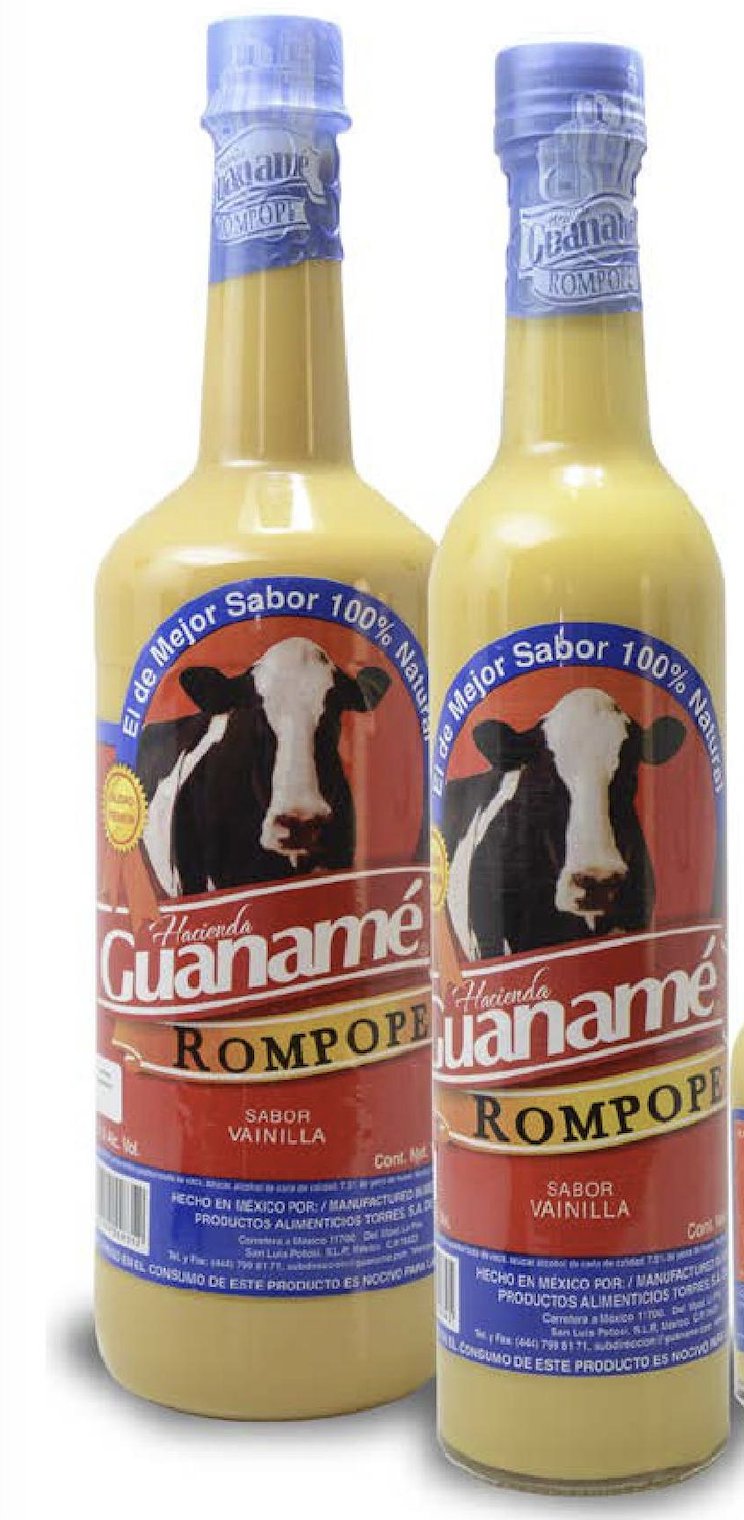
“It all starts with our Holstein cows. They are the queens of the barn, and we spoil them a lot. We take care of what they eat, their well-being, and the environment around them,” he says.
Fresh milk, obtained in a sustainable environment, is the basis of a rompope that has won medals and conquered palates inside and outside of Mexico. The milk, sugar, pasteurized egg yolks, cornstarch, vanilla, and cane alcohol — all from local producers — are mixed in open stainless steel pots.
“We process in small batches, preserving the original recipe we’ve had for twenty years,” Torres Barrera says. “We are not a mega-volume brand. We are a niche brand, focused on quality and telling a story of origin.”
That respect for the artisanal process has reaped rewards: Guanamé is the first rompope in the world to win gold medals at the Brussels World Competition, both in its Mexico Selection and Spirit Selection International editions.
The brand is in supermarkets in Mexico and in Chicago, Texas, Florida, and Arizona; recently launched a rompope mocachino with cinnamon, a flavor completely new to the industry; and is preparing to launch Caramel Cream, a caramel and hazelnut cream that will debut in the United States.
“That product is really taking off in mixology and cafes. It’s our next step,” Torres Barrera says.
Between Nostalgia and Reinvention
Both Martínez and Torres agree that rompope is experiencing a renaissance. It’s not about replacing the traditional image but about reinterpreting it.
“The nun on the label and the golden color represent our roots, but we have to show new ways to enjoy it,” says Martínez.
Torres adds to this from his artisanal perspective.
“We want young people to see it and say, ‘I’ll buy it, take it home, and use it in a coffee or dessert.’ We want rompope to be part of Mexican celebrations again, but with a modern twist,” he explains.
The challenge is emotional and cultural. It is about reconciling two perspectives: that of memory, of grandmother serving a small glass after dinner, and that of a Mexico that experiments, mixes, and exports its flavor to the world.
Rompope does not seek to compete with tequila or mezcal; it seeks to reaffirm an identity-defining sweetness, a liquid form of memory. Perhaps that is why rompope survives. In a market dominated by fleeting fads, this drink continues to be a testament to how Mexico transforms the everyday into art and flavor.
“When someone opens a bottle of rompope, they are not just tasting a drink, they are touching a little piece of their history,” Martínez concludes.
Click here to go to the next article, Making the Case for Late-Night Happy Hours