
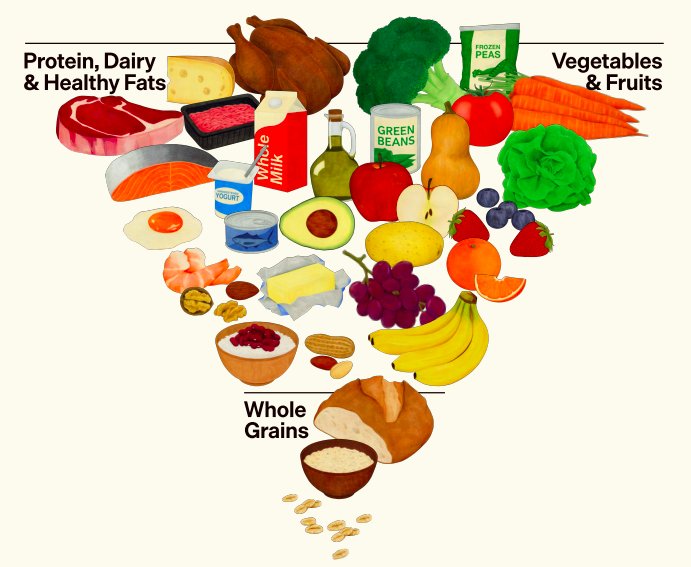
The USDA introduced a greatly revised set of dietary guidelines for Americans earlier this year, with a much stronger focus on animal proteins and certain fats. The guidelines have received mixed reviews, which is not surprising given the disdain of science the Trump administration has shown.
But for Mexican restaurant owners, the guidelines might be good news. After all, a lot of Mexican restaurant menu items are rich in animal protein. Furthermore, avocadoes — proudly featured on nearly every Mexican restaurant menu — are highlighted in the guidelines as a nutrient-dense, whole-food source of healthy, unsaturated fats.
“It’s the dawn of a new nutritional era in Mexican cuisine,” predicts Chef Chuck Hayworth, a private chef and medical meal specialist in North Carolina. “Now is the golden age for fajitas, enchiladas, and non-fried foods in Mexican cuisine such as ceviche and reinvented taco salads.”
What Do the Guidelines Say?
The new guidelines essentially turn the old food pyramid upside down. Now meat and other animal products, such as cheese and eggs, as well as whole vegetables, are highly recommend, while processed foods and refined grain products are discouraged.
In general, the guidelines emphasize “whole” foods over processed foods, which means more fresh meat, fish, vegetables, etc., and less factory-made food.
Avocadoes are nicely pictured right in the middle of the new food pyramid image. They are recommended because of their healthy, monounsaturated fat content, and for their fiber and potassium content. The guidelines encourage incorporating them into diets to replace saturated fats and reduce processed food consumption.
Good Mexican restaurants, therefore, should benefit, because of the prevalence of guacamole, entrees with lots of meat and cheese, and the use of animal fat such as beef lard.
“New USDA and FDA advice on the benefits of increased protein consumption (in animal fats) can help sustain the menu items such as carne asada, carnitas, and cheese-based dishes,” says Chad Larson, a naturopathic physician and chiropractor and CEO of The Adapt Lab in Solana Beach, CA.
But Do Guidelines Matter?
An important question regarding the new guidelines is: Do people care?
“Federal recommendations seldom change the patterns of ordering dramatically,” Larson says. “The majority of the diners choose within 30 seconds based on the taste, price, and contentment. Assuming that a beef burrito supplies 30 grams of protein and keeps the individual full for four to five hours, the practical value is greater than policy language that most consumers do not read. There might be a slight increase in the popularity of protein-forward meals, about 5 to 10 percent among those who are health conscious.”
However, some research shows that the federal government’s dietary guidelines do play some role in decisions people make.
For example, a USDA study published in 2012 concluded that the 2005 version of the dietary guidelines, which stressed the importance of whole grains, prompted American consumers to reduce purchases of refined-grain bread by 3 percent and increase purchases of whole grain bread by 14 percent.
Contradictory Guidance
The guidelines have been criticized by many health professionals for promoting animal protein, even though data shows most Americans already get plenty of protein in their diet.
And some guidance is contradictory. For example, the guidelines advise limiting saturated fat to less than 10 percent of total calories, while simultaneously promoting red meat, full-fat dairy, butter, and beef tallow.
“Following these food-based recommendations would make it difficult, if not impossible, for many Americans to remain below the recommended upper limit for saturated fat threshold, making these guidelines internally inconsistent,” according to a statement issued by Stanford University.
Play Up the Advantage
The bottom line is that the guidelines may have some impact, at least in so far as making people feel better about eating some Mexican restaurant menu items. Mexican restaurants could benefit from the guidelines by adding key nutrition facts to their menus, Larson suggests.
“The description of protein grams, balanced portions, and the fiber of beans and vegetables are credible points,” he says.
Hayworth agrees: “It’s up to the restaurant to paint the healthy aspect onto ingredients and menu items they offer. Create and market healthier menus and the patron will return, especially if these are items you have already featured and have been overlooked in the past.”
Click here to go to the next article, Webinar: Take Advantage of the World Cup